
English Bulldog Breed Guide: Lovable, Stubborn, and Expensive to Vet (2026)
English Bulldogs are sweet, stubborn, and come with some of the highest vet bills in the dog world. Here's the honest breakdown.
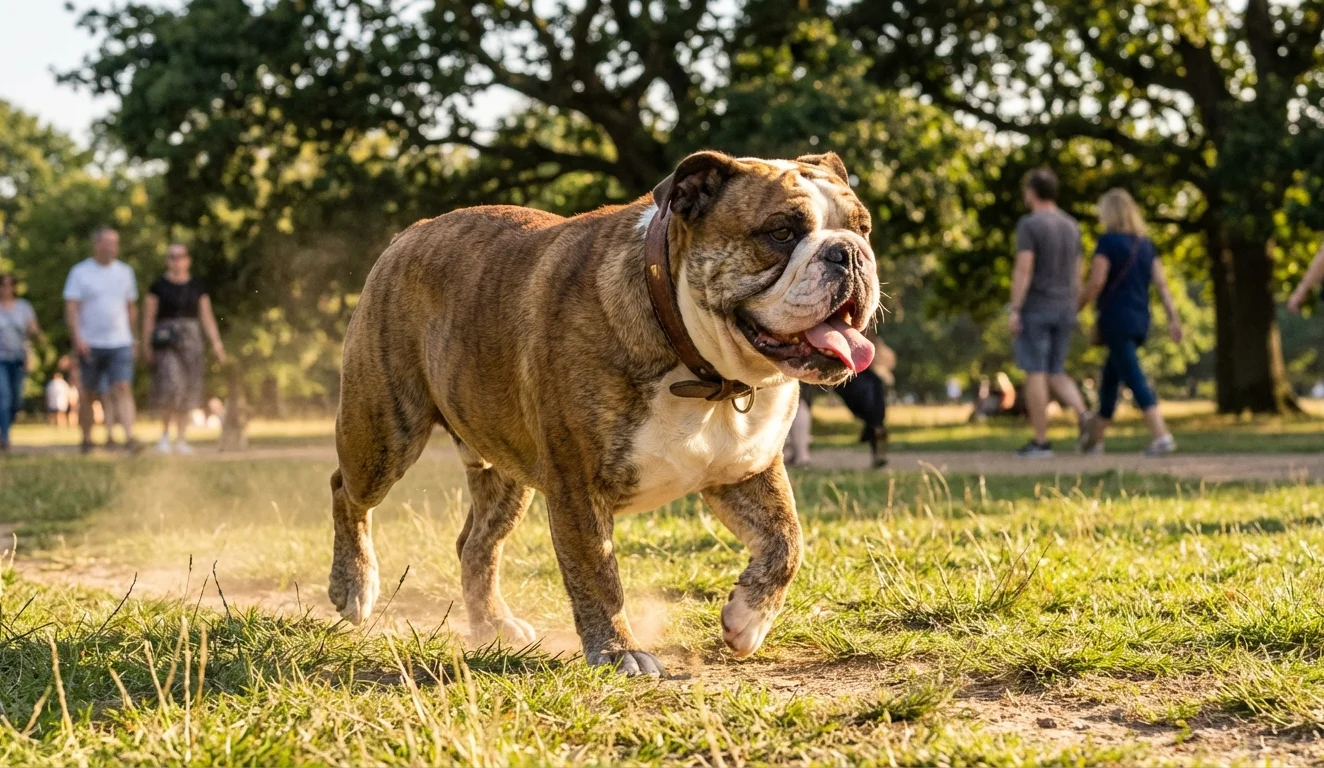
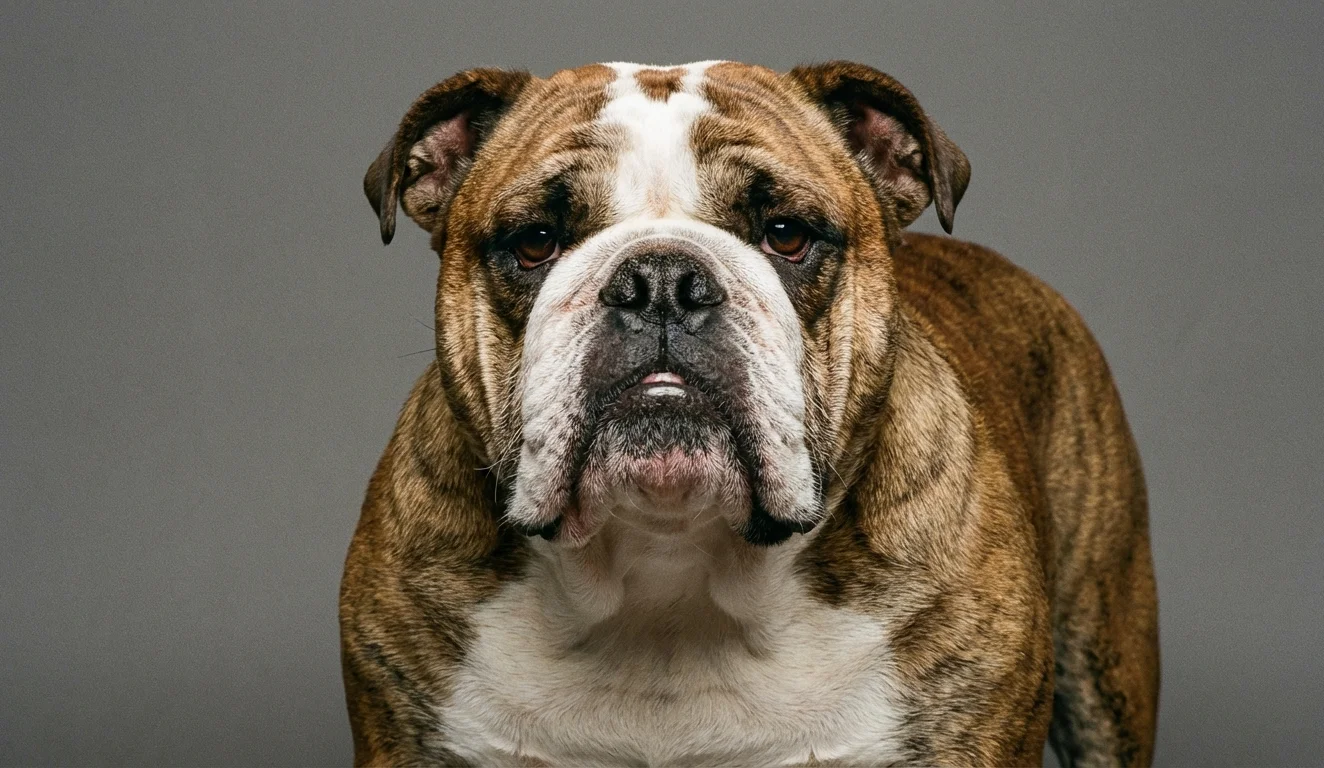
The English Bulldog is a compact, muscular dog that weighs 40-55 pounds, stands just 12-15 inches tall, and lives 8-10 years. That lifespan number is important, we’ll come back to it. Bulldogs are one of the most recognizable breeds on the planet, with their pushed-in faces, rolling gait, and expression that somehow manages to look both grumpy and adorable at the same time.
In Short: 40–55 lbs, 8–10 years. Low energy. Moderate shedding. Watch for Brachycephalic Obstructive Airway Syndrome and Hip Dysplasia. Great for families and first-time owners, apartment-friendly.
Most breed guides dance around this, but the English Bulldog is a breed in crisis. Decades of breeding for increasingly exaggerated features have produced a dog that frequently can’t breathe properly, can’t give birth naturally, and has one of the shortest lifespans of any breed its size. We think English Bulldogs are wonderful dogs, their personalities are genuinely special, but we’d be doing you a disservice if we didn’t lead with the health reality. If you’re considering a Bulldog, this is a breed where choosing your breeder matters more than almost any other decision you’ll make.
English Bulldog at a Glance
| Trait | Details |
|---|---|
| Breed Group | Non-Sporting (AKC) |
| Height | Males: 14-15 in / Females: 12-14 in |
| Weight | Males: 50-55 lbs / Females: 40-44 lbs |
| Life Expectancy | 8-10 years |
| Coat | Short, smooth, fine |
| Colors | Red, White, Fawn, Brindle, Piebald |
| Temperament | Docile, Friendly, Willful, Loyal |
| Shedding | Moderate |
| Energy Level | Low |
| Good With Kids | Yes |
| Apartment Friendly | Yes |
History of the English Bulldog
The Bulldog’s origin story is brutal. The breed was developed in England for bull-baiting, a blood sport popular from the 13th through the 19th century where dogs were set upon tethered bulls. The original Bulldogs were taller, more athletic, and far more aggressive than today’s breed. They needed to be. Their job was to grab a bull by the nose and pin it to the ground.
When bull-baiting was outlawed in England in 1835, the Bulldog nearly went extinct. Breeders who loved the breed pivoted, selectively breeding for companionship traits instead of fighting ability. The aggressive tendencies were bred out over generations, replaced by the gentle, docile temperament we see today. The Bulldog went from gladiator to couch companion in about 50 years.
The modern English Bulldog looks dramatically different from its ancestors. Historical illustrations from the 1800s show a leggier, more athletic dog with a less extreme face. The squat build, pushed-in nose, and heavy wrinkles are largely 20th-century developments driven by show-ring preferences. The AKC recognized the breed in 1886, and the Bulldog has been a popular companion and mascot ever since, serving as the face of the US Marine Corps, Yale University, and dozens of other organizations.
Size and Appearance
English Bulldogs are medium-sized but deceptively heavy. They’re built like a low-slung tank. Males weigh 50-55 pounds and stand 14-15 inches tall, while females weigh 40-44 pounds and stand 12-14 inches. When you pick up a Bulldog, they always feel heavier than they look, it’s dense muscle and bone packed into a compact frame.
Build
The Bulldog has a wide chest, thick-set body, and a distinctive rolling gait. The head is massive relative to the body, with a broad skull and pronounced underbite. The face features deep wrinkles (called “rope”) above the nose and around the muzzle. The shoulders are wide and set low. Everything about this dog says “built for stability, not speed.”
Coat and Color
The English Bulldog coat is short, smooth, and lies flat against the body. It’s easy to maintain but sheds more than you’d expect for such a short coat. Common colors include red, white, fawn, brindle, and piebald (white with patches of another color). Fawn and brindle combinations are probably the most popular.
English Bulldog Temperament
If the English Bulldog’s body is a design compromise, its personality is a home run. These dogs are genuinely sweet. Not in a generic “all dogs are nice” way, Bulldogs have a specific quality of calm, patient affection that’s hard to find in other breeds.
What English Bulldogs are really like to live with:
- They’re loyal to their people. Bulldogs form deep attachments to their family and want to be where you are. They’re not clingy in an anxious way, more like they’ve decided you’re their person and that’s that.
- Stubborn is an understatement. The Bulldog’s willfulness is legendary. If a Bulldog doesn’t want to walk any further, you’re not moving that dog. Period. They’re not being defiant, they genuinely have their own agenda, and sometimes that agenda involves lying down in the middle of the sidewalk.
- Surprisingly gentle with kids. Bulldogs have a high tolerance for toddler chaos. Their low center of gravity makes them hard to knock over, and their patience with grabby little hands is remarkable.
- Low energy, high personality. An English Bulldog can make doing absolutely nothing look entertaining. They snore, they snort, they make faces. Bulldog owners will tell you these dogs have a sense of humor, and honestly, it’s hard to argue.
One thing worth noting: Bulldogs can be possessive over food. It’s not aggressive in most cases, but resource guarding tends to show up more in this breed than in many others. Address it early with training if you notice it.
Exercise Needs
English Bulldogs need about 20-30 minutes of exercise per day, making them one of the lowest-energy breeds around. A couple of short walks is usually enough. And honestly, your Bulldog will probably tell you when they’re done before you are.
Important exercise limitations:
- Heat sensitivity is serious. Because of their brachycephalic (flat-faced) anatomy, English Bulldogs can’t cool themselves efficiently through panting. Exercise in temperatures above 80°F is dangerous. Summer walks should happen early morning or after dark. Period.
- Swimming is a no. Most English Bulldogs cannot swim. Their front-heavy build and short legs make it nearly impossible for them to stay afloat. If you have a pool, a fence around it isn’t optional, it’s a safety requirement.
- No long-distance anything. Bulldogs are sprinters, not marathon runners. Short bursts of play followed by rest is the right pattern.
We’d recommend keeping exercise sessions low-intensity and always having water available. Indoor play on hot days is a perfectly acceptable substitute. A puzzle feeder can provide mental stimulation without the physical strain.
Grooming
English Bulldogs have a simple coat but complicated skin. The grooming demands are less about the fur and more about everything else.
The daily essentials:
- Wrinkle cleaning, every day. This is non-negotiable. The skin folds on a Bulldog’s face trap moisture, bacteria, and debris. If you don’t clean them regularly, you’ll end up dealing with skin fold dermatitis, which is painful for the dog and expensive to treat. Use a damp cloth or unscented baby wipe, then dry the folds thoroughly.
- Tail pocket cleaning. Many Bulldogs have a tight screw tail with a pocket underneath that collects grime. Check it during wrinkle cleaning.
- Weekly brushing with a rubber curry brush or bristle brush handles shedding.
- Bathing every 4-6 weeks, using a mild shampoo that won’t irritate sensitive skin.
- Ear cleaning weekly, those rose-shaped ears can trap moisture.
Professional grooming isn’t usually necessary for coat maintenance, but some owners opt for regular grooming appointments to handle nail trims and thorough wrinkle care. Budget $30-$50 per session if you go that route.
English Bulldog Health Issues
This is the section that matters most. English Bulldogs have significant health challenges, and ignoring them won’t make them go away. A 2022 study published in Canine Medicine and Genetics found that English Bulldogs were twice as likely to be diagnosed with at least one health disorder compared to other breeds in the same study.
Brachycephalic Obstructive Airway Syndrome (BOAS)
This is the big one. BOAS affects a large percentage of English Bulldogs to some degree. The flat face that defines the breed comes with narrowed nostrils, an elongated soft palate, and a narrowed trachea, all of which make breathing harder than it should be. Symptoms range from chronic snoring and noisy breathing to exercise intolerance, overheating, and in severe cases, collapse. Corrective surgery (soft palate resection, nostril widening) costs $2,000-$5,000 and can significantly improve quality of life.
We think it’s worth saying: if a Bulldog can’t walk around the block without gasping, that’s not a personality quirk. That’s a medical condition.
Hip Dysplasia
The OFA reports that English Bulldogs have one of the highest rates of hip dysplasia of any breed, over 70% of Bulldogs evaluated show some degree of hip dysplasia. That’s a staggering number. Treatment ranges from weight management and anti-inflammatories to total hip replacement at $1,500-$6,000 per hip.
Cherry Eye
Cherry eye (prolapse of the third eyelid gland) is common in English Bulldogs and usually appears in puppies or young adults. The gland pops out from behind the lower eyelid and looks like a small red mass in the corner of the eye. Surgical correction costs $500-$1,500 and is usually successful.
Skin Fold Dermatitis
Those adorable wrinkles are also bacterial breeding grounds. Skin fold dermatitis is common in Bulldogs and presents as redness, irritation, odor, and sometimes infection in the skin folds. Treatment costs $200-$1,000 depending on severity, but the real solution is prevention through daily wrinkle cleaning.
Patellar Luxation
A condition where the kneecap slides out of its normal position. Moderate prevalence in English Bulldogs. Treatment ranges from conservative management to surgery at $1,500-$3,000.
A note on pet insurance: We’d consider pet insurance nearly essential for English Bulldogs. Given the breed’s health predispositions, lifetime veterinary costs are substantially higher than average. Get insurance early, before any pre-existing conditions are documented.
Training an English Bulldog
Training an English Bulldog requires patience. A lot of patience. This isn’t a dumb dog, Bulldogs are actually quite clever, but they are independent thinkers who will decide on their own terms whether to comply with your request.
What works with Bulldogs:
- Short training sessions. Five to ten minutes maximum. Bulldogs lose interest quickly, and pushing past that point is counterproductive.
- High-value treats. Bulldogs are food-motivated, but they need incentives that are worth their effort. Plain kibble usually won’t cut it.
- Consistency without rigidity. Repeat the same commands and expectations, but don’t try to physically force a Bulldog into compliance. They’ll plant their feet and win.
- Positive reinforcement only. Harsh corrections will make a Bulldog shut down. They respond to encouragement, not intimidation.
Common mistakes:
- Expecting Lab-like eagerness to please. Bulldogs aren’t trying to make you happy, they’re evaluating whether what you’re asking is worth the effort. That’s a different dynamic.
- Skipping basic obedience because “they’re small enough to control.” A 50-pound dog that resource guards and hasn’t learned basic manners is still a problem.
Start socialization early. Bulldogs that aren’t well-socialized can become territorial or reactive. Puppy classes are a good investment.
English Bulldog Cost
Purchase Price
English Bulldogs are expensive. Puppies from reputable breeders typically cost $1,500-$4,000, and prices on the higher end are common. The high price reflects the cost of breeding Bulldogs, most require artificial insemination and C-section deliveries, which runs breeders $2,000-$4,000 per litter just for the veterinary procedures.
Be extremely wary of “cheap” Bulldogs. A Bulldog puppy under $1,000 usually means a backyard breeder who hasn’t done health testing, and with this breed, that gamble is particularly risky.
Monthly Costs
| Expense | Monthly Estimate |
|---|---|
| Food (high-quality kibble) | $40-$60 |
| Preventive vet care (averaged) | $25-$50 |
| Pet insurance | $50-$90 |
| Wrinkle care supplies | $10-$15 |
| Treats and chews | $10-$20 |
| Miscellaneous (toys, supplies) | $10-$20 |
| Total | $100-$250 |
Notice that pet insurance line. Bulldog insurance premiums are among the highest of any breed because insurers know what’s coming. But even at $50-$90 per month, a single BOAS surgery or hip replacement will make that insurance look like the best money you ever spent.
First-year costs including purchase, supplies, vet visits, and spay/neuter typically run $4,000-$8,000.
Is an English Bulldog Right for You?
An English Bulldog is a great fit if you:
- Want a low-energy, affectionate companion who’s happy being a couch buddy
- Live in an apartment or home without a big yard
- Have kids, Bulldogs are remarkably patient with children
- Can handle significant veterinary costs (and will get pet insurance)
- Work from home or have a flexible schedule, Bulldogs want your company
- Appreciate a dog with a big personality in a compact package
An English Bulldog might NOT be right if you:
- Want a jogging or hiking partner (Bulldogs physically can’t do it)
- Live in a hot climate without reliable air conditioning
- Can’t budget for above-average veterinary expenses
- Want a dog with a long lifespan, 8-10 years is the realistic expectation
- Are looking for an obedient, eager-to-please breed
- Have a pool without fencing (serious drowning risk)
Bulldogs are polarizing, and we get why. On one hand, you have a dog with a personality that’s second to none, genuinely funny, deeply loyal, fantastic with families. On the other hand, you have a breed whose physical structure causes real suffering for a meaningful percentage of individual dogs. If you go the Bulldog route, please do your homework on breeders. Find someone who prioritizes health testing and functional breathing over an extreme look. Your dog’s quality of life depends on it.
Related Breeds
If you’re considering this breed, you might also want to look at:
Frequently Asked Questions
How long do English Bulldogs live?
English Bulldogs typically live 8-10 years, which is shorter than average for a dog their size. A 2024 study by the Royal Veterinary College in the UK found the median lifespan for English Bulldogs was around 7.4 years in their dataset, though dogs from health-focused breeders can exceed that. The most impactful thing you can do for longevity is keeping your Bulldog at a healthy weight and addressing breathing issues early.
Can English Bulldogs swim?
Most English Bulldogs cannot swim and should never be left unsupervised near water. Their heavy, front-loaded body and short legs make it extremely difficult for them to stay buoyant. Some individual Bulldogs can manage with a properly fitted life vest, but many can’t even stay afloat with one. If you have a pool, treat it as a genuine safety hazard and ensure there’s a fence or barrier between your Bulldog and the water at all times.
Why are English Bulldogs so expensive?
English Bulldogs are expensive to purchase because they’re expensive to breed. The breed’s physical structure means most females require artificial insemination ($200-$500 per attempt) and C-section delivery ($2,000-$4,000) because natural mating and whelping are often impossible or dangerous. Add in health testing, prenatal care, and raising a litter, and responsible breeders have significant costs to recoup. Beyond the purchase price, English Bulldogs are also expensive to own, higher veterinary costs, pet insurance premiums, and specialized care add up over the dog’s lifetime.
Do English Bulldogs have breathing problems?
Many English Bulldogs experience some degree of breathing difficulty due to Brachycephalic Obstructive Airway Syndrome (BOAS). The severity varies widely, some Bulldogs have mild snoring and occasional snorting, while others struggle with basic exercise and overheat easily. A UK Kennel Club respiratory assessment can help evaluate severity. If your Bulldog is consistently panting at rest, can’t walk more than a few minutes without stopping, or makes stridor (high-pitched breathing sounds), talk to your vet about corrective surgery options. These aren’t normal breed characteristics to accept, they’re treatable medical conditions.
Are English Bulldogs good with other pets?
English Bulldogs generally get along well with other dogs and cats, especially when raised together from a young age. Their low energy and non-confrontational nature makes them less likely to chase or antagonize other animals. But some Bulldogs (particularly males) can be territorial or resource-guard around food bowls. Proper introductions and early socialization help. If you’re bringing a Bulldog into a home with existing pets, supervised introductions and separate feeding areas are smart precautions.