Airedale Terrier Breed Guide: The King of Terriers Has Strong Opinions About Everything (2026)
The Airedale Terrier is the largest terrier breed, athletic, intelligent, opinionated, and absolutely convinced it's in charge of the household.
The Airedale Terrier weighs 50-70 pounds, stands 23 inches at the shoulder, and lives 11-14 years. It’s the largest of all terrier breeds, earning the nickname “King of Terriers”, and unlike many terriers that were bred to go after small vermin, the Airedale was designed to hunt otters, rats, and larger game along the rivers of northern England. The AKC recognized the breed in 1888, and the Airedale has spent the last 137 years being exactly the kind of dog that inspires equal parts admiration and exasperation in its owners.
In Short: 50–70 lbs, 11–14 years. High energy, needs 60+ minutes of daily exercise. Low shedder (but needs regular professional grooming). Watch for Hip Dysplasia. Best for active, experienced owners who appreciate a dog with a mind of its own.
The Airedale is the terrier personality cranked up to large-breed size, which means you get all the tenacity, prey drive, and independence of a smaller terrier, packed into a dog that can reach your kitchen counters and outrun you in a straight line. They’re brilliant, versatile, loyal, and they will test you on a daily basis. If you want a dog that follows instructions without question, the Airedale will disappoint you. If you want a dog that keeps you on your toes, makes you laugh, and occasionally drives you up the wall with its stubbornness, you’ve found your breed.
Airedale Terrier at a Glance
| Trait | Details |
|---|---|
| Breed Group | Terrier (AKC, 1888) |
| Height | Males: 23 in / Females: slightly less |
| Weight | Males: 50-70 lbs / Females: 40-55 lbs |
| Life Expectancy | 11-14 years |
| Coat | Dense, wiry double coat |
| Colors | Tan with black or dark grizzle saddle |
| Temperament | Intelligent, Independent, Confident |
| Shedding | Low |
| Energy Level | High |
| Good With Kids | Yes (with supervision) |
| First-Time Owner Friendly | No |
History
The Airedale Terrier was developed in the Aire Valley of Yorkshire, England, in the mid-1800s. Working-class men in the region, factory workers, miners, and millhands, wanted a dog versatile enough to hunt otters in the River Aire and rats along its banks, while also being large enough to serve as a guard dog and family companion. They crossed the Old English Black and Tan Terrier (now extinct) with the Otterhound, producing a dog that could swim, track, and work both in water and on land.
The result was a tall, leggy, wire-coated terrier that combined the Otterhound’s swimming ability and scenting prowess with the terrier’s fearlessness and prey drive. The breed was originally known as the Waterside Terrier or Bingley Terrier before being officially named the Airedale Terrier in 1878.
The Airedale’s intelligence and versatility quickly expanded its resume beyond hunting. During World War I, Airedales served as messenger dogs, sentries, search-and-rescue dogs, and Red Cross aid dogs in the trenches. They carried messages through no-man’s-land under fire, and their courage under combat conditions became legendary. Colonel Edwin Hautenville Richardson, who trained war dogs for the British military, considered the Airedale the best all-around military dog available. After the war, the breed’s popularity soared. Presidents Woodrow Wilson, Warren Harding, and Calvin Coolidge all kept Airedales in the White House. Laddie Boy, Harding’s Airedale, was arguably the first celebrity presidential pet.
Size and Appearance
The Airedale is a big terrier, the biggest. Males stand about 23 inches at the shoulder and weigh 50-70 pounds. Females are slightly smaller. There’s also an informal “Oorang” or oversized Airedale that can reach 80-100 pounds. These larger dogs were originally bred in the early 1900s for big-game hunting but aren’t recognized as a separate variety by the AKC.
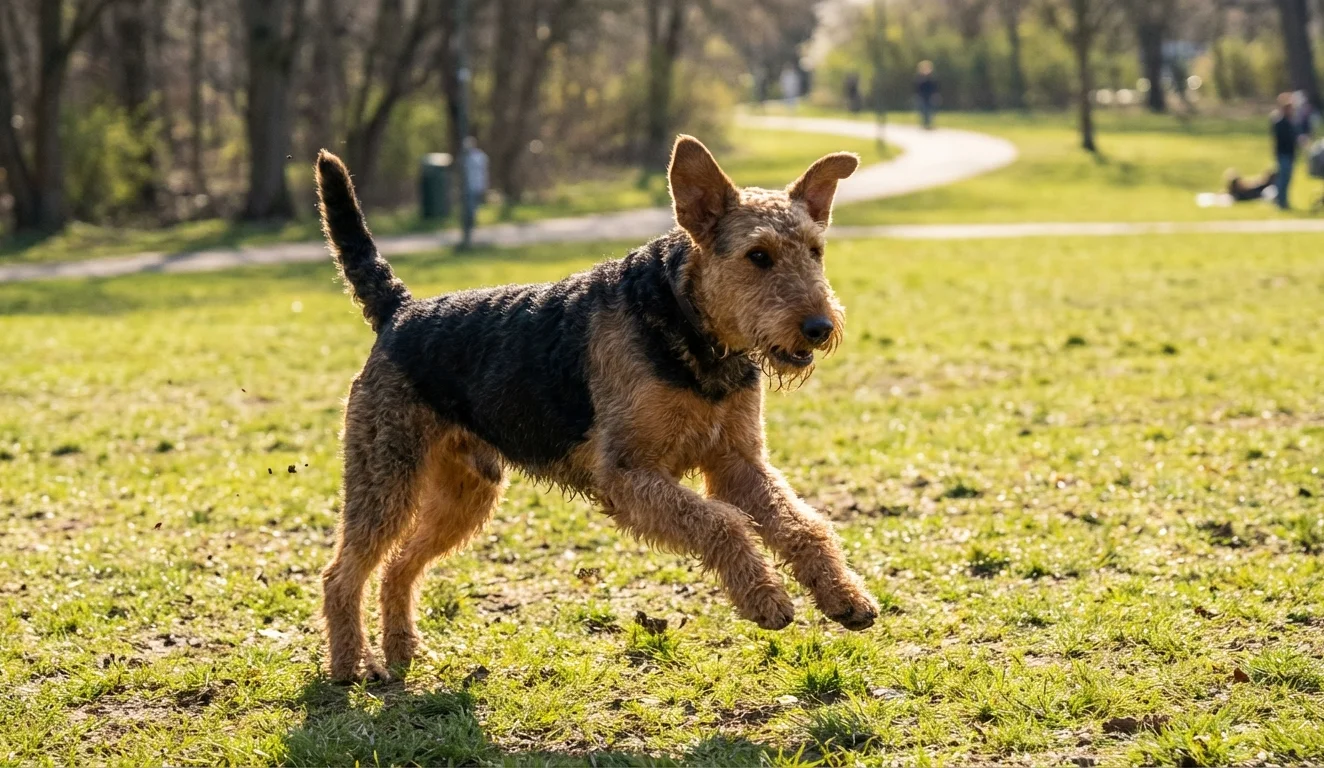
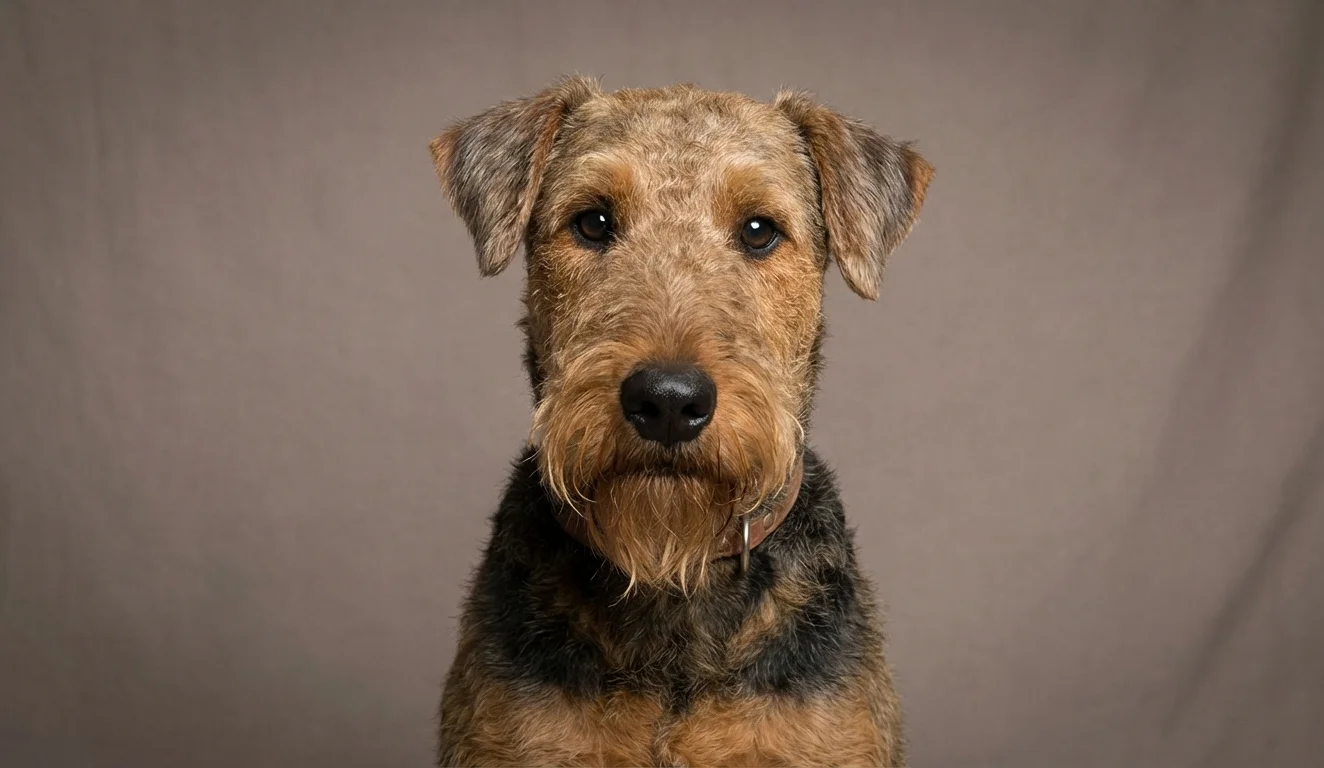
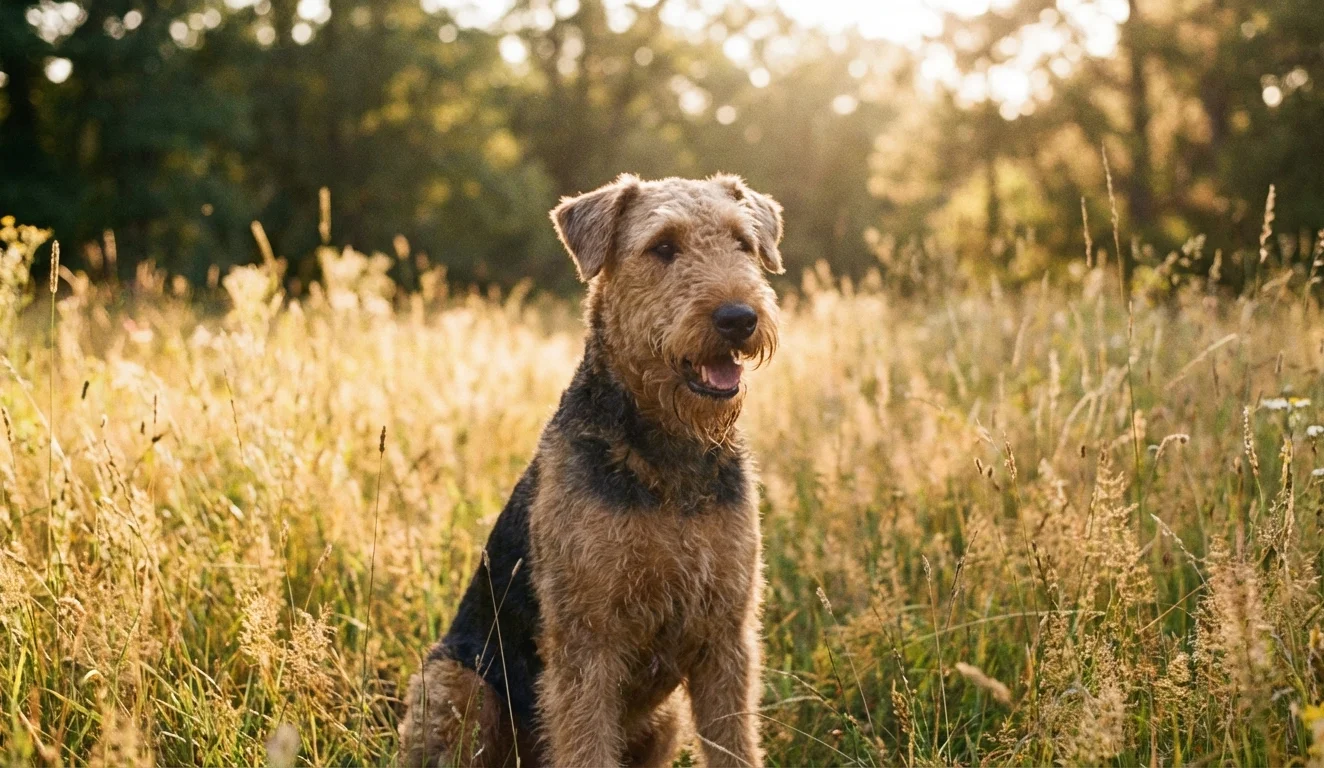
The build is athletic and square, roughly as long as they are tall, with a flat back, deep chest, and long, straight legs. They move with a purposeful, ground-covering gait that reflects their working heritage. The head is long and flat, with a strong jaw, small V-shaped ears that fold forward, and dark, intelligent eyes that always look like they’re planning something.
Coat and Color
The coat is the Airedale’s defining physical feature: a dense, wiry outer coat over a soft, shorter undercoat. It’s hypoallergenic relative to most breeds (no dog is truly hypoallergenic, but Airedales produce less dander and shed very little). The texture should feel harsh and crisp, not soft, a properly maintained Airedale coat feels like a Brillo pad in the best possible way.
The color is always tan with a black or dark grizzle saddle. The head, ears, and legs are tan (ranging from light gold to deep reddish-tan), and the back and sides are covered in a dark saddle of black or dark mixed coloring. The tan and black pattern is consistent across the breed, there’s very little color variation in Airedales.
Airedale Terrier Temperament
Take the personality of any small terrier, the confidence, the stubbornness, the prey drive, the “I’d fight a bear if one showed up” attitude, and put it in a 60-pound body. That’s the Airedale.
What living with an Airedale is actually like:
- Confident to the point of cockiness. Airedales carry themselves with a self-assurance that borders on swagger. They walk into a room like they own it. They approach new situations with curiosity rather than fear. This confidence is what made them effective war dogs, police dogs, and hunters, but in a domestic setting, it means they’re not going to defer to you just because you’re the human.
- Intensely loyal to their people. Airedales bond deeply with their family and can be protective in a measured, intelligent way. They’re not indiscriminate guarders, they read situations and respond accordingly. An Airedale that perceives a genuine threat will step up. An Airedale that meets your friends will wag its tail (after a brief assessment).
- High prey drive. Squirrels, rabbits, cats, small dogs, anything small and fast can trigger the chase instinct. This is a breed that was developed to hunt, and the prey drive hasn’t been bred out. Airedales can coexist with cats they’ve been raised with, but introductions should be careful and supervised.
- Playful and entertaining. Airedales have a goofy side that catches people off-guard given their dignified appearance. They play hard, invent their own games, steal household objects for attention, and have been known to rearrange furniture out of boredom. They maintain a puppy-like playfulness well into adulthood.
- Independent operators. An Airedale will learn a command, understand a command, and then decide whether that command applies to the current situation. This is classic terrier independence scaled up to large-breed proportions. They’re problem-solvers, which is great when they’re working, and less great when they’ve figured out how to open the pantry door.
Exercise Needs
Airedale Terriers need 60-90 minutes of exercise per day. This is a high-energy working breed that needs both physical and mental stimulation to stay balanced. A bored Airedale is a creative Airedale, and their creativity tends to involve digging, chewing, barking, or figuring out how to access things you thought were secure.
Good exercise for Airedales:
- Long walks and hikes. Airedales are excellent hiking companions, they’ve got the stamina, the agility, and the enthusiasm for trail work. They’ll keep pace on a 5-10 mile hike without slowing down.
- Running. If you’re a jogger, an adult Airedale (over 18 months) makes a solid running partner. They’re athletic enough for moderate-distance running and seem to enjoy the structure.
- Fetch and retrieval games. Many Airedales enjoy retrieving, which traces back to their hunting background. A good game of fetch in a fenced yard can burn off energy efficiently.
- Swimming. The Airedale’s Otterhound heritage means many of them are natural swimmers. If you have access to safe water, swimming is excellent low-impact exercise.
- Dog sports. Airedales do well in agility, rally, barn hunt (which channels their rat-hunting instincts), and tracking. These activities engage both body and mind.
What happens when an Airedale doesn’t get enough exercise: digging. A LOT of digging. Also barking, destructive chewing, counter-surfing, and general household chaos. An under-exercised Airedale will find ways to entertain itself, and those ways will cost you money.
Grooming
Airedales don’t shed much, which is the good news. The trade-off is that their wiry coat requires regular professional grooming to maintain its texture and appearance.
Grooming routine:
- Brush 2-3 times per week with a slicker brush and a stripping comb to prevent mats and tangles in the wiry coat
- Professional grooming every 6-8 weeks. Airedales need either hand-stripping (pulling dead coat by hand to maintain proper wire texture) or clipping. Hand-stripping preserves the coat’s harsh texture and color but is time-consuming and more expensive ($75-$150 per session). Clipping is faster and cheaper ($50-$80) but softens the coat texture over time.
- Bath as needed: roughly every 4-6 weeks. The wiry coat doesn’t hold odor the way softer coats do.
- Nail trims every 2-3 weeks
- Beard maintenance. The Airedale’s facial furnishings (the beard and eyebrows that give them their distinctive look) need daily attention. They collect food, water, and debris. Wipe the beard after meals and water breaks to prevent matting and odor.
The choice between hand-stripping and clipping is a real decision for Airedale owners. Show dogs are always hand-stripped, but for pet owners, clipping is more practical and widely available. If you go the clipping route, the coat will become softer and may lighten in color over time, this is cosmetic, not a health issue.
Airedale Terrier Health Issues
Airedales are a generally healthy breed with a solid lifespan. 11-14 years is above average for a dog in the 50-70 pound range. Still, there are some conditions to watch for.
Hip Dysplasia
The OFA reports hip dysplasia in approximately 12% of Airedale Terriers evaluated. The condition causes abnormal hip joint development, leading to arthritis and pain. Symptoms include lameness, stiffness, and difficulty with stairs or jumping. Treatment ranges from weight management and physical therapy ($500-$1,500 per year) to surgical options like total hip replacement ($3,500-$7,000 per hip). Reputable breeders screen with OFA or PennHIP evaluations.
Hypothyroidism
Airedales have an elevated rate of underactive thyroid compared to the general dog population. Signs include weight gain despite normal feeding, lethargy, skin problems, and coat changes. It’s diagnosed with a simple blood test and managed with daily thyroid supplementation, typically $200-$500 per year including medication and monitoring.
Dermatitis and Skin Allergies
The breed is predisposed to various skin conditions, including atopic dermatitis (environmental allergies) and contact allergies. Symptoms include itching, redness, hot spots, and recurrent ear infections. Treatment depends on severity, mild cases may require $300-$800 per year for medicated shampoos and antihistamines, while severe cases involving immunotherapy or Apoquel/Cytopoint injections can run $1,000-$2,500 per year.
Bloat (Gastric Dilatation-Volvulus)
Like many deep-chested breeds, Airedales carry a moderate risk for bloat. Symptoms include abdominal distension, unproductive vomiting, restlessness, and distress. This is a veterinary emergency requiring immediate surgery ($2,000-$5,000). Feeding two smaller meals instead of one large meal and avoiding vigorous exercise after eating can reduce risk.
Training
Airedales are highly intelligent, they learn fast and remember well. The challenge isn’t their ability to learn. It’s their willingness to comply. This is a terrier. Terriers were bred to work independently, make their own decisions, and persist until the job was done. That independent streak means training is more of a negotiation than a lecture.
What works with Airedale training:
- Positive reinforcement with variety. Airedales respond well to treats and praise but get bored with repetitive drills. Mix up the exercises, keep sessions under 10 minutes, and end on a success. They learn faster when training feels like a game rather than a chore.
- Start early and be consistent. Terrier confidence develops early, and a puppy that learns it can push boundaries will push them forever. Establish rules from day one and enforce them calmly and consistently.
- Channel the prey drive. Instead of fighting the hunting instinct, use it. Flirt poles, hide-and-seek games with treats, and structured search games satisfy the drive in appropriate ways.
- Socialization from puppyhood. Airedales can be suspicious of unfamiliar dogs if not properly socialized. Puppy classes, regular exposure to other dogs, and positive experiences with strangers help build a well-adjusted adult.
- Respect the intelligence. An Airedale that seems to be ignoring you isn’t dumb, they’ve evaluated the situation and decided your command isn’t relevant. Find a way to make it relevant (usually through motivation) rather than repeating the command louder.
The breeds that are easy to train (Labs, Golden Retrievers, Poodles) want to please you. The Airedale wants to know what’s in it for them. Once you accept that framing, training actually goes pretty well.
Cost
Purchase Price
An Airedale Terrier puppy from a reputable breeder costs $1,000-$2,500. Show-quality puppies and those from titled working lines may cost $3,000+. Rescue adoption through the National Airedale Rescue or regional organizations typically runs $250-$500.
Monthly Costs
| Expense | Monthly Estimate |
|---|---|
| Food (high-quality, active breed formula) | $50-$80 |
| Preventive vet care (averaged) | $15-$30 |
| Pet insurance | $30-$50 |
| Professional grooming (averaged monthly) | $40-$75 |
| Treats and chews | $10-$20 |
| Miscellaneous (toys, supplies) | $15-$25 |
| Total | $160-$280 |
First-Year Costs
First-year expenses beyond the purchase price typically run $2,500-$4,500. That includes vaccinations, spay/neuter, a quality crate, initial grooming setup, training classes, supplies, and ongoing grooming appointments. Grooming is a recurring significant cost with this breed, budget $500-$900 per year for professional grooming, which is higher than most breeds.
Is an Airedale Terrier Right for You?
An Airedale Terrier could be a great fit if you:
- Are an experienced dog owner comfortable with independent, strong-willed breeds
- Lead an active lifestyle and can provide 60+ minutes of daily exercise
- Enjoy a dog with personality, humor, and a bit of sass
- Are committed to ongoing professional grooming every 6-8 weeks
- Have a securely fenced yard (Airedales can be escape artists when bored)
- Want a dog that’s loyal and moderately protective without being aggressive
- Appreciate a breed that learns quickly, even if it doesn’t always comply quickly
An Airedale Terrier is probably not right if you:
- Are a first-time dog owner
- Want a dog that obeys commands eagerly every time
- Have cats or small pets and can’t manage introductions carefully
- Don’t want to invest in regular professional grooming
- Work long hours and can’t provide enough stimulation
- Want a low-energy companion that’s happy with a short daily walk
- Prefer a dog with a predictable, compliant personality
The Airedale Terrier is the dog equivalent of that friend who’s brilliant, funny, a little bit difficult, and absolutely worth the effort. They’re not easy dogs. They’ll challenge you, outsmart you occasionally, and make you wonder why you didn’t get a Labrador instead. But they’ll also make you laugh, impress you with their intelligence, and give you a level of loyalty that feels earned rather than automatic. The King of Terriers doesn’t just hand out its respect, you have to be worth it.
Related Breeds
If you’re considering this breed, you might also want to look at:
Frequently Asked Questions
Are Airedale Terriers hypoallergenic?
No dog is truly hypoallergenic, but Airedales are one of the better choices for allergy sufferers. Their wiry coat sheds very little, and they produce less dander than most breeds. People with mild dog allergies often tolerate Airedales well, though individual reactions vary. Spending time around Airedales before committing to a puppy is the best way to assess your tolerance. Regular grooming (which removes dead coat and dander) helps minimize allergen levels.
Do Airedale Terriers bark a lot?
Airedales are moderately vocal. They’ll bark to alert you to visitors, unusual sounds, or activity outside, but they’re not obsessive barkers like some smaller terriers. The bigger noise concern is what happens when they’re bored or under-exercised, a frustrated Airedale can become a persistent barker. Adequate exercise and mental stimulation are the best prevention. Some Airedales also vocalize while playing, which is enthusiasm rather than a behavior problem.
Can Airedale Terriers live with cats?
It’s possible but requires careful management. The breed’s prey drive is significant, and many Airedales will chase cats. Airedales raised with cats from puppyhood have the best chance of peaceful coexistence, but even then, the prey drive can be triggered by a running cat. Always supervise interactions, ensure the cat has escape routes and high perches the dog can’t reach, and never assume a prey-driven breed is “safe” with small animals just because they’ve been okay so far.
How often do Airedale Terriers need grooming?
Professional grooming every 6-8 weeks is the standard recommendation. Between appointments, brush 2-3 times per week and maintain the beard and facial furnishings daily. Hand-stripping (for show dogs or owners who prefer the classic wire texture) should happen 2-4 times per year, though many pet owners opt for clipping, which is faster and more readily available. Annual grooming costs run $500-$900, making the Airedale one of the more expensive breeds to maintain coat-wise.
Are Airedales good family dogs?
Yes, with caveats. Airedales are playful, loyal, and generally good with children, they’re sturdy enough for rough play and patient enough for kid chaos. The concerns are the same as with any high-energy, independent breed: they need exercise, training, and supervision with small children (their exuberance can knock over toddlers). They do best in families that are active and can give them a job to do, even if that job is just a daily run or regular training sessions. A bored Airedale in a family that ignores it will find ways to get attention, and those ways rarely involve good behavior.