Cairn Terrier Breed Guide: Toto's Breed, and Just as Brave as You'd Expect (2026)
The Cairn Terrier is a scrappy, cheerful, fearless little terrier that's been digging things up and charming families since before your grandparents were born.
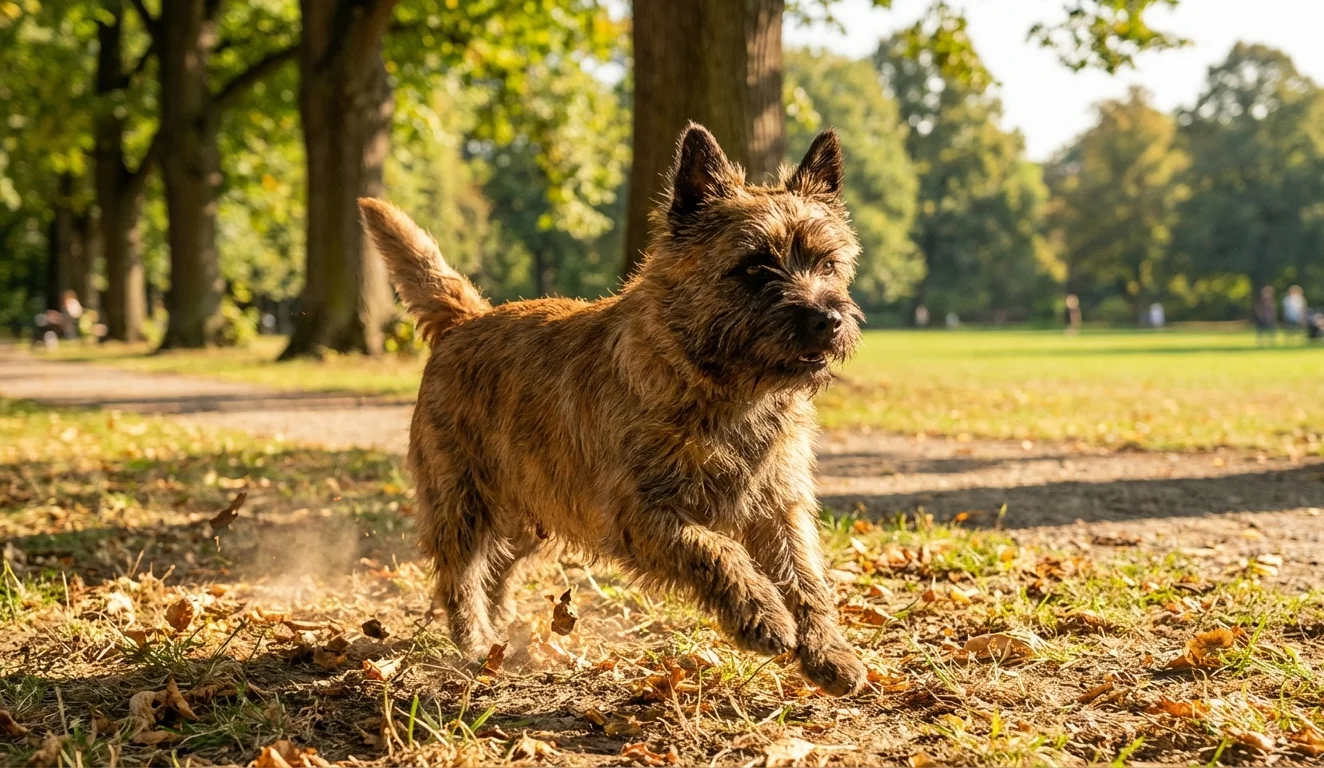
The Cairn Terrier weighs 13-14 pounds, stands 9.5-10 inches at the shoulder, and lives 13-15 years. That’s a small, long-lived, ruggedly built little dog that looks like it was designed for exactly one purpose: to dive headfirst into a pile of rocks and drag out whatever’s hiding in there. Which, historically, is exactly what it was designed for. The AKC recognized the Cairn in 1913, but the breed existed for centuries before that as a working terrier in the Scottish Highlands. And most people, whether they know it or not, have already seen one, Toto in The Wizard of Oz (1939) was a Cairn Terrier named Terry.
In Short: 13–14 lbs, 13–15 years. Moderate energy, needs 30-45 minutes of daily activity. Low shedder (requires regular grooming). Watch for Portosystemic Liver Shunt. Best for families and individuals who want a spirited, adaptable small dog with real terrier grit.
The Cairn Terrier is what happens when you take the terrier personality, brave, tenacious, independent, slightly delusional about its own size, and package it in a body that weighs less than most house cats. They’re small enough for apartment life but tough enough for farm work. They’re old enough as a breed to have genuine working heritage but adaptable enough to thrive as modern family companions. And they have that terrier spark, that slightly mad look in the eye that says, “I could take that dog twice my size. I probably won’t. But I could.”
Cairn Terrier at a Glance
| Trait | Details |
|---|---|
| Breed Group | Terrier (AKC, 1913) |
| Height | Males: 10 in / Females: 9.5 in |
| Weight | Males: 14 lbs / Females: 13 lbs |
| Life Expectancy | 13-15 years |
| Coat | Hard, weather-resistant double coat |
| Colors | Cream, Wheaten, Red, Sandy, Gray, Brindle, Black |
| Temperament | Alert, Cheerful, Busy |
| Shedding | Low |
| Energy Level | Moderate |
| Good With Kids | Yes |
| First-Time Owner Friendly | Yes (with terrier temperament awareness) |
History
The Cairn Terrier is one of the oldest terrier breeds, originating in the Scottish Highlands and the Isle of Skye at least 500 years ago. The name comes from “cairns”, the piles of stones that dot the Scottish countryside, used as boundary markers and memorials. Vermin (rats, foxes, weasels, and other small predators) used these stone piles as dens, and Highland farmers needed a dog small and brave enough to wriggle into the gaps between rocks and flush them out.
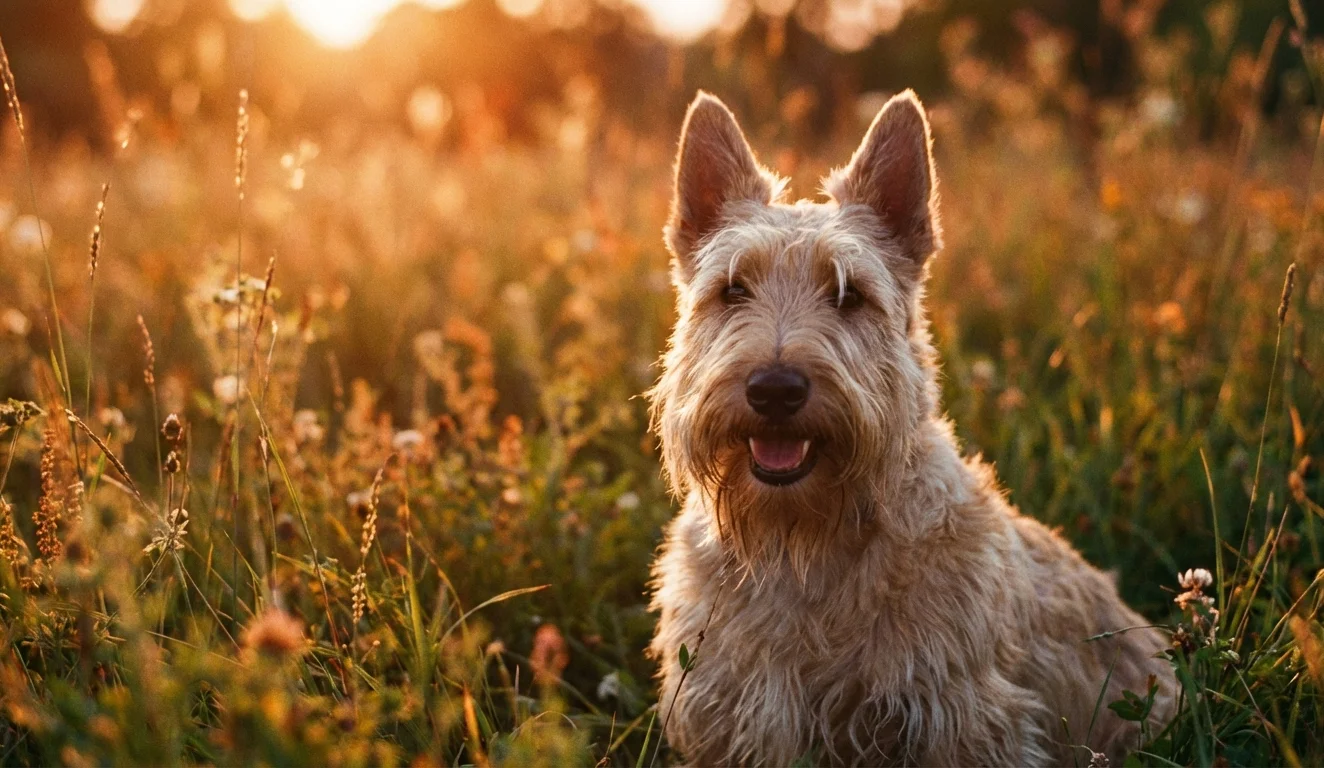
For centuries, these small Highland terriers weren’t separated into distinct breeds. Cairns, West Highland White Terriers, Scottish Terriers, and Skye Terriers all came from the same general pool of short-legged, rough-coated working dogs. Breed distinctions began to formalize in the late 1800s, and the Cairn Terrier was recognized as a separate breed in 1912 by the Kennel Club (UK) and in 1913 by the AKC.
The breed’s biggest pop culture moment came in 1939, when a Cairn Terrier named Terry played Toto alongside Judy Garland in The Wizard of Oz. Terry earned $125 per week, more than many of the human extras. She went on to appear in 16 films during her career, and her trainer Carl Spitz eventually renamed her “Toto” because the character became so iconic. The movie cemented the Cairn Terrier’s image in American culture as a plucky, loyal, slightly scruffy little companion, which, to be fair, is exactly what they are.
Size and Appearance
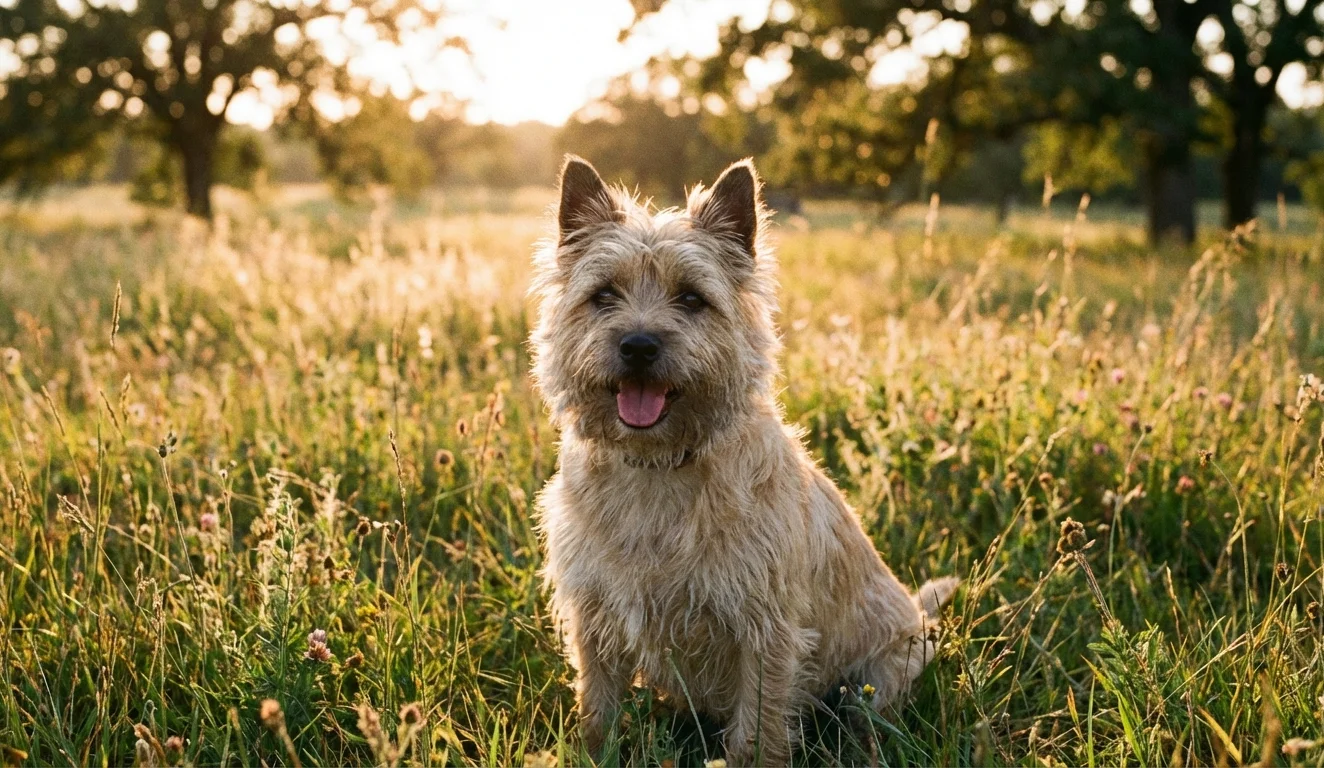
Cairns are small but don’t look fragile. Males stand about 10 inches and weigh 14 pounds. Females are slightly smaller at 9.5 inches and 13 pounds. They’re compact, short-legged, and sturdy, with a body that’s longer than it is tall. The build is working-dog functional, low center of gravity, strong legs, flexible enough to squeeze into tight spaces.
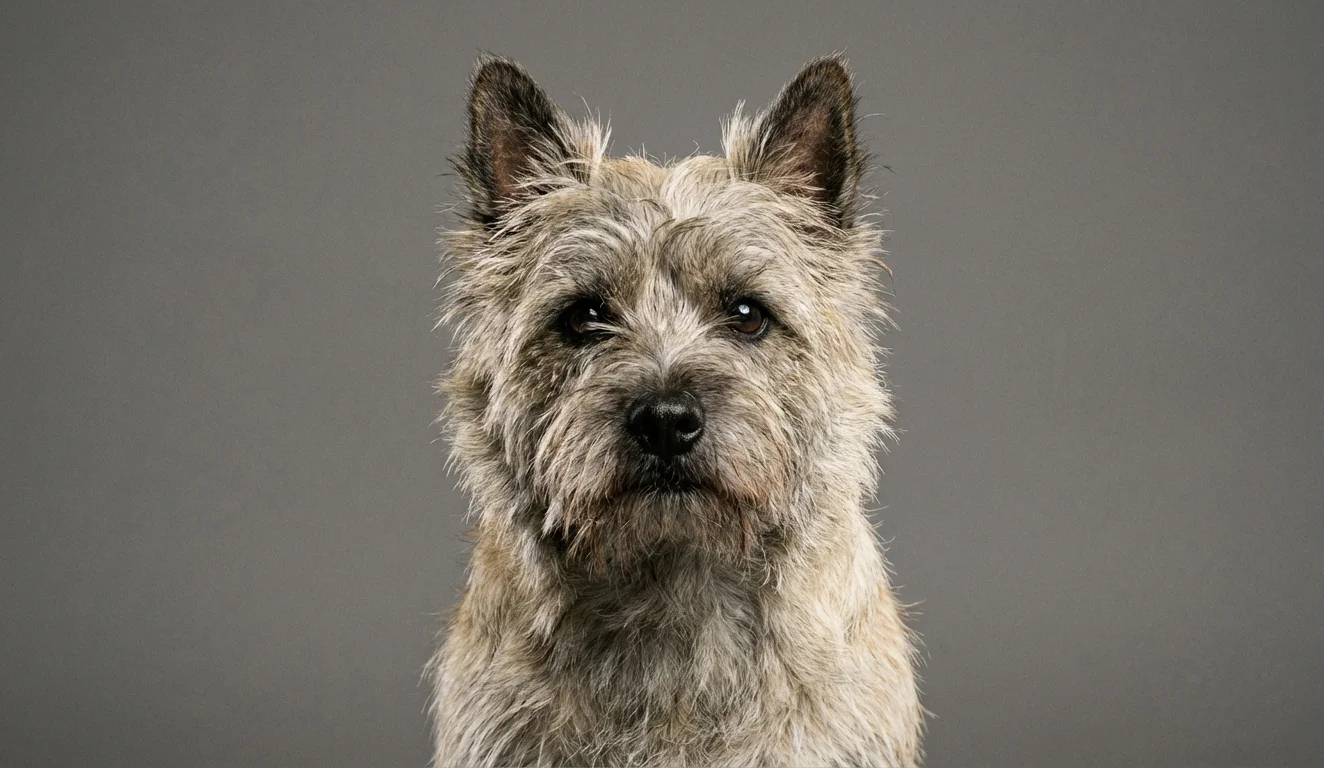
The head is broad and rounded, with a distinct stop, a short strong muzzle, and medium-sized erect ears. The eyes are dark, wide-set, and have an expression that most Cairn owners describe as “alert and slightly mischievous”, the look of a dog that’s currently planning something you haven’t anticipated.
The overall appearance is shaggy and natural, without the heavy grooming or sculpted lines of some terrier breeds. A well-kept Cairn looks like a small, rough-coated dog that just came in from a productive day of investigating things outdoors. They’re meant to look functional, not fancy.
Coat and Color
The coat is a weather-resistant double coat: a harsh, wiry outer coat over a soft, dense undercoat. It’s designed to protect against Scottish Highland weather, rain, wind, cold, and it does the job remarkably well. The coat sheds very little, which makes Cairns a reasonable option for people with mild dog allergies.
Cairns come in more colors than most terrier breeds: cream, wheaten, red, sandy, gray, brindle, and nearly black. White is not an accepted color (that’s a Westie). One of the Cairn’s interesting traits is that coat color can change throughout the dog’s life, a puppy born wheaten may darken to brindle or gray as an adult. The breed standard specifically states that brindle dogs are “very desirable.”
Cairn Terrier Temperament
The Cairn Terrier temperament is the breed’s greatest asset and its biggest challenge. They’re terriers through and through, packed with confidence, curiosity, and an unflinching willingness to tackle anything, regardless of whether “anything” outweighs them by 100 pounds.
What living with a Cairn Terrier is actually like:
- Busy and curious. Cairns always have something to investigate. A new sound, a new smell, a new corner of the yard they haven’t dug up yet, they move through life with an engaged, purposeful energy that’s infectious. They’re not hyperactive, but they’re rarely idle.
- Brave beyond reason. This is a dog that was bred to face animals in dark underground dens. That bravery carries over into modern life in ways that are sometimes admirable and sometimes terrifying. A Cairn will bark at a much larger dog. A Cairn will investigate a strange noise without hesitation. A Cairn will face down a vacuum cleaner like it’s a mortal enemy. The bravery is genuine and not size-dependent.
- Cheerful and affectionate. Unlike some terrier breeds that are reserved or aloof, Cairns are generally happy dogs that enjoy being around their people. They’ll sit on your lap, follow you around the house, and greet you with genuine enthusiasm. They bond with the whole family rather than fixating on one person.
- Diggers. If you value a pristine yard, reconsider the Cairn Terrier. Digging is hardwired into this breed, they were literally bred to dig into cairns to find vermin. Provide a designated digging area or accept that your garden will have craters. Trying to train a Cairn not to dig is like trying to train a retriever not to fetch, you’re fighting centuries of selective breeding.
- Independent streak. Cairns are more agreeable than some terrier breeds (Scotties, for example), but they still have opinions. They’ll follow commands they agree with and quietly ignore ones they don’t. This is manageable, the Cairn’s independence is more “I’ll do it in a minute” than “absolutely not.”
Exercise Needs
Cairn Terriers need 30-45 minutes of exercise per day. They’re moderate-energy dogs that are active enough to enjoy a good walk and a play session but don’t require the kind of intensive exercise that high-energy breeds demand.
Good exercise for Cairns:
- Daily walks. Two walks of 15-20 minutes each cover the baseline. Cairns love to sniff and explore, so walks are as much mental stimulation as physical exercise. Let them investigate, rushing a Cairn through a walk defeats the purpose.
- Yard play. A fenced yard is ideal for a Cairn. They’ll patrol, dig, chase squirrels (or try to), and generally keep themselves busy. Make sure the fence goes into the ground, Cairns will dig under a fence if motivated.
- Interactive games. Hide-and-seek with treats, puzzle feeders, and fetch (some Cairns are enthusiastic retrievers, some couldn’t care less) provide mental engagement.
- Earthdog trials. Like all terrier breeds with a “go to ground” heritage, Cairns can participate in earthdog events, and they’re usually pretty good at it. It channels their natural instincts in a structured way.
What happens when a Cairn doesn’t get enough exercise: excessive barking, digging (even more than usual), and general busybody behavior, getting into things, counter-surfing, demanding attention through increasingly creative means. They won’t destroy your house the way a bored Lab will, but they’ll annoy you into paying attention to them.
Grooming
Cairns have a natural, “undone” look compared to more sculpted terrier breeds, but that doesn’t mean they’re maintenance-free.
Grooming routine:
- Brush 2-3 times per week with a slicker brush or pin brush to prevent mats and remove dead coat. The wiry outer coat can tangle, especially behind the ears and on the legs.
- Professional grooming every 8-12 weeks. Hand-stripping preserves the coat’s harsh, weather-resistant texture ($60-$100 per session). Clipping is an alternative ($40-$70) but softens the coat over time and may cause color changes. Many pet Cairn owners use a combination, hand-stripping the body and clipping areas that mat easily.
- Bath every 6-8 weeks or when the dog is dirty, which will be often if they have yard access. The wiry coat repels water and dirt to some degree, but a Cairn that’s been digging will need cleaning.
- Nail trims every 2-3 weeks
- Facial hair maintenance. The eyebrows and beard don’t need daily attention like a Scottie’s, but they should be combed regularly and trimmed occasionally to keep them neat.
Cairn Terrier Health Issues
Cairn Terriers are a generally healthy breed with a good lifespan. 13-15 years is excellent, and many Cairns live to 15-16 with good care. Still, there are some breed-specific conditions to watch for.
Portosystemic Liver Shunt (PSS)
This is a congenital condition where blood bypasses the liver through an abnormal vessel, meaning the liver can’t properly filter toxins. It’s more common in Cairn Terriers than in most breeds. Symptoms include stunted growth, disorientation, seizures, and vomiting, often appearing in the first year of life. Diagnosis involves blood work and imaging ($500-$1,500). Surgical correction costs $2,000-$6,000, and success rates are generally good for single extrahepatic shunts. Some cases are managed medically with a low-protein diet and medications ($500-$1,000 per year).
Globoid Cell Leukodystrophy (Krabbe Disease)
This is a fatal inherited neurological disease specific to a few terrier breeds, including Cairns. It’s caused by a deficiency of a specific enzyme, leading to progressive neurological deterioration. Symptoms appear between 2-6 months of age. A DNA test is available, and responsible breeders screen for it. There is no treatment. The test costs $50-$100 and should be performed on all breeding stock.
Cataracts
Cairns have a moderate predisposition to cataracts, which can appear at any age. Juvenile cataracts (appearing in young dogs) are a particular concern. Symptoms include cloudy or blue-tinted eyes and reduced vision. Surgical removal costs $2,000-$4,000 per eye. Annual eye exams (CAER evaluations, $40-$60) can detect cataracts early.
Patellar Luxation
The kneecap slipping out of position is common in small breeds, and Cairns are no exception. Mild cases cause intermittent skipping or holding up the affected leg. Severe cases require surgical correction ($1,500-$3,000 per knee). The OFA evaluates patellas, and breeders should screen for this.
Training
Cairn Terriers are more trainable than most terrier breeds, which is a relative statement, they’re easier than a Scottie or a Jack Russell, but they’re still terriers. Expect cooperation rather than obedience, and you’ll be in the right mindset.
What works with Cairn training:
- Positive, upbeat methods. Cairns respond well to treats, toys, and enthusiastic praise. They’re happy dogs, and training that matches their energy level gets the best results.
- Consistency without harshness. Cairns need clear rules applied consistently, but they don’t respond well to corrections. A firm “no” works. Raising your voice or physical handling doesn’t.
- Channel the digging. Instead of punishing digging (which won’t stop it), designate a digging area and reward the dog for using it. This is one of the most practical training adaptations for the breed.
- Recall training from puppyhood. Cairns have enough prey drive that an off-leash Cairn will chase a squirrel and forget you exist. Reliable recall takes persistent training with high-value rewards. Even then, a fenced area is safer than trusting off-leash recall alone.
- Socialization. Cairns are generally friendlier than some terrier breeds, but they still benefit from early exposure to other dogs, people, and environments. A well-socialized Cairn is a confident, adaptable dog that handles new situations with curiosity rather than anxiety.
The good news about training Cairns: they’re food-motivated, they enjoy interaction with their people, and they don’t hold the grudges that some terrier breeds do. You can build a really nice training relationship with a Cairn if you approach it as a collaboration rather than a dictatorship.
Cost
Purchase Price
A Cairn Terrier puppy from a reputable breeder costs $1,000-$2,000. Show-quality puppies from health-tested parents may cost $2,500+. The Cairn Terrier Club of America maintains a breeder referral list, and breed-specific rescues typically charge $250-$500 for adoption.
Monthly Costs
| Expense | Monthly Estimate |
|---|---|
| Food (high-quality, small breed formula) | $20-$40 |
| Preventive vet care (averaged) | $10-$20 |
| Pet insurance | $20-$35 |
| Professional grooming (averaged monthly) | $30-$50 |
| Treats and chews | $10-$15 |
| Miscellaneous (toys, supplies) | $10-$15 |
| Total | $100-$175 |
First-Year Costs
First-year expenses beyond the purchase price typically run $1,800-$3,000. This includes vaccinations, spay/neuter, a crate, grooming appointments, training classes, initial vet workup, supplies, and the inevitable replacement of whatever the puppy destroys during the teething phase. Cairns aren’t the most expensive breed to maintain, but grooming costs ($350-$600 per year) push them above average for dogs their size.
Is a Cairn Terrier Right for You?
A Cairn Terrier could be a great fit if you:
- Want a small, sturdy, long-lived dog with real personality
- Have an active lifestyle but don’t need a marathon-running partner
- Enjoy a dog that’s cheerful, curious, and always up for an adventure
- Have older children who know how to interact with dogs respectfully
- Can commit to regular grooming (professional and at-home)
- Don’t mind some digging in the yard (or can designate a digging zone)
- Want a watchdog in a small package, Cairns are alert and vocal about anything unusual
- Live in a house or apartment (Cairns adapt well to both, with adequate exercise)
A Cairn Terrier is probably not right if you:
- Want a perfectly obedient dog that follows commands without hesitation
- Have a yard you need to keep pristine (digging is non-negotiable)
- Want a dog that’s reliable off-leash near prey animals
- Have very small children who might be rough with a small dog
- Don’t want to deal with regular grooming maintenance
- Need a dog that’s completely quiet (Cairns bark at things that interest or concern them)
- Want a dog with zero prey drive (squirrels, rabbits, and cats may all be targets)
The Cairn Terrier is proof that great things come in small, slightly scruffy packages. They don’t have the elegance of a show dog or the obedience of a working shepherd, but they have something better: a personality that fills a room, a heart that’s bigger than their body, and the kind of plucky, can-do attitude that made Toto brave enough to follow Dorothy anywhere, even Oz. They’ll dig up your yard, bark at the mailman, and ignore your recall when there’s a squirrel to investigate. And you’ll love them for it.
Related Breeds
If you’re considering this breed, you might also want to look at:
Frequently Asked Questions
Are Cairn Terriers good with children?
Cairn Terriers are generally good with children, especially kids old enough to treat them gently. They’re sturdy enough to handle normal kid play and cheerful enough to enjoy the chaos. The concern is with very young children, toddlers who grab, pull, or fall on the dog can provoke a snap. Cairns are less tolerant of rough handling than some breeds, though they’re more patient than Scotties or other reserved terriers. Supervision and teaching kids proper dog interaction are standard precautions.
How long do Cairn Terriers live?
The typical lifespan is 13-15 years, which is excellent for any breed and above average even for small dogs. Many well-cared-for Cairns reach 15-16 years. Longevity depends on genetics (buying from health-tested parents helps), regular veterinary care, maintaining a healthy weight, and dental health. The breed’s working heritage and genetic diversity contribute to overall hardiness.
Do Cairn Terriers bark a lot?
Yes, more than average. Cairns are alert dogs that bark at unfamiliar sounds, visitors, passing dogs, squirrels, and anything else they deem worthy of commentary. The barking is informational rather than neurotic, they’re telling you something is happening. Training can moderate the volume (teaching a “quiet” command helps), but eliminating barking entirely isn’t realistic. If you live in an apartment with thin walls, the barking is worth considering.
Can Cairn Terriers be left alone?
For moderate periods, yes. Cairns are independent enough to handle 4-6 hours alone without developing separation anxiety, as long as they’ve been exercised and have something to occupy them. Extended daily absences of 8+ hours are harder on any dog, and a bored Cairn left alone may dig, bark, or find creative ways to express displeasure. A midday dog walker or puzzle toys can bridge the gap.
What’s the difference between a Cairn Terrier and a West Highland White Terrier?
They’re closely related, both come from the same Scottish Highland terrier stock. The main differences are color (Westies are always white. Cairns are never white), coat texture (Westies have a slightly different grooming style), and temperament nuances (Cairns are generally considered slightly more active and independent, while Westies tend to be a bit more people-focused). Size is similar, though Westies are typically 1-2 pounds heavier. Both are excellent small terriers with similar exercise and grooming needs.