Border Terrier Breed Guide: The Scruffy Little Dog That Outworks Everyone (2026)
Border Terriers look like they were assembled from spare parts, wiry coat, otter-shaped head, and the heart of a much larger dog. Here's what it's really like living with one.
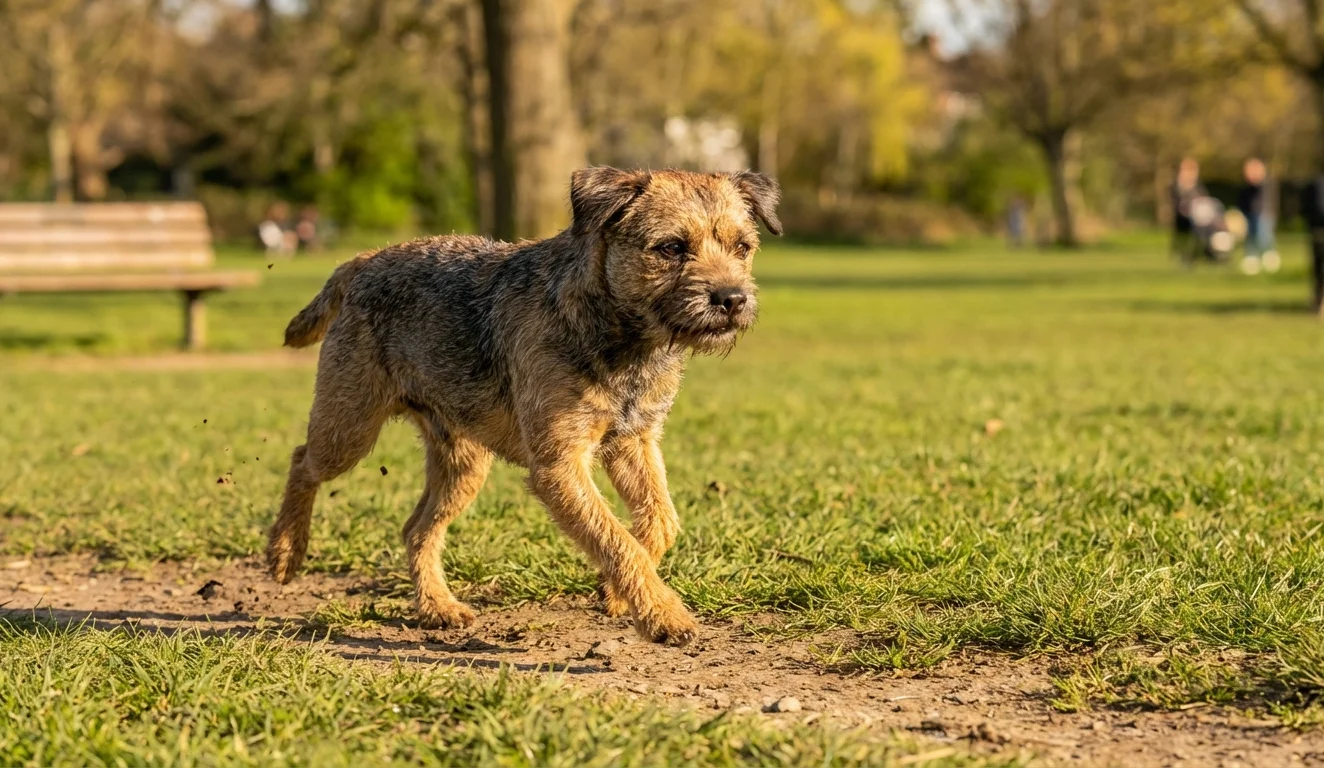
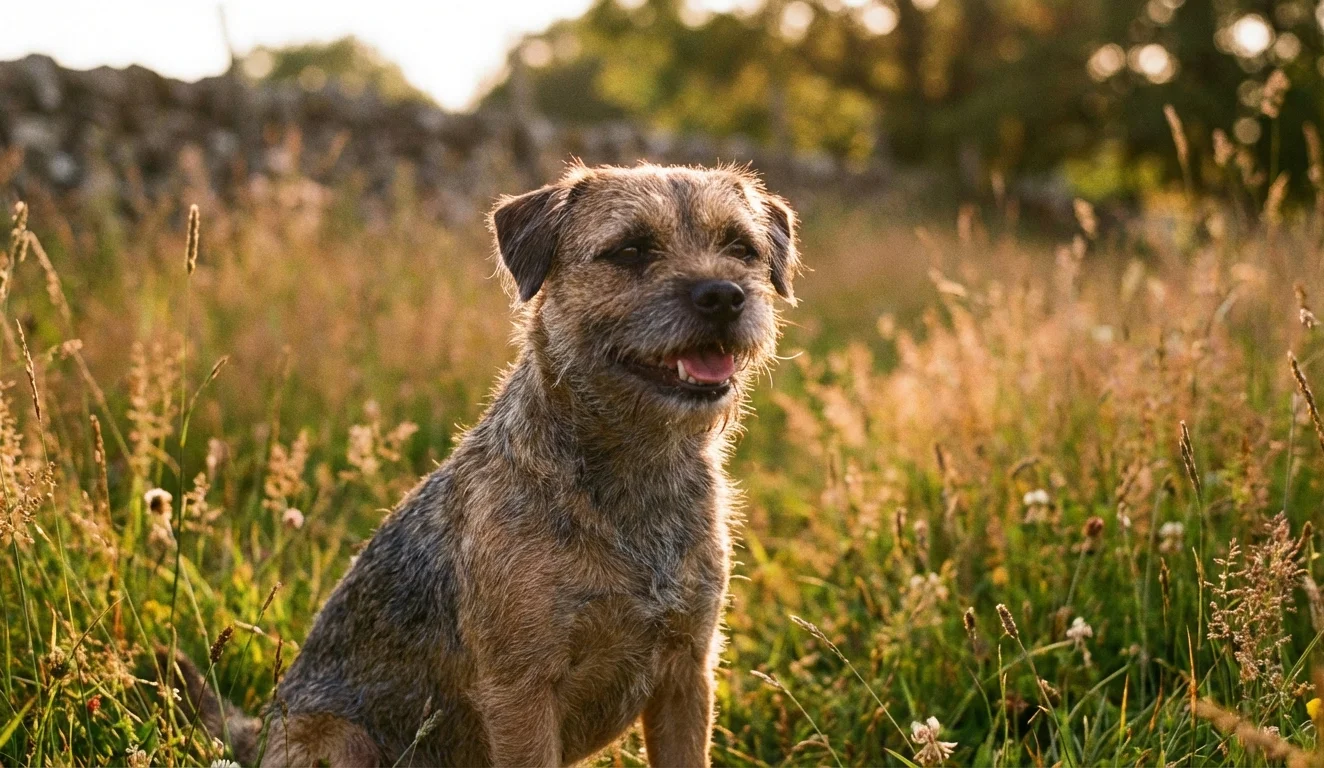
The Border Terrier weighs 11-15.5 pounds and stands 12-15 inches tall, one of the smaller terriers, but definitely not one of the quieter ones. They live 12-15 years, which gives you a decade-plus of a scrappy, affectionate, surprisingly athletic little dog that can keep up with just about any outdoor activity you throw at it. Originally bred to bolt foxes from their dens along the border of England and Scotland, the Border Terrier has an otter-shaped head, a wiry double coat, and enough drive to make a Jack Russell raise an eyebrow.
In Short: 11–15.5 lbs, 12–15 years. High energy. Low shedding (with hand-stripping). Watch for Heart Defects. Best for active families and anyone who wants a big-dog personality in a carry-on-sized body.
Here’s what we like about Border Terriers: they don’t act like small dogs. There’s no trembling on laps or yapping at shadows. A Border Terrier will hike with you for hours, sleep hard at night, and then do it all again tomorrow. They’re the kind of dog that earns the “terrier” name without the full-blown terrier chaos that makes some people swear off the group entirely. But they’re still terriers. If you have squirrels in your yard, your Border Terrier has already noticed.
Border Terrier at a Glance
| Trait | Details |
|---|---|
| Breed Group | Terrier (AKC) |
| Height | Males: 13-15.5 in / Females: 12-14 in |
| Weight | Males: 13-15.5 lbs / Females: 11.5-14 lbs |
| Life Expectancy | 12-15 years |
| Coat | Wiry, dense double coat |
| Colors | Red, grizzle and tan, blue and tan, wheaten |
| Temperament | Affectionate, Happy, Plucky, Obedient |
| Shedding | Low (with hand-stripping) |
| Energy Level | High |
| Good With Kids | Yes |
| Good With Other Dogs | Yes (with socialization) |
| Good With Cats | Use caution (high prey drive) |
| AKC Recognition | 1930 |
History
The Border Terrier gets its name from the Anglo-Scottish border region where it was developed, probably during the 18th century. Farmers and shepherds there had a fox problem, foxes were killing lambs, and they needed a dog small enough to follow a fox underground but tough enough to keep up with horses on a long hunt. The Border Terrier was the answer. It ran alongside foxhounds during the chase, then went to ground when the fox bolted into its den.
What set the Border Terrier apart from other terrier breeds was its temperament. While many terriers were bred to be aggressive toward other dogs (for pit fighting or ratting), the Border needed to work cooperatively with hounds and other terriers. The result is a terrier that’s noticeably more agreeable with other dogs than, say, a Bull Terrier or a Cairn.
The AKC recognized the Border Terrier in 1930, though the breed had been registered with the Kennel Club in England since 1920. They’ve never been a wildly popular breed in the U.S., they typically hover around #80-90 on the AKC’s popularity rankings, and many Border Terrier enthusiasts prefer it that way. Popularity tends to attract irresponsible breeders, and the Border has largely been spared that fate.
Size and Appearance
Border Terriers are compact, no-frills dogs. Males weigh 13-15.5 pounds and stand 13-15.5 inches. Females are slightly smaller at 11.5-14 pounds and 12-14 inches. They’re narrow enough to squeeze through tight spaces (a job requirement in their fox-bolting days) but sturdy enough that they don’t feel fragile.
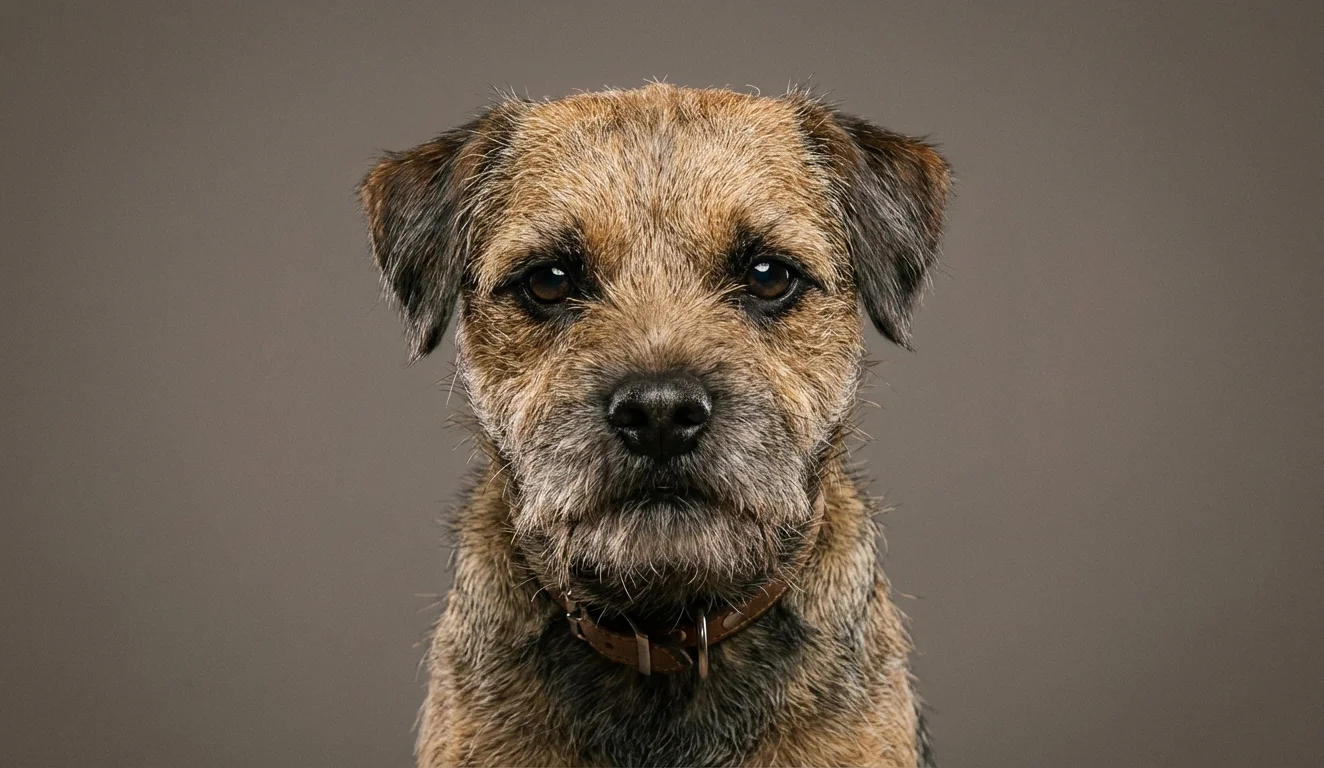
The head is the breed’s most distinctive feature. The AKC standard describes it as “otter-shaped”, broad skull, short muzzle, dark eyes with a keen expression. It’s a workmanlike head on a workmanlike dog. Nothing exaggerated, nothing overdone.
The coat is a wiry, dense outer layer over a short, thick undercoat. It comes in red, grizzle and tan, blue and tan, or wheaten. The wire coat is naturally weather-resistant and sheds minimally if you hand-strip it (more on that in the grooming section). If you clip instead of strip, the coat loses its texture and color vibrancy over time, and shedding increases. It’s one of those rare breeds where the traditional grooming method actually makes your life easier.
Border Terrier Temperament
Border Terriers are often called the “good citizen” of the terrier group, and there’s truth to that. They’re less wired than Jack Russells, less feisty than Cairns, and more trainable than most of their terrier cousins. But they’re still terriers at their core.
What living with a Border Terrier looks like:
- Affectionate without being clingy. Borders want to be near you but they’re not the type to follow you from room to room whimpering. They’ll check on you, confirm you exist, and then go back to whatever they were investigating.
- Excellent with kids. Their sturdy build and patient temperament make them one of the better small breeds for families. They can handle rough play without getting snippy, though obviously supervision is still smart with young children.
- Prey drive is real. Squirrels, rabbits, cats (sometimes), a Border Terrier’s instinct to chase small, fast-moving things is not something you’ll train out of them. You can manage it, but that wiring runs deep.
- They dig. Not all of them, but enough that it’s worth mentioning. These dogs were bred to go underground. Your flower beds might pay the price.
- Surprisingly adaptable. Borders do well in apartments if exercised properly. They do well in houses with yards. They do well in the city and in the country. They’re not drama queens about their living situation.
Our take: the Border Terrier is the terrier for people who think they don’t like terriers. If you’ve been burned by a terrier’s intensity before, the Border is worth a second look. They’ve got the fire, but it’s a controlled burn.
Exercise Needs
Border Terriers need 45-60 minutes of exercise daily. That can be walks, hikes, fetch sessions, or, their personal favorite, anything that involves chasing something.
This is not a breed you can skip walks with. An under-exercised Border Terrier will find ways to burn energy on its own, and you won’t like the methods. Digging, barking, chewing, and general destruction are all on the table for a bored Border.
What works well for Border Terrier exercise:
- Brisk walks (they prefer a faster pace over a leisurely stroll)
- Hiking, they’re surprisingly good trail dogs for their size, handling rough terrain without complaining
- Earthdog trials, which simulate the underground work they were bred for. If your Border lights up when it sees a hole in the ground, this sport will make its entire year
- Agility. Borders are athletic and smart enough to excel, though they’ll occasionally decide mid-course that something off to the side is more interesting
- Off-leash time in securely fenced areas. Emphasis on “securely”, a Border Terrier that spots a squirrel will test every weakness in your fence
Don’t make the mistake of thinking a small dog means small exercise needs. Border Terriers were bred to run alongside horses all day. They’ve got stamina.
Grooming
Border Terrier grooming is straightforward with one catch: hand-stripping.
The ideal way to maintain a Border’s coat is hand-stripping, pulling out the dead outer coat by hand (or with a stripping knife) twice a year. It sounds painful but it’s not. The dead hair comes out easily and the dog barely notices. Hand-stripping keeps the coat’s wiry, weather-resistant texture intact and minimizes shedding.
The alternative is clipping, which is easier and faster but changes the coat over time. A clipped Border coat becomes softer, loses color intensity, and sheds more. Most pet owners clip and it’s fine, the dog won’t care. But if you want that classic Border look, hand-stripping is the way.
Regular maintenance:
- Brush weekly to remove loose hair and prevent matting in the undercoat
- Clean ears weekly, Borders are moderately prone to ear infections
- Trim nails every 2-3 weeks
- Dental care is important with this breed. Small dogs are more prone to dental disease, and Borders are no exception. Brush teeth several times a week or use dental chews
The good news: Border Terriers don’t have a strong doggy odor. They’re one of the cleaner-smelling terrier breeds. Baths every 4-6 weeks are plenty unless they’ve rolled in something (and they will, eventually).
Border Terrier Health Issues
Border Terriers are generally healthy dogs with a long lifespan, but there are a few breed-specific conditions to know about.
Canine Epileptoid Cramping Syndrome (CECS)
This is sometimes called “Spike’s Disease” and it’s specific to Border Terriers. CECS causes episodes of cramping, trembling, and difficulty walking that can last from seconds to 30 minutes. It’s not true epilepsy, it’s thought to be related to a gluten sensitivity or metabolic issue. Episodes look scary but the dog remains conscious. Some owners manage it successfully with a gluten-free diet. Vet visits for diagnosis and management run $200-$800. The condition doesn’t appear to reduce lifespan.
Heart Defects
Border Terriers have a higher-than-average incidence of certain heart conditions, including pulmonic stenosis (a narrowing of the heart’s pulmonic valve). The OFA recommends cardiac screening for breeding Border Terriers. Mild cases may not need treatment. Severe cases may require balloon valvuloplasty or surgery at $2,000-$6,000. Ask your breeder for cardiac clearances.
Hip Dysplasia
Less common than in large breeds but it does occur in Borders. The OFA database shows Border Terriers at roughly 12% dysplastic. Treatment ranges from weight management and anti-inflammatories ($200-$500/year) to surgical intervention ($1,500-$5,000) depending on severity.
Progressive Retinal Atrophy (PRA)
A genetic eye condition that causes gradual vision loss leading to blindness. There’s a DNA test available, and responsible breeders screen for it. There’s no treatment for PRA, but blind dogs adapt remarkably well, especially if they lose vision gradually. Eye exams cost $200-$400 annually.
Luxating Patella
Common in small breeds, including Border Terriers. The kneecap slides out of its normal position, causing intermittent lameness. Grade 1-2 cases often need no treatment beyond monitoring. Grade 3-4 may require surgery at $1,500-$3,500 per knee.
Training
Good news: Border Terriers are among the most trainable terrier breeds. They’re food-motivated, eager to interact with you, and smart enough to pick up commands quickly.
The catch is that they’re still terriers, so “trainable” comes with some fine print. A Border Terrier will learn a command and execute it reliably, until something more interesting appears. A squirrel, a strange noise, an interesting smell, distractions can override even solid training. Proofing commands in high-distraction environments takes extra work with this breed.
Training strategies that work:
- Positive reinforcement with food rewards. Borders are strongly food-motivated and respond poorly to harsh corrections. If you go heavy-handed, they’ll shut down or get stubborn.
- Keep sessions short, 5-10 minutes, and end on a win. Border Terriers have good attention spans for a terrier, but they’ll check out if training gets repetitive.
- Start socialization early and make it ongoing. Expose puppies to other dogs, cats, people, and environments between 8-16 weeks. This is particularly important for managing prey drive around cats.
- Recall is the hardest command to proof with a Border Terrier. Practice it constantly, reward it heavily, and still don’t trust it near roads or in unfenced areas. A long line gives your dog some freedom while keeping you in control.
House training is typically straightforward with Borders. They’re clean dogs by nature and most are reliable by 4-5 months with consistent crate training.
Border Terrier Cost
Purchase Price
A Border Terrier puppy from a reputable breeder costs $1,500-$2,500. The breed isn’t overproduced, so expect to be on a waiting list, sometimes 6 months to a year. Show-quality puppies from champion bloodlines may run higher. Rescue Border Terriers are available through the Border Terrier Club of America rescue network, typically for $250-$500.
Monthly Costs
| Expense | Monthly Estimate |
|---|---|
| Food (high-quality kibble) | $25-$40 |
| Preventive vet care (averaged) | $15-$25 |
| Pet insurance | $25-$40 |
| Grooming (professional hand-stripping averaged) | $15-$30 |
| Treats and chews | $10-$15 |
| Miscellaneous (toys, supplies) | $10-$15 |
| Total | $100-$165 |
First-Year Costs
Budget $3,500-$5,500 for the first year with a Border Terrier, including purchase price. If you learn to hand-strip the coat yourself (YouTube tutorials abound), you’ll save significantly on grooming over the dog’s lifetime.
Is a Border Terrier Right for You?
A Border Terrier is a great fit if you:
- Want a small dog that doesn’t act like a small dog
- Have an active lifestyle and can commit to daily exercise
- Want a terrier with a more manageable temperament than some of the more intense breeds
- Are looking for a good family dog that’s patient with kids
- Can deal with some prey drive around small animals
- Prefer a low-shedding dog (with proper grooming)
A Border Terrier is probably NOT right if you:
- Have cats, rabbits, or other small pets and aren’t prepared to manage interactions carefully
- Want a dog you can trust off-leash without extensive training
- Don’t have time for daily exercise, a walk around the block won’t cut it
- Want a perfectly manicured yard (digging is a possibility)
- Prefer a dog that’s purely a lap dog with no independent streak
Border Terriers are the quiet achievers of the dog world. They don’t have the flash of a Cavalier or the intimidation factor of a German Shepherd. But they’re tough, smart, affectionate, and built to last. And at 13 pounds, they fit just about anywhere your life takes you.
Related Breeds
If you’re considering this breed, you might also want to look at:
Frequently Asked Questions
Are Border Terriers good apartment dogs?
Yes, they’re one of the better small breeds for apartment living, with a major caveat. They need their exercise. A Border Terrier in a small apartment who gets 45-60 minutes of daily activity will be calm and content indoors. A Border Terrier who doesn’t get walked enough will redecorate your apartment by chewing it. They’re also not excessive barkers compared to some terrier breeds, though they will bark at unusual sounds.
Do Border Terriers get along with cats?
It depends on the individual dog and the timing. A Border Terrier raised with a cat from puppyhood can learn to coexist peacefully. But the prey drive is hardwired, a cat that runs will trigger the chase instinct. Introductions should be slow and supervised, and some Borders simply can’t be trusted around cats no matter how much training you do. Be honest with yourself about whether you can manage that risk.
How much do Border Terriers bark?
Moderate. They’re less vocal than many terrier breeds, but “less vocal than a Jack Russell” is a low bar. Borders will bark at strangers, unusual sounds, and anything they find interesting in the yard. Training can minimize nuisance barking, but you won’t get a silent dog. If you need a truly quiet breed, look elsewhere.
What’s the difference between hand-stripping and clipping?
Hand-stripping removes dead hair from the root, allowing new wiry coat to grow in with its natural color and texture. Clipping cuts the hair short but leaves the dead root, which changes the coat’s texture to softer and flatter over time. Hand-stripping is done 2-3 times per year. Clipping is done every 6-8 weeks. Both are acceptable for pet dogs. Show dogs must be hand-stripped. Many groomers charge $60-$120 for a full hand-strip.
Are Border Terriers hypoallergenic?
No dog is truly hypoallergenic, but Border Terriers are better than most for allergy sufferers. Their wiry coat produces less dander when hand-stripped, and they shed minimally. If you have dog allergies, spend time around a Border Terrier before committing to see how you react. They’re not a guarantee, but they’re a better bet than a Lab.