Staffordshire Bull Terrier Breed Guide: The Nanny Dog That Bench Presses (2026)
Staffordshire Bull Terriers are 35 pounds of solid muscle, unstoppable tail wags, and a love for children that earned them the nickname 'nanny dog' in England.
The Staffordshire Bull Terrier stands 14-16 inches at the shoulder and weighs 24-38 pounds. They live 12-14 years. If you took a bodybuilder, gave it the personality of a Golden Retriever, and shrunk the whole package down to knee height, you’d get something close to a Staffie. These dogs are absurdly muscular, absurdly friendly (with people), and absurdly devoted to their families. In their native England, they’re the 5th most popular breed and are nicknamed the “nanny dog” for their legendary patience with children. In the US, they’re far less known, partly because people confuse them with American Pit Bull Terriers, and partly because the Staffie’s compact, muscular build triggers breed-specific legislation fears even though the two breeds are distinct.
In Short: 24–38 lbs, 12–14 years. High energy. Low shedding, low grooming. Watch for L-2-HGA and Hip Dysplasia. Best for active families who want a loyal, people-loving, kid-friendly dog in a compact, muscular package and are willing to manage dog-selectivity.
Let’s be direct about the elephant in the room: the Staffordshire Bull Terrier has a fighting heritage. The breed was developed from crosses between Bulldogs and terriers in 19th-century England for the purpose of bull-baiting and dog fighting. Those days are 200 years gone, and the modern Staffie has been bred for generations as a family companion. The breed standard specifically calls for “total reliability” with people and affection for children. But the history means two things. First, some Staffies are dog-selective (they may not get along with other dogs, particularly same-sex dogs). Second, the breed faces discrimination, breed-specific legislation in some areas, insurance restrictions in others, and landlord bans in many. If you’re considering a Staffie, research your local laws and insurance requirements first.
Staffordshire Bull Terrier at a Glance
| Trait | Details |
|---|---|
| Breed Group | Terrier (AKC) |
| Height | 14-16 in |
| Weight | Males: 28-38 lbs / Females: 24-34 lbs |
| Life Expectancy | 12-14 years |
| Coat | Short, smooth, close |
| Colors | Red, Fawn, White, Black, Blue, Brindle (with or without white markings) |
| Temperament | Brave, Affectionate, Loyal |
| Shedding | Low |
| Energy Level | High |
| Good With Kids | Excellent |
| AKC Recognition | 1974 |
History
The Staffordshire Bull Terrier emerged in the Staffordshire region of England in the early 19th century. The breed’s ancestors were crosses between old-style Bulldogs (smaller and more athletic than today’s Bulldogs) and various terrier breeds. The original purpose was grim: these dogs were bred for blood sports, bull-baiting and, after that was banned in 1835, dog fighting in pits.
After dog fighting was criminalized in England, the breed’s future depended on a pivot. Staffordshire miners and ironworkers kept the dogs as family companions, and the breed’s natural affinity for people, particularly children, became its defining trait rather than its fighting ability. Breeders actively selected for human-friendly temperaments over generations, and by the early 20th century, the Staffie had become a working-class family dog.
The Kennel Club (UK) recognized the Staffordshire Bull Terrier in 1935. The breed standard, written by founding members of the Staffordshire Bull Terrier Club, includes the phrase “particularly trustworthy with children”, a deliberate and specific requirement that has shaped breeding priorities for nearly a century. The AKC recognized the breed much later, in 1974.
In the UK, the Staffie is enormously popular, it’s consistently in the top 5 registered breeds and is deeply embedded in British culture. In the US, it’s much less common, ranking around 80th in AKC registrations. American Pit Bull Terriers (which are not AKC-recognized and are a different, larger breed) dominate the cultural conversation about “pit bull type” dogs in the US, and the Staffie often gets unfairly swept into those debates.
Size and Appearance
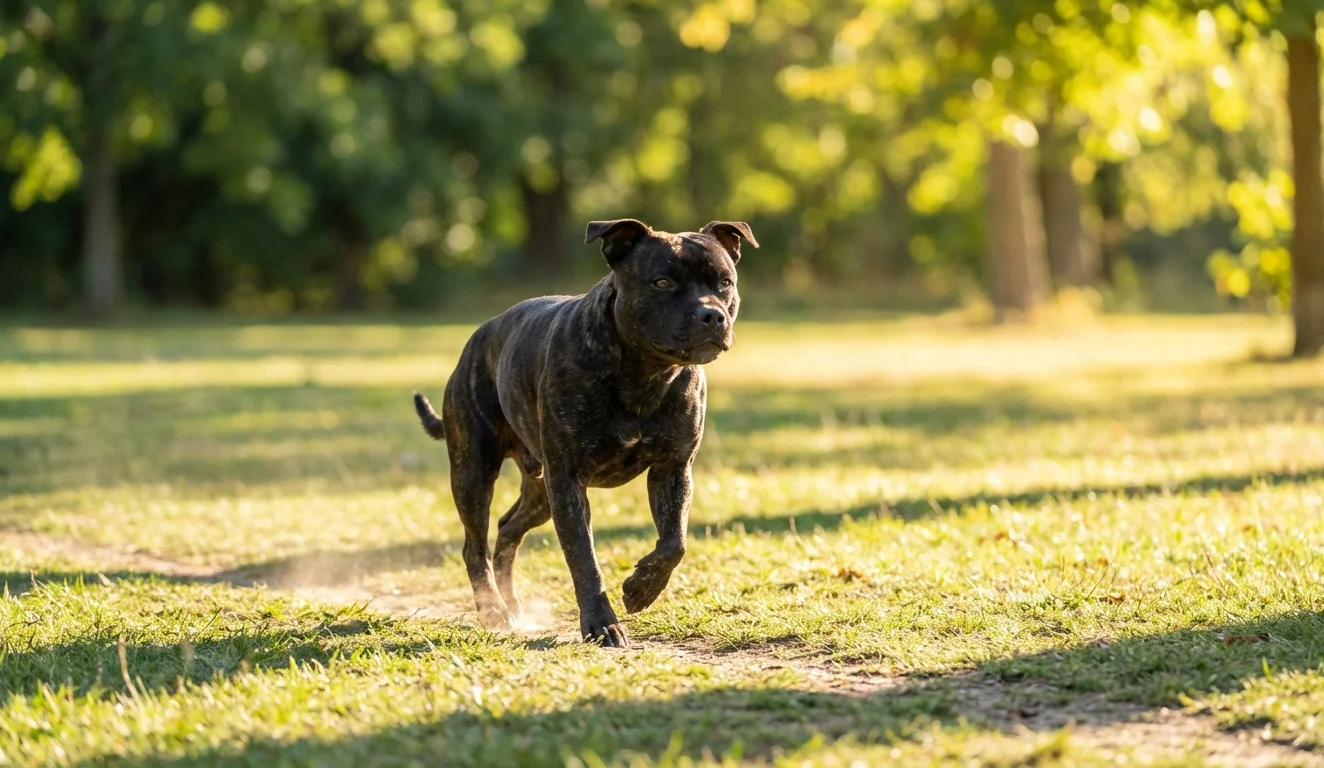
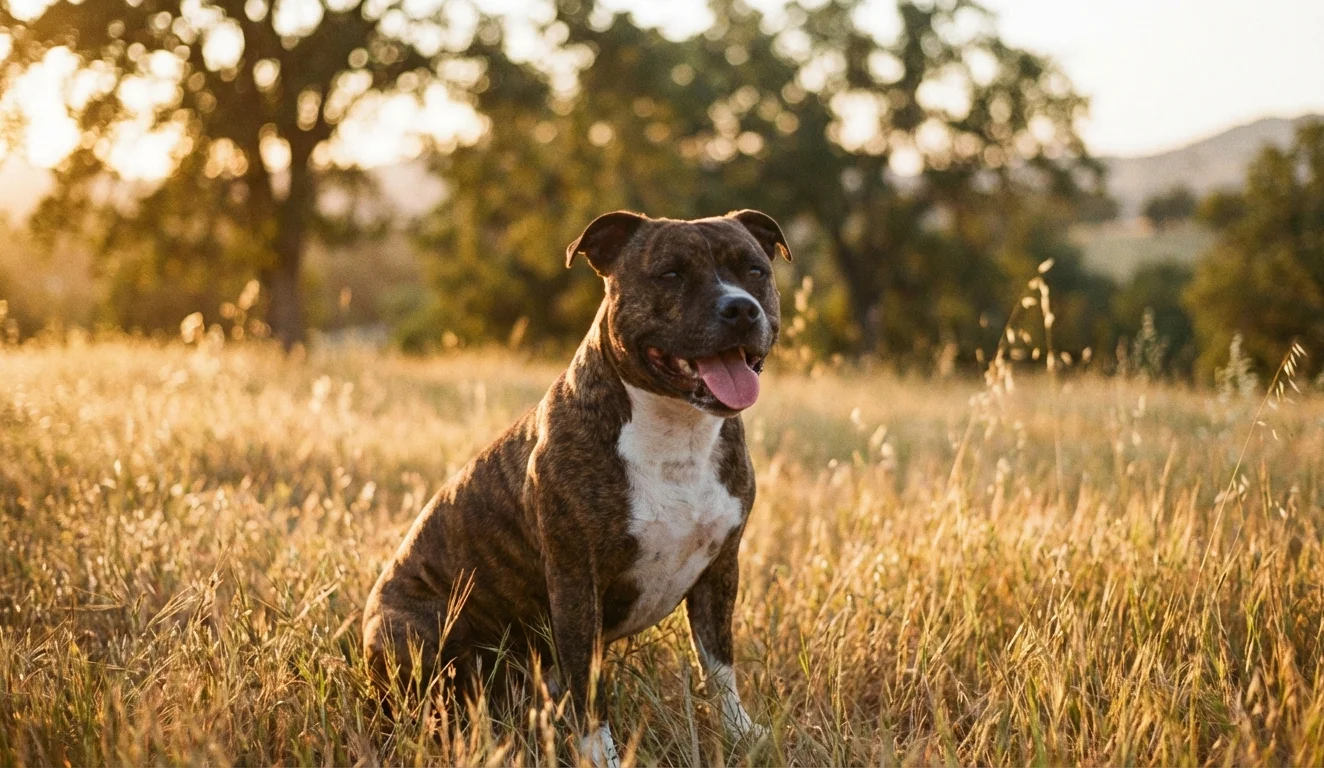
The Staffordshire Bull Terrier is compact, muscular, and built like it spends its free time at the gym. Despite standing only 14-16 inches tall, the breed packs 24-38 pounds of dense muscle into a short, wide frame. The chest is broad, the legs are straight and well-boned, and the overall impression is one of tremendous strength relative to size. A Staffie at the end of a leash pulls like a dog twice its weight.
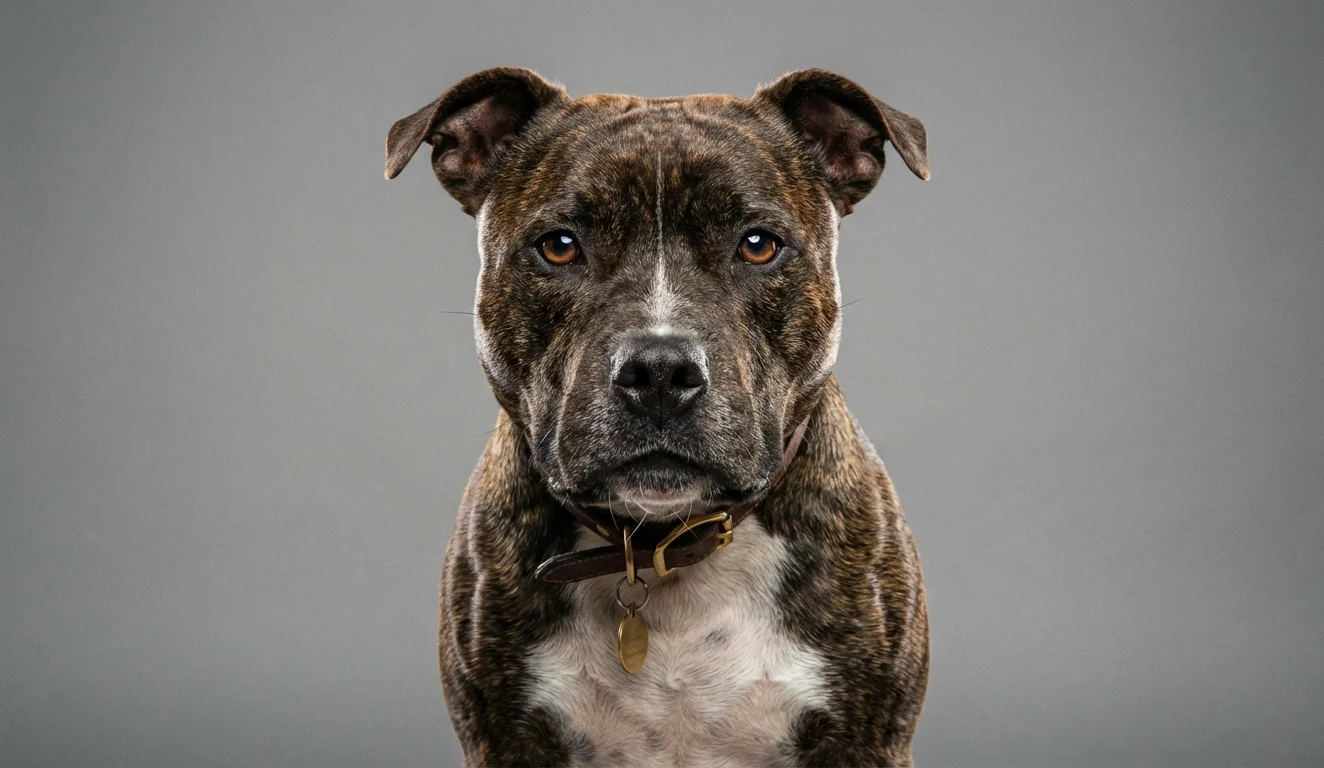
The head is broad and deep, with a short foreface, pronounced cheek muscles, and a wide jaw. The eyes are round, dark, and set wide apart, they give the face an expression that oscillates between “I love you more than anything” and “I’m about to do something you’ll regret.” Ears are rose-shaped or half-pricked. The tail is medium-length, carried low, and tapers to a point. It wags constantly.
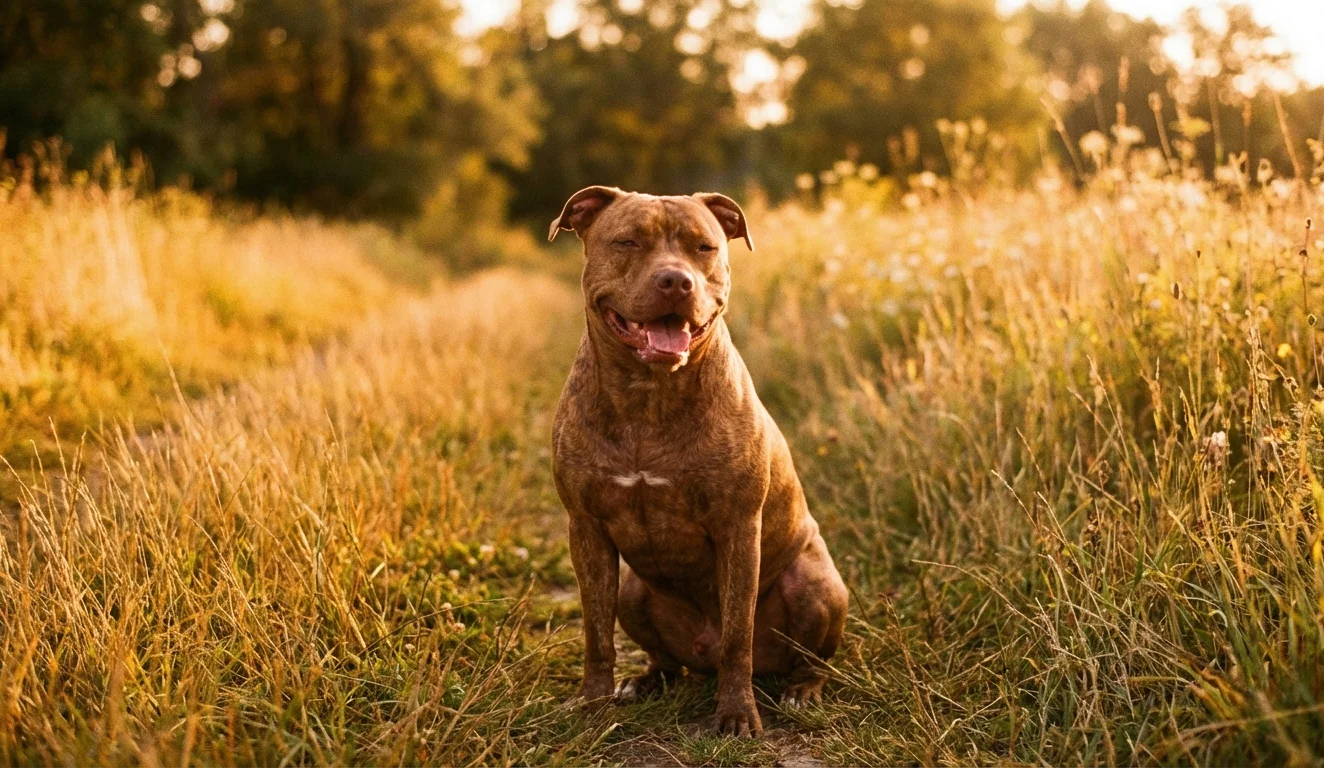
The coat is short, smooth, and lies close to the body. It comes in a wide range of colors: solid red, fawn, white, black, blue (a steel gray), or any of these with white markings. Brindle (a tiger-stripe pattern) is common and striking. The coat is low-maintenance, the trade-off for a dog that looks this good with this little grooming effort.
Staffordshire Bull Terrier Temperament
The Staffie’s temperament is the single best argument against breed stereotyping. Despite a fighting heritage, the modern Staffordshire Bull Terrier was bred specifically for reliability with people. The UK Kennel Club’s breed standard describes the ideal temperament as “bold, fearless, and totally reliable.”
What living with a Staffordshire Bull Terrier is actually like:
- They love people with everything they’ve got. Staffies are among the most people-oriented breeds. They bond intensely with their families and want physical contact as much as possible. They’re lap dogs that happen to be made of muscle. A Staffie will climb into your lap, lean against you, shove its head under your hand for petting, and follow you from room to room.
- They’re phenomenal with children. This isn’t marketing, the breed standard literally requires it. Staffies are patient, tolerant, gentle with kids, and seem to have an innate understanding that small humans need different treatment than adults. The “nanny dog” nickname, while sometimes disputed as historical terminology, accurately describes the breed’s behavior with children. Still, supervise all dog-child interactions (with any breed), because a Staffie’s enthusiasm can accidentally knock over a small child.
- They can be dog-selective. This is the breed’s biggest behavioral challenge. Many Staffies are wonderful with other dogs. But a significant percentage are selective, they may not tolerate unfamiliar dogs, particularly same-sex dogs, and same-sex dog aggression can develop even in dogs that were fine with other dogs as puppies. This isn’t universal, but it’s common enough that every prospective owner needs a management plan. Leash reactivity (barking and lunging at other dogs on walks) is the most frequent manifestation.
- They’re playful and goofy. Staffies are clowns. They play with toys, wrestle (with you, with cushions, with air), do zoomies at full speed, and invent games that make no sense to anyone but them. They stay playful well into old age. A 10-year-old Staffie still thinks it’s a puppy.
- They’re brave but not aggressive. Staffies are confident, not hostile. They don’t start fights (well-bred ones don’t), but they won’t back down from one either. Their courage makes them surprisingly good watchdogs despite the wiggly, people-loving exterior, an intruder facing a stiff, staring Staffie usually reconsiders their life choices.
Exercise Needs
Staffordshire Bull Terriers need about 45-60 minutes of exercise per day, and they want that exercise to be vigorous. A leisurely stroll isn’t enough for this breed, they need running, playing, fetching, tugging, or some other activity that lets them use that muscular body. Without sufficient exercise, Staffies redirect their energy into destructive behaviors: chewing, digging, and general chaos.
The daily exercise routine for most Staffie owners includes a brisk 30-minute walk plus a play session in the yard, tug-of-war, fetch, or spring pole (a hanging rope toy that Staffies absolutely love). Many Staffies excel at dog sports: agility, weight pull, flyball, and barn hunt all channel their energy and intelligence.
Heat tolerance is a concern. Staffies have brachycephalic tendencies (the short muzzle, while not as extreme as Bulldogs, still limits airway efficiency), and their heavy muscle mass generates significant body heat during exercise. In warm weather, keep vigorous exercise to cool parts of the day and always carry water. Watch for excessive panting and slowing down, Staffies are so eager to please that they’ll push through discomfort, so it’s your job to call the break.
Dog parks are a mixed bag. If your Staffie is genuinely dog-friendly, a dog park can be great exercise. If your Staffie has any dog-selectivity at all, a dog park is a liability, for your dog and for others. Many experienced Staffie owners avoid dog parks entirely and rely on solo exercise, play dates with known dog-friendly dogs, and structured activities instead.
Grooming
Staffies are about as low-maintenance as dogs get in the grooming department.
- Weekly brushing with a rubber curry mitt or soft bristle brush, this takes about 5 minutes and removes loose hair
- Bath every 6-8 weeks (or when dirty, Staffies enjoy rolling in things)
- Nail trims every 2-3 weeks: thick, sturdy nails that grow quickly
- Dental care 3-4 times per week: standard brushing
- Ear cleaning weekly: the rose/half-pricked ears don’t trap moisture easily, so infections are uncommon
- No professional grooming needed
Shedding is minimal. The short, tight coat produces some loose hair year-round, with a slightly heavier shed in spring and fall, but it’s nothing that a weekly brushing session can’t manage. You’ll find occasional short hairs on furniture and clothing, but compared to breeds with longer or double coats, it’s negligible.
One grooming note specific to Staffies: check the skin regularly for bumps, lumps, or irritation. The breed is prone to skin allergies and occasional mast cell tumors (see health section), and early detection makes a difference.
Staffordshire Bull Terrier Health Issues
Staffies are generally tough, healthy dogs with a lifespan of 12-14 years. The breed has fewer genetic health issues than many purebreds of similar size. But there are specific conditions every owner should know about.
L-2-Hydroxyglutaric Aciduria (L-2-HGA)
L-2-HGA is a metabolic disorder that affects the nervous system, caused by an accumulation of L-2-hydroxyglutaric acid in the cerebrospinal fluid. It causes symptoms including seizures, tremors, muscle stiffness, and behavioral changes, typically appearing between 6 months and 1 year of age. It’s a recessive genetic condition, meaning both parents must carry the gene. A DNA test is available, and responsible breeders test all breeding stock, this is a condition that can be completely eliminated through testing. There’s no cure, and treatment is limited to managing symptoms ($100-$300/month for anti-seizure medications). Ask your breeder about L-2-HGA testing status. Both parents should be “clear” or “carrier bred to clear.”
Hip Dysplasia
The OFA reports hip dysplasia rates of approximately 12% in evaluated Staffordshire Bull Terriers. The breed’s muscular build can mask the symptoms in some dogs, so radiographic screening is important even in dogs that aren’t limping. Treatment ranges from weight management and anti-inflammatory supplements ($40-$80/month) to surgical intervention, total hip replacement costs $5,000-$7,000 per hip. Breeding stock should be OFA or PennHIP evaluated.
Hereditary Cataracts (HC)
Staffordshire Bull Terriers have a breed-specific form of hereditary cataracts caused by a known genetic mutation. A DNA test (HC-HSF4) identifies carriers and affected dogs. Cataracts may develop as early as 12-18 months and can progress to blindness. Surgical removal of cataracts costs $2,500-$4,000 per eye and has good success rates. Like L-2-HGA, this is a condition that can be eliminated through responsible testing, both parents should be DNA tested.
Skin Allergies
Staffies are prone to environmental and food allergies that manifest as skin problems: itching, redness, hot spots, ear infections, and paw-licking. Allergies often develop between ages 1-3. Treatment depends on severity: mild cases may respond to dietary changes and antihistamines ($20-$50/month). Moderate-to-severe cases may need immunotherapy (allergy shots, $50-$100/month) or medications like Apoquel or Cytopoint ($75-$200/month). A veterinary dermatologist may be needed for complex cases.
Mast Cell Tumors
Staffies appear to have a higher-than-average incidence of mast cell tumors (MCTs), a type of skin cancer. MCTs typically present as lumps on or just under the skin that may change size. Many are benign or low-grade, but some are aggressive. Early removal and pathology grading cost $500-$2,000. Aggressive MCTs requiring chemotherapy or radiation escalate costs to $5,000-$10,000+. Regular skin checks, running your hands over your dog weekly and noting any new lumps, enable early detection.
Training
Staffordshire Bull Terriers are intelligent, eager to please (with their people), and highly food-motivated, a combination that makes them responsive to training. They’re not terrier-stubborn in the way a Cairn Terrier or a Jack Russell is. They genuinely want to make you happy, and they learn quickly when the training is clear, consistent, and rewarding.
Positive reinforcement is the way to go. Staffies respond beautifully to food rewards, play rewards, and enthusiastic praise. Harsh corrections are counterproductive, they can create anxiety or trigger stubbornness, and in a dog this strong, you don’t want either. Force-free, reward-based training produces a Staffie that’s eager to work and confident in its relationship with you.
Leash manners are important to train early. A 35-pound Staffie that pulls is a formidable opponent, they’re incredibly strong for their size. Front-clip harnesses, consistent “loose leash” training, and engagement-based walking exercises make a significant difference. Start before the puppy reaches full strength.
Dog-to-dog socialization is the most important investment you can make. Between 8-16 weeks, expose your Staffie puppy to as many calm, friendly dogs as possible in controlled settings. Puppy kindergarten classes are excellent. Positive early experiences don’t guarantee a dog-friendly adult (genetics play a role), but they give your dog the best possible foundation. Even if your adult Staffie becomes dog-selective, good socialization during puppyhood produces a dog that’s more manageable and less reactive than one that wasn’t socialized.
If dog-selectivity develops (and it may, typically between 1-3 years of age), don’t panic. Many Staffie owners successfully manage dog-selectivity through controlled introductions, leash management, and avoiding high-conflict situations like dog parks. A certified behavior consultant who has experience with bully breeds can help you develop a management plan.
Cost
Purchase Price
A Staffordshire Bull Terrier puppy from a reputable breeder costs $1,500-$3,000. The breed is less common in the US than in the UK, which can mean longer wait lists and fewer breeders to choose from. Breeding stock should be tested for L-2-HGA, HC (hereditary cataracts), hips, and elbows, these are the Staffordshire Bull Terrier Club of America’s recommended health tests. Don’t skip them.
Rescue Staffies are available through breed-specific rescues and general shelters for $150-$500. Because Staffies are sometimes confused with American Pit Bull Terriers or Pit Bull mixes, you may find them labeled as “Pit Bull” or “Pit mix” in shelters. A DNA test can clarify breed composition.
Monthly Costs
| Expense | Monthly Estimate |
|---|---|
| Food (medium breed, high-quality) | $40-$65 |
| Preventive vet care (averaged) | $20-$40 |
| Pet insurance | $30-$55 |
| Treats and chews (Staffies are power chewers) | $20-$30 |
| Miscellaneous (tough toys, supplies) | $10-$20 |
| Total | $120-$210 |
Note: Budget for durable, heavy-duty toys. Staffies are power chewers that destroy standard toys in minutes. Brands like Kong, West Paw, and GoughNuts make toys rated for strong chewers.
First-Year Costs
Beyond the purchase price, first-year costs run $1,800-$3,200. This includes vaccinations, spay/neuter, a heavy-duty crate (Staffies are strong and can bend wire crate bars), a front-clip harness, durable toys, initial vet exams, microchipping, and a puppy training class (which should be considered mandatory, not optional, for this breed). Add an obedience class or private training sessions if leash reactivity or dog-selectivity begins to emerge.
Is a Staffordshire Bull Terrier Right for You?
A Staffordshire Bull Terrier could be a great fit if you:
- Want a loyal, people-loving, kid-friendly family dog
- Are active and can provide 45-60 minutes of daily vigorous exercise
- Appreciate a dog with athleticism and a playful, goofy personality
- Are willing to manage potential dog-selectivity through training and avoidance of triggers
- Want a low-maintenance, low-shedding, easy-to-groom breed
- Can handle a strong dog on a leash (training helps, but they’re powerful)
- Have researched your local breed-specific legislation and insurance requirements
A Staffordshire Bull Terrier is probably not right if you:
- Need a dog that’s reliably friendly with all other dogs (it’s possible but not guaranteed)
- Live in an area with breed-specific legislation that targets “pit bull type” dogs (check your local laws)
- Want a guard dog that’s suspicious of strangers (Staffies love people too much)
- Can’t commit to training, particularly leash manners and socialization
- Want a low-energy, sedate companion
- Are gone from home for very long hours (Staffies crave human company)
- Can’t handle the emotional weight of potential breed discrimination
The Staffordshire Bull Terrier is one of the most underrated breeds in the US. In England, where they’ve been family dogs for generations, there’s no confusion about what they are: loyal, patient, playful, human-obsessed companions that happen to be built like small tanks. The fighting heritage is 200 years in the rearview mirror, and the modern Staffie’s breeding is focused squarely on the traits that make it an outstanding family dog. They’re not for every household. The strength, the energy, the potential dog-selectivity, and the breed discrimination all need clear-eyed consideration. But for the right family, one that’s active, present, and willing to train, a Staffie will reward you with a devotion so fierce and a personality so joyful that you’ll spend the rest of your life wondering why this breed isn’t more popular on this side of the Atlantic.
Related Breeds
If you’re considering this breed, you might also want to look at:
Frequently Asked Questions
Is a Staffordshire Bull Terrier the same as a Pit Bull?
No. The Staffordshire Bull Terrier is a distinct, AKC-recognized breed originating in England. The American Pit Bull Terrier (APBT) is a separate, larger breed recognized by the UKC and ADBA but not the AKC. Staffies are smaller (24-38 lbs vs. 35-60+ lbs for APBTs), have a specific breed standard, and have been bred as family companions in England for nearly a century. But “pit bull” is often used as a catch-all term for several bully breeds, and Staffies can be mislabeled under breed-specific legislation. Know your local laws.
Are Staffordshire Bull Terriers good with children?
This is the breed’s strongest suit. The UK Kennel Club standard describes Staffies as having “particular affinity with children.” They’re patient, tolerant, gentle with kids, and seem to instinctively moderate their strength around small humans. The Kennel Club of the UK has even stated that the breed “has an affinity with children that is probably unsurpassed.” As with any dog, supervise interactions, a Staffie’s enthusiasm can accidentally bowl over a toddler, but the breed’s reputation with children is well-earned.
Do Staffordshire Bull Terriers get along with other dogs?
It varies significantly by individual. Many Staffies are social and enjoy other dogs’ company. Others develop dog-selectivity, typically between ages 1-3, often triggered by same-sex dogs. The breed’s bull-baiting and fighting ancestry means dog aggression has a genetic component that socialization can moderate but not always eliminate. The responsible approach: socialize extensively during puppyhood, be alert for emerging selectivity in adolescence, and have a management plan if it develops. Many Staffie owners successfully maintain multi-dog households with opposite-sex pairings.
Are Staffordshire Bull Terriers banned anywhere?
Unfortunately, yes. Various jurisdictions worldwide have breed-specific legislation (BSL) that targets “pit bull type” dogs, and Staffordshire Bull Terriers are sometimes included. Some US cities, counties, and housing complexes restrict or ban the breed. Some insurance companies won’t cover bully breeds. Before getting a Staffie, check your local municipal codes, your homeowner’s or renter’s insurance policy, and your landlord’s pet policy. The Staffordshire Bull Terrier Club of America maintains resources on BSL.
How strong are Staffordshire Bull Terriers?
Remarkably strong for their size. Staffies have been bred for muscular power for centuries, and a 35-pound Staffie can pull, tug, and hold with force disproportionate to its weight. In weight pull competitions, Staffies regularly pull 20-30 times their body weight. On a leash, an untrained Staffie can yank a full-grown adult off balance. This is why leash training and a front-clip harness are non-negotiable investments in the first year.