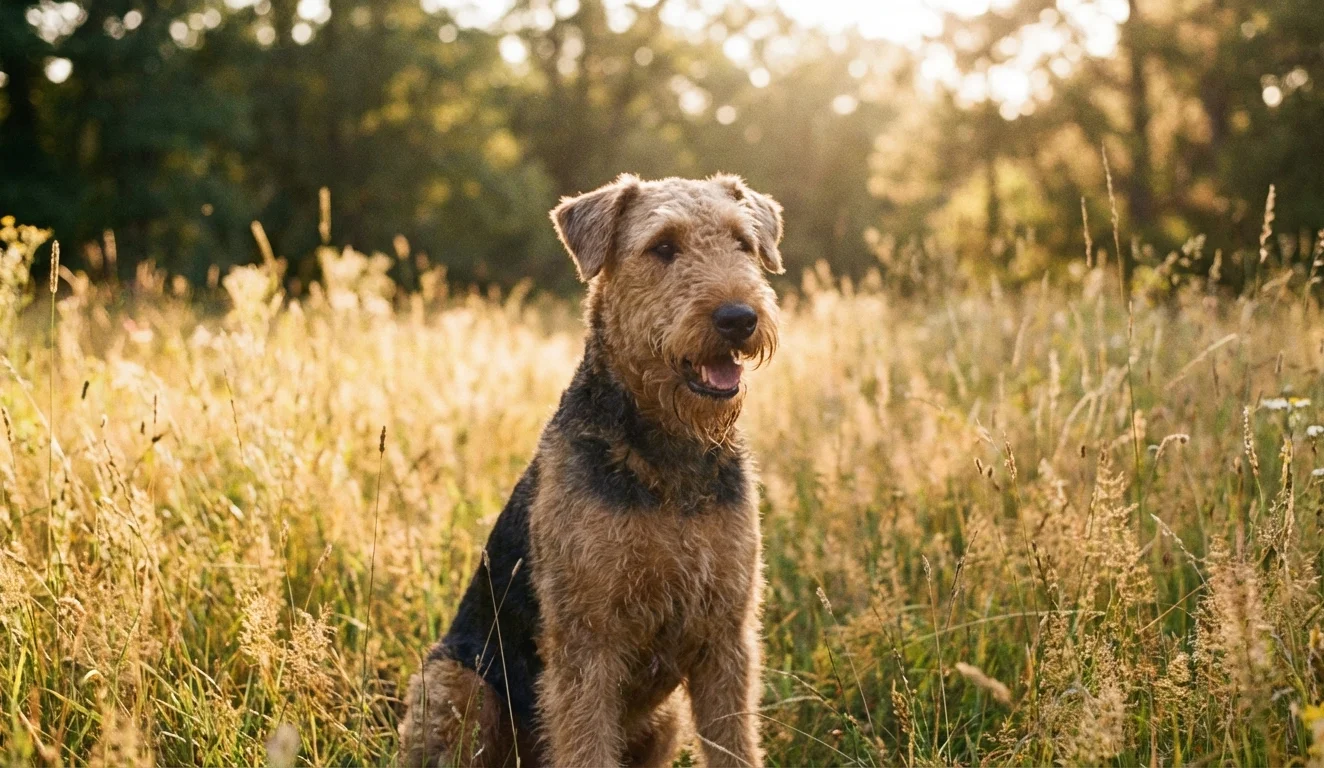

Soft Coated Wheaten Terrier Breed Guide: The Terrier That Hugs Everyone (2026)
Soft Coated Wheaten Terriers greet every person, every dog, and every day with the same level of unbridled enthusiasm. It's exhausting. It's also kind of wonderful.
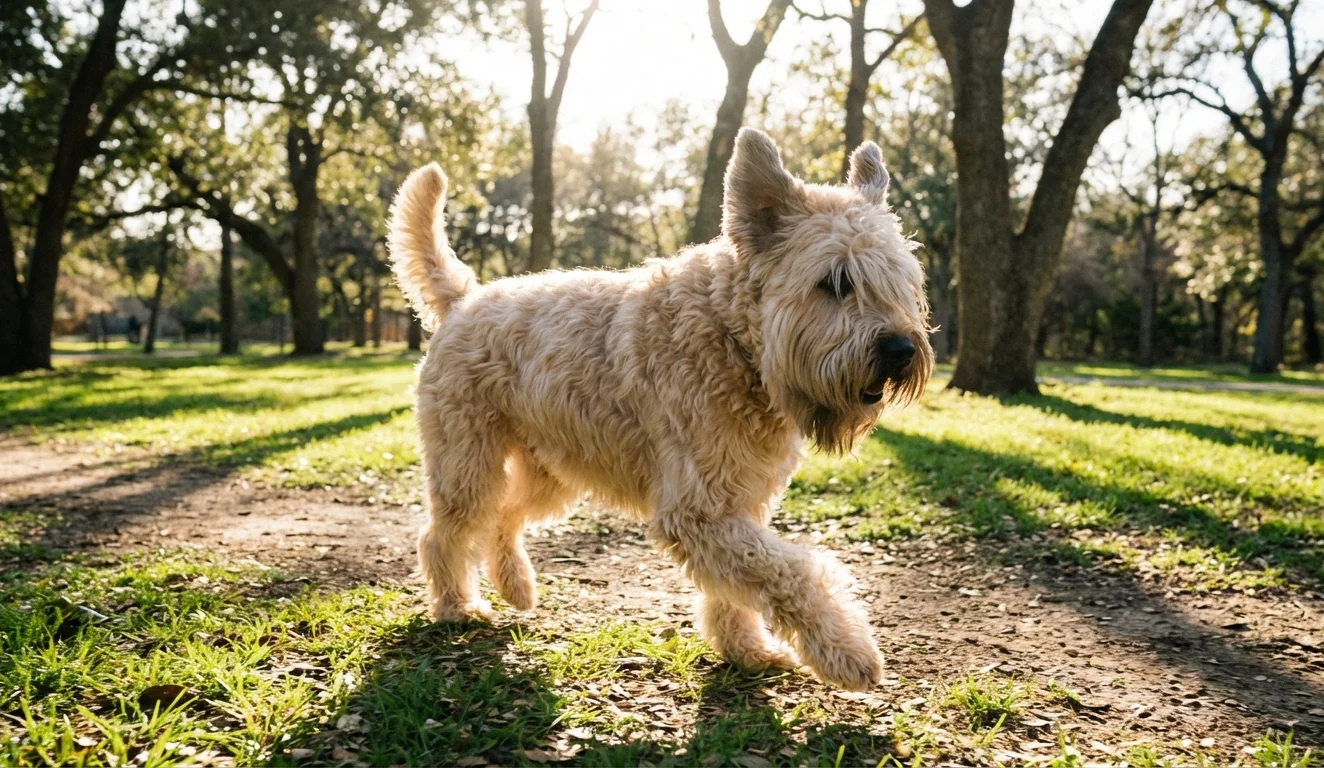
The Soft Coated Wheaten Terrier stands 17-19 inches at the shoulder and weighs 30-40 pounds. They live 12-14 years. Most terriers are feisty, independent, and would rather bite a rat than cuddle on the couch. The Wheaten didn’t get that memo. This is the terrier that bounces over to greet strangers with the enthusiasm usually reserved for Golden Retrievers, performs the infamous “Wheaten Greetin’” (a full-body, vertical-launch greeting that involves the dog jumping up to lick your face while spinning in a circle), and generally treats every interaction like the best thing that’s happened all day. They’ve got terrier confidence without terrier edge, wrapped in a coat that feels like silk and looks like wheat fields in August.
In Short: 30–40 lbs, 12–14 years. High energy. Low shedding, high grooming. Watch for Protein-Losing Nephropathy (PLN) and Protein-Losing Enteropathy (PLE). Best for active families who want an exuberant, people-loving, non-shedding medium dog and are prepared for serious grooming.
The Wheaten is sometimes called the “poor man’s Goldendoodle,” which isn’t entirely fair but isn’t entirely wrong. They’re medium-sized, low-shedding, friendly with everyone, and great with kids, the same checklist that drives Goldendoodle demand. The difference is that Wheatens have 200+ years of consistent breeding behind them (versus the Goldendoodle’s 30 years and wildly variable genetics) and a breed club that health-tests rigorously. The trade-off is that the Wheaten coat requires more grooming than most people expect and the breed has two serious genetic kidney/gut conditions that every buyer needs to know about.
Soft Coated Wheaten Terrier at a Glance
| Trait | Details |
|---|---|
| Breed Group | Terrier (AKC) |
| Height | Males: 18-19 in / Females: 17-18 in |
| Weight | Males: 35-40 lbs / Females: 30-35 lbs |
| Life Expectancy | 12-14 years |
| Coat | Single coat, silky, wavy, wheat-colored |
| Colors | Wheaten (ranges from pale gold to deep reddish gold; puppies are born darker and lighten) |
| Temperament | Happy, Friendly, Stubborn |
| Shedding | Very low |
| Energy Level | High |
| Good With Kids | Yes |
| AKC Recognition | 1973 |
History
The Soft Coated Wheaten Terrier is Ireland’s oldest terrier, with origins dating back at least 200 years on Irish farms. While the Irish Terrier, Kerry Blue Terrier, and Irish Glen of Imaal Terrier all have documented histories and specific regional origins, the Wheaten was the common working dog of the Irish countryside, so widespread and utilitarian that nobody bothered to formally distinguish it as a breed until relatively recently.
On Irish farms, Wheatens were general-purpose working dogs. They herded livestock, guarded the property, hunted vermin, and even helped poach small game (which, in 18th-century Ireland, meant the Wheaten was keeping poor farming families fed). The Irish Kennel Club recognized the breed in 1937, the story goes that a Wheaten won a major terrier field trial and someone said, “We should probably make this a proper breed.” Lydia Vogel brought the first Wheatens to the US in 1946, and the breed slowly built a following.
AKC recognition came in 1973, making the Wheaten one of the newer AKC breeds despite being one of the oldest terriers. The breed has climbed steadily in popularity, now ranking around 53rd in AKC registrations. Its combination of low-shedding coat, medium size, and friendly temperament hits a demographic sweet spot that keeps demand strong.
Size and Appearance
Wheatens are medium-sized, squarely proportioned dogs with a sturdy, athletic build hidden under all that coat. Males stand 18-19 inches and weigh 35-40 pounds. Females are 17-18 inches and 30-35 pounds. Under the wavy fur, there’s a well-muscled, compact body built for a full day of farm work.
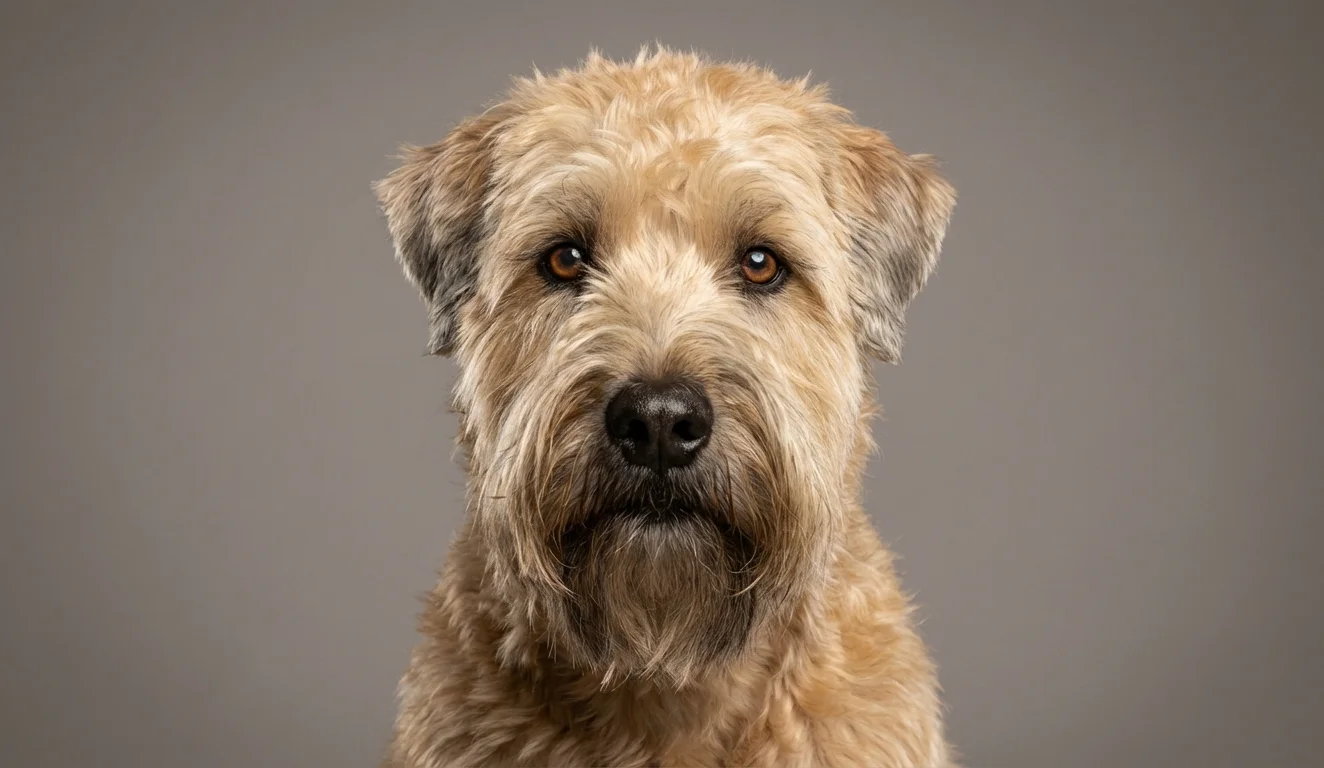
The coat is the breed’s defining feature and its biggest maintenance commitment. It’s a single coat (no undercoat) of soft, silky, gently waving hair that ranges in color from pale cream to a warm golden wheat. Puppies are born with darker coats, often reddish or brownish, that gradually lighten to the adult wheaten color by about 2 years of age. The coat is similar in texture to human hair, which means it grows continuously and doesn’t shed in the traditional sense. Loose hairs stay caught in the coat rather than dropping on your furniture, which makes Wheatens a popular choice for allergy sufferers (though no dog is truly hypoallergenic).
The head is moderately long, with a strong muzzle, large dark eyes (often partially hidden by the fall of hair across the forehead), and small-to-medium ears that fold forward. The overall expression, when you can see it through the coat, is one of eager, perpetual friendliness.
Soft Coated Wheaten Terrier Temperament
The Wheaten temperament is the breed’s biggest selling point. These are joyful, people-oriented dogs that approach life with an enthusiasm most humans can only envy.
What living with a Soft Coated Wheaten Terrier is actually like:
- The Wheaten Greetin’ is real. This is the breed’s signature move: when a Wheaten is happy to see you (which is always, whether you’ve been gone eight hours or eight seconds), it jumps up, often reaching face height, while wriggling its entire body. This is adorable when the dog is 10 pounds. It’s less adorable when it’s a muddy 38-pound adult leaping at your work clothes. Training can moderate but rarely eliminates this behavior.
- They love everyone. Wheatens are one of the friendliest breeds. Strangers, children, other dogs, the mail carrier, the UPS driver, everyone gets the same exuberant welcome. This makes them terrible guard dogs but excellent family dogs and neighborhood ambassadors.
- They’re terrier-stubborn. Underneath the friendliness, there’s a terrier brain that makes independent decisions. Wheatens learn quickly and then decide on a per-command basis whether to comply. They’re not defiant, they’re just terriers. Expect to repeat yourself.
- They’ve got prey drive. Wheatens were ratters and small-game hunters. Squirrels, rabbits, and other small animals trigger the chase instinct. Some Wheatens coexist with cats (especially if raised together). Others don’t. Each dog needs individual assessment.
- They’re great with kids. The Wheaten’s sturdy build, playful energy, and friendly disposition make them one of the better terrier breeds for families with children. They can handle the chaos of kid life without being fragile or easily overwhelmed.
Exercise Needs
Wheatens need about 45-60 minutes of exercise per day. This should include at least one vigorous activity, a brisk walk, fetch in the yard, a trip to the dog park, or a play session with another dog. They’re athletic and enjoy being active, but they’re not obsessive about exercise the way Border Collies or Belgian Malinois are.
A fenced yard is ideal but not mandatory. Wheatens can do well in apartments if their exercise needs are consistently met through walks and outdoor activities. The key word is “consistently”, a Wheaten that doesn’t burn off energy becomes a Wheaten that redirects that energy into counter-surfing, jumping, barking, or chewing.
Mental stimulation matters. Puzzle toys, training games, nose work, and varied walking routes keep the Wheaten brain engaged. They’re clever dogs that get bored with routine, and boredom amplifies the terrier tendencies you’d rather minimize.
Off-leash exercise should only happen in enclosed areas. The terrier prey drive means a squirrel sighting can override all training. Wheatens aren’t as recall-resistant as sighthounds, but they’re not Labradors either. Trust your Wheaten off-leash only in fenced spaces.
Grooming
This is where many Wheaten owners get surprised. The “low shedding” part is true. The “low maintenance” part is not. The Wheaten coat is gorgeous and demands serious commitment.
- Daily brushing or combing is recommended, especially for the full-length coat. A metal comb (Greyhound-style) and a slicker brush are your primary tools. Work through the entire coat section by section, paying special attention to behind the ears, under the legs, the beard, and the belly, these areas mat fastest. Budget 15-20 minutes daily
- Professional grooming every 4-6 weeks: a Wheaten-experienced groomer is worth finding. The breed has a specific trim that maintains the natural, tousled look. Avoid shaving, the coat’s texture changes if shaved and may not grow back correctly. Budget $60-$100 per session
- Bath every 3-4 weeks with a moisturizing dog shampoo and conditioner. The silky coat tangles more when dirty
- Beard cleaning after every meal: the facial hair traps food and water, creating a breeding ground for bacteria (and an unpleasant smell if neglected). A quick wipe after eating is a daily necessity
- Nail trims every 2-3 weeks
- Dental care 3-4 times per week
- Ear cleaning weekly: the folded ears and ear hair can trap moisture
If daily brushing sounds like too much, you can keep the coat in a shorter “puppy clip” (2-3 inches long), which reduces brushing to 3-4 times per week. Most pet Wheatens wear some version of a shorter trim for practicality.
Soft Coated Wheaten Terrier Health Issues
The Wheaten is generally healthy, with a 12-14 year lifespan. But the breed has two serious genetic conditions that every prospective owner must understand. The Soft Coated Wheaten Terrier Club of America (SCWTCA) has invested heavily in health research for these conditions, and responsible breeders participate in screening protocols.
Protein-Losing Nephropathy (PLN)
PLN is a kidney disease in which the kidneys leak protein into the urine. It’s been identified as a significant health concern in Wheatens, and the SCWTCA has partnered with researchers to identify the genetic markers involved. Symptoms include weight loss, decreased appetite, lethargy, and edema (fluid retention). PLN can progress to kidney failure. Diagnosis involves urine protein-to-creatinine ratio testing (which should be done annually for all Wheatens after age 2). Treatment focuses on ACE inhibitors to reduce protein loss, dietary management, and blood pressure control, costing $100-$300/month for ongoing management. Prognosis varies from years of stable disease to rapid progression. Genetic testing can identify dogs with increased risk, and responsible breeders use these results to guide breeding decisions.
Protein-Losing Enteropathy (PLE)
PLE is a gastrointestinal condition where protein is lost through the intestinal lining. It often occurs alongside PLN in Wheatens (the two conditions share genetic risk factors). Symptoms include chronic diarrhea, weight loss, decreased appetite, and lethargy. Diagnosis involves blood work showing low protein levels and intestinal biopsy. Treatment includes immunosuppressive medications, dietary management (typically a low-fat, highly digestible diet), and vitamin supplements, costing $150-$400/month for ongoing management. Like PLN, the prognosis is variable.
Addison’s Disease (Hypoadrenocorticism)
Wheatens have a higher-than-average incidence of Addison’s disease, where the adrenal glands don’t produce sufficient hormones. Symptoms are often vague, lethargy, poor appetite, vomiting, weakness, and can mimic many other conditions, earning Addison’s the nickname “the great imitator.” An acute Addisonian crisis (sudden collapse, shock) is a life-threatening emergency. Once diagnosed, treatment is lifelong but manageable: monthly DOCP injections or daily oral fludrocortisone, costing $50-$150/month. Most dogs with controlled Addison’s live normal lifespans.
Hip Dysplasia
The OFA reports hip dysplasia rates of approximately 6% in Wheatens, lower than many breeds of similar size. Screening through OFA or PennHIP radiographs is recommended for breeding stock. Treatment ranges from weight management and supplements to surgical intervention ($5,000-$7,000 per hip) for severe cases.
Renal Dysplasia
Some Wheaten lines carry renal dysplasia, a developmental kidney condition. The SCWTCA recommends screening breeding dogs. The condition ranges from subclinical (detected only through biopsy) to severe (progressive kidney failure in young dogs). It’s distinct from PLN but adds to the breed’s overall kidney disease risk profile, underscoring the importance of buying from health-tested lines.
Training
Wheatens are smart, food-motivated, and eager to interact, which makes them responsive to training by terrier standards. They’ll never have the instant compliance of a German Shepherd, but they’re far easier to train than many terrier breeds.
Positive reinforcement is the clear winner. Wheatens are sensitive enough that harsh corrections produce pushback (terrier stubbornness) or anxiety, and neither is productive. Treats, play, and enthusiastic praise get the best results. They respond particularly well to training that feels like a game rather than a drill.
The Wheaten Greetin’, jumping, is the breed’s biggest training challenge. It’s hardwired, it’s joyful, and it’s unwelcome when your dog is muddy and your guest is wearing white. Training an alternative greeting (sitting, four-on-the-floor) requires absolute consistency from every person who interacts with the dog. If even one visitor rewards the jumping with attention, you lose ground. It’s a long game, and many Wheaten owners settle for managing it (asking visitors to turn away until the dog calms) rather than eliminating it.
Recall is trainable but not bulletproof. Wheatens come when called more reliably than most terriers, but a squirrel or rabbit can override the recall at inopportune moments. Keep them on-leash or in fenced areas when outdoors.
Socialization is usually easy with Wheatens, they’re naturally friendly, and early exposure to various people and situations generally produces a well-adjusted adult. The main socialization focus should be on impulse control: teaching the Wheaten that not every person, dog, and situation requires a full-body celebration.
Cost
Purchase Price
A Soft Coated Wheaten Terrier puppy from a reputable breeder costs $1,500-$3,000. Given the breed’s PLN/PLE risk, buying from a breeder who participates in the SCWTCA health testing protocol, including annual urine protein testing, genetic marker testing, and standard OFA evaluations, is non-negotiable. A puppy from untested parents may save you $500 upfront and cost you $5,000+ in medical bills later.
Rescue Wheatens are available through S’Wheat Rescues & Adoptions and regional Wheaten rescue organizations for $300-$600.
Monthly Costs
| Expense | Monthly Estimate |
|---|---|
| Food (medium breed, high-quality) | $40-$70 |
| Preventive vet care (averaged) | $20-$40 |
| Pet insurance | $35-$60 |
| Professional grooming | $25-$50 |
| Grooming supplies | $10-$15 |
| Treats and chews | $15-$20 |
| Miscellaneous | $10-$20 |
| Total | $155-$275 |
First-Year Costs
Beyond the purchase price, first-year costs run $2,200-$3,800. This includes vaccinations, spay/neuter, a crate, professional grooming tools (metal comb, slicker brush, quality shampoo/conditioner), professional grooming sessions, initial vet exams, microchipping, and a baseline urine protein-to-creatinine ratio test. Pet insurance is strongly recommended for Wheatens given the PLN/PLE risk, get coverage early, before any conditions develop.
Is a Soft Coated Wheaten Terrier Right for You?
A Soft Coated Wheaten Terrier could be a great fit if you:
- Want a friendly, outgoing, medium-sized family dog
- Need a low-shedding breed (for allergy reasons or personal preference)
- Have kids, Wheatens are one of the best terrier breeds for families
- Are active and can provide 45-60 minutes of daily exercise
- Are willing to commit to serious grooming (daily brushing or regular professional grooming)
- Want a dog that loves people, all people, every time
- Can handle some terrier stubbornness with humor and patience
A Soft Coated Wheaten Terrier is probably not right if you:
- Want a guard dog or a dog that’s reserved with strangers
- Hate grooming, the coat is non-negotiable work
- Have small pets that might trigger prey drive (cats, rabbits, hamsters)
- Want perfect off-leash reliability
- Aren’t willing to manage jumping behavior long-term
- Can’t handle the financial risk of PLN/PLE (though insurance and health testing reduce this risk)
- Want a calm, sedate companion (Wheatens stay puppyish well into middle age)
The Soft Coated Wheaten Terrier is the extrovert’s terrier. It’s for people who want a dog that shares their enthusiasm for life, greets every day like a celebration, and approaches every human being as a potential new best friend. The coat requires work. The jumping requires patience. The health testing requires diligence. But what you get in return is a medium-sized, hypoallergenic-ish, kid-friendly, irrepressibly happy dog that makes your house feel more alive just by being in it. Also, your clothes will have beard water on them forever. That’s just part of the deal.
Related Breeds
If you’re considering this breed, you might also want to look at:
Frequently Asked Questions
Are Soft Coated Wheaten Terriers hypoallergenic?
No dog is truly hypoallergenic, but Wheatens are among the better options for allergy sufferers. Their single coat sheds minimally, dead hair stays in the coat rather than becoming airborne. They produce less dander than double-coated breeds. Many people with mild-to-moderate dog allergies can tolerate Wheatens well. If you have severe allergies, spend significant time with a Wheaten before committing, the coat’s low shedding helps, but individual reactions vary.
What is the Wheaten Greetin’?
It’s the breed’s signature greeting behavior: a full-body jump, often accompanied by spinning, face-licking, and what can only be described as a physical expression of uncontainable joy. Wheatens jump to greet people, sometimes reaching face height with a 35-pound launch. It’s endearing in theory and inconvenient in practice (mud, small children, elderly guests). Training can reduce it, but the impulse is deeply bred into the Wheaten personality. Consistent “four on the floor” training and management (having visitors ignore the dog until it calms) are the standard approaches.
How serious are PLN and PLE?
They’re the breed’s most significant health concerns. PLN (kidney protein loss) and PLE (intestinal protein loss) are genetic conditions that can range from manageable-with-medication to fatal. Not all Wheatens develop them, incidence estimates vary, but the SCWTCA reports that a meaningful percentage of the breed is affected. The best protection is buying from a breeder who does annual urine protein screening on all breeding stock and uses genetic marker testing to make informed breeding decisions. Annual screening (urine protein-to-creatinine ratio) for your own Wheaten after age 2 enables early detection and better outcomes.
Do Wheatens get along with cats?
It depends on the individual dog. Wheatens have terrier prey drive, and some will chase cats. Others, especially those raised with cats from puppyhood, coexist peacefully. The safest approach is to introduce carefully, supervise interactions, and never assume the prey drive won’t activate. If you have cats, look for breeders who can speak to their dogs’ behavior around cats, or consider an adult rescue dog that’s been cat-tested.
How much grooming does a Wheaten really need?
More than most people expect. A full-length Wheaten coat needs daily combing (15-20 minutes) to prevent mats, plus professional grooming every 4-6 weeks. A shorter pet clip reduces daily combing to 3-4 times weekly but still requires regular professional trimming. The beard needs wiping after every meal. If you’re not prepared for this level of coat maintenance, the Wheaten is the wrong breed, matted coats lead to skin infections, and shaving changes the coat texture permanently.