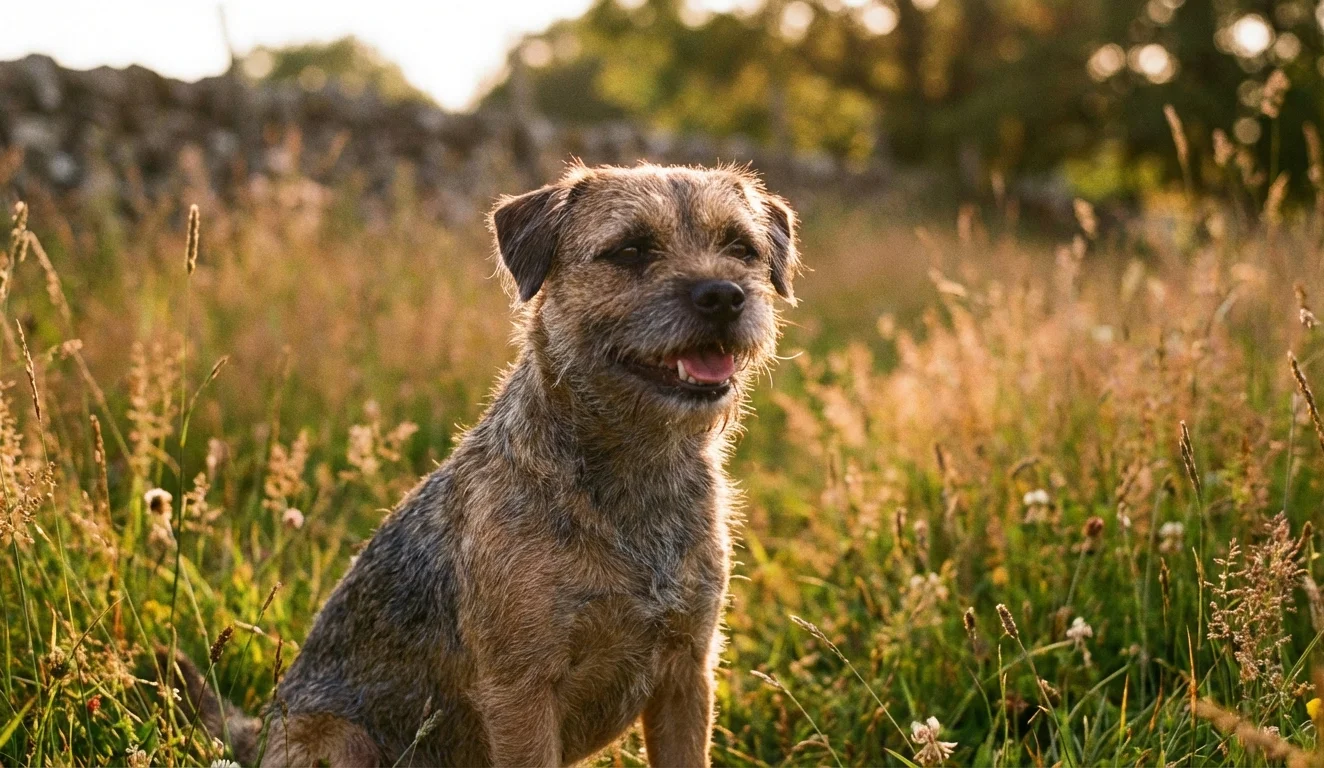

Jack Russell Terrier Breed Guide: Small Dog, Nuclear Energy (2026)
The Jack Russell Terrier is a 15-pound stick of dynamite with a PhD in mischief. Here's what you're actually signing up for.
The Jack Russell Terrier stands 10-15 inches tall, weighs 13-17 pounds, and lives 13-16 years. On paper, that sounds like a manageable little dog. In practice, the Jack Russell is the most intense small dog you’ll ever meet. This breed was designed to chase foxes into underground dens, and that fearless, relentless energy hasn’t gone anywhere, it’s just been redirected at your furniture, your garden, and occasionally your sanity.
In Short: 13–17 lbs, 13–16 years. Extremely high energy. Moderate shedding. Watch for Patellar Luxation and Lens Luxation. Best for active owners who want a small dog that acts like a big one.
Let’s be honest about Jack Russells: they’re not for everyone. They’re not even for most people. This is a breed that needs a job, needs exercise, and needs an owner who finds their particular brand of chaos entertaining rather than exhausting. If you want a calm lapdog, keep scrolling. If you want a 15-pound dog that can jump five feet in the air and has opinions about everything, read on.
Jack Russell Terrier at a Glance
| Trait | Details |
|---|---|
| Breed Group | Terrier (AKC, as Parson Russell Terrier) |
| Height | 10-15 inches |
| Weight | 13-17 lbs |
| Life Expectancy | 13-16 years |
| Coat | Smooth, broken, or rough; dense double coat |
| Colors | White with tan, black, or brown markings |
| Temperament | Fearless, Athletic, Intense, Clever |
| Shedding | Moderate (heavier with smooth coats) |
| Energy Level | Very High |
| Good With Kids | Yes (older kids) |
| Apartment Friendly | Not recommended |
History
The Jack Russell Terrier owes its existence to one man: Reverend John Russell, an Oxford theology student and avid fox hunter in 19th-century Devon, England. Around 1819, Russell purchased a small white terrier named Trump from a local milkman, and that dog became the foundation of the breed. Russell wanted a working terrier that could keep up with hounds on a fox hunt and then go to ground, following the fox into its den to flush it out.
Russell spent nearly 50 years refining his terriers. He didn’t care much about looks (which is why the breed has such variable appearance even today), he cared about function. The dogs needed to be small enough to fit into fox dens, brave enough to face a cornered fox underground, and athletic enough to run with horses and hounds for hours. That combination of small body and enormous courage is what defines the breed to this day.
The naming gets a bit confusing. The AKC recognized the “Parson Russell Terrier” in 1997, which is the longer-legged variant (12-14 inches). The shorter-legged dogs (10-12 inches) are what most people call Jack Russells and are registered by the Jack Russell Terrier Club of America (JRTCA), which actually opposes AKC recognition because they believe conformation showing would ruin the breed’s working character. It’s a whole political thing in the dog world. For our purposes, we’re covering the broader Jack Russell type, since that’s what most prospective owners are researching.
Size and Appearance
Jack Russells are compact, muscular little dogs that look like they’re ready for action at all times, because they are. They typically weigh 13-17 pounds and stand 10-15 inches tall, depending on whether you’re looking at the shorter-legged or taller (Parson) type.
The body is slightly longer than tall, with a flat skull, strong jaws, and dark almond-shaped eyes that seem perpetually alert. Their chest should be small enough to span with two hands, this was a practical requirement so the dog could fit into fox dens. If a Jack Russell’s chest is too broad, it’s not built to breed standard.
Coat Types
Jack Russells come in three coat varieties:
- Smooth: Short, flat coat that sheds more than you’d expect
- Broken: A mix of smooth and rough areas, with some longer hair on the face and body
- Rough: Longer, wiry coat that requires hand-stripping
All three types are double-coated and predominantly white (at least 51% white, per breed standards) with tan, black, or brown markings. The white coloring was intentional, hunters needed to distinguish their terrier from the fox at a distance.
Jack Russell Terrier Temperament
The AKC calls the Parson Russell “friendly, clever, and athletic.” That’s technically accurate, but it leaves out the part where this dog is also relentless, stubborn, and perfectly willing to outsmart you. Terrier temperament is a specific thing, and Jack Russells have it turned up to eleven.
What living with a Jack Russell actually looks like:
- They never stop moving. A Jack Russell at rest is a Jack Russell plotting its next move. These dogs have an energy level that borders on pathological. They’ll run laps in your yard, dig holes, chase squirrels, and then look at you like, “What’s next?”
- They’re escape artists. Jack Russells can jump over 5 feet from a standing position. They dig under fences. They squeeze through gaps you didn’t know existed. A standard backyard fence is a suggestion, not a barrier. You’ll need a 6-foot fence at minimum, and you should bury hardware cloth along the base to prevent digging.
- They have a massive prey drive. Small animals, squirrels, rabbits, cats, hamsters, trigger a hunting instinct that’s been hardwired over 200 years of selective breeding. Many Jack Russell owners cannot safely keep cats. This isn’t a training issue. It’s genetics.
- They’re fearless to a fault. Jack Russells will pick fights with dogs four times their size and seem genuinely confused about why this is a problem. They don’t understand that they’re small. Dog parks can be dicey.
- They’re genuinely funny. For all their intensity, JRTs have a clownish quality that’s hard not to love. They play hard, they engage fully, and their facial expressions are remarkably communicative.
Jack Russells can be great with older kids who know how to handle dogs. They’re less ideal with toddlers, the combination of a high-energy terrier and a small child who grabs and screams is a recipe for nipping.
Exercise Needs
Jack Russells need a minimum of 90 minutes of exercise per day, and honestly, more is better. This isn’t a breed you can satisfy with a couple of short walks. They need running, chasing, digging, and mental challenges.
Exercise that works for Jack Russells:
- Hard running in a securely fenced area (emphasis on “securely”)
- Fetch, JRTs are typically obsessive retrievers
- Agility training, the breed excels at it and the obstacle courses channel both their physical and mental energy
- Barn hunt and earthdog trials, these tap into the breed’s original purpose and watching a JRT work underground is genuinely thrilling
- Puzzle feeders and interactive toys for mental stimulation
The consequences of under-exercising a Jack Russell are immediate and expensive. They’ll dig craters in your yard, bark for hours, shred furniture, and generally dismantle your home with terrifying efficiency. A tired Jack Russell is a good Jack Russell. An energized Jack Russell is a demolition crew.
One important note: despite their small size, Jack Russells are not apartment dogs. They need space to run and burn off energy, and their barking level makes thin-walled living situations problematic for everyone involved.
Grooming
Jack Russell grooming is relatively straightforward, though it varies by coat type.
Smooth coat: Weekly brushing with a bristle brush or rubber grooming mitt. They shed more than you’d expect from a small dog, the short white hairs embed in everything.
Broken coat: Weekly brushing plus occasional hand-stripping (pulling dead coat by hand or with a stripping knife) every 4-6 months to maintain texture.
Rough coat: More frequent brushing (2-3 times weekly) and hand-stripping every 3-4 months. Don’t clipper a rough coat, it ruins the wire texture permanently.
General grooming for all coat types:
- Bath every 4-6 weeks (they love rolling in things, so you may bathe more often)
- Nail trim every 2-3 weeks
- Ear check weekly
- Teeth brushing 2-3 times weekly
One grooming reality: white dogs show dirt. Your Jack Russell will come inside looking like it rolled in a construction site, because it probably did. Invest in a good waterless shampoo for quick cleanups between full baths.
Jack Russell Terrier Health Issues
Jack Russells are generally a healthy, long-lived breed. That 13-16 year lifespan is among the longest of any breed, and many JRTs stay vigorous well into their teens. But there are breed-specific conditions to watch for.
Patellar Luxation
This is the most common orthopedic issue in Jack Russells. The kneecap (patella) slides out of its normal groove, causing the dog to skip or hold up a hind leg. The OFA reports a higher-than-average prevalence in the breed. Mild cases can be managed with weight control and joint supplements. Severe cases require surgical correction at $1,500-$3,000 per knee.
Lens Luxation
A condition where the lens of the eye detaches from its normal position. It’s hereditary in Jack Russells and can lead to glaucoma and blindness if untreated. A DNA test (PLL test) exists and responsible breeders screen for it. Emergency surgery costs $2,000-$4,000. This is one of those conditions that’s treatable if caught early and devastating if missed.
Legg-Calve-Perthes Disease
The head of the femur bone loses blood supply and deteriorates, causing pain and lameness. It typically appears in puppies between 4-12 months. Surgery to remove the femoral head costs $1,000-$3,000 and most dogs recover well with physical therapy.
Deafness
Congenital deafness occurs in Jack Russells at a slightly elevated rate, particularly in dogs with more white pigmentation. BAER testing (Brainstem Auditory Evoked Response) can confirm hearing status in puppies as young as 5 weeks. Reputable breeders BAER test all puppies before placement.
Ataxia
Spinocerebellar ataxia is a hereditary neurological condition documented in the breed. It causes progressive loss of coordination starting between 2-9 months of age. A DNA test exists. There’s no treatment. This is why buying from a breeder who does genetic testing matters.
Training
Training a Jack Russell is an exercise in negotiation. They’re smart, genuinely smart, but they’re terriers, which means they have an independent streak a mile wide. A Jack Russell doesn’t disobey because it doesn’t understand what you want. It disobeys because it’s decided something else is more interesting.
Training strategies that work:
- Keep it fast, varied, and reward-heavy. JRTs get bored with repetition faster than almost any breed. If you’re drilling the same sit command for ten minutes, you’ve already lost them.
- Use food motivation strategically. Most Jack Russells are very food-driven, which is your biggest training advantage.
- Recall training is paramount. Given their prey drive and escape artistry, a reliable recall can literally save their life. Start early and practice constantly.
- Channel the digging instinct rather than fighting it. Give them a designated digging spot in the yard, a sandbox works great, and reward them for using it.
- Socialization from 8-16 weeks is critical, especially with other dogs. Jack Russells that aren’t properly socialized can become dog-aggressive.
A word on crate training: Jack Russells do well with crate training because it prevents the household destruction that happens when they’re left to their own devices. But the crate should never be a substitute for exercise. A JRT that’s crated all day and walked for 20 minutes will find ways to express its frustration.
Cost
Purchase Price
A Jack Russell Terrier puppy from a reputable breeder costs $800-$2,000. Working-line puppies from proven hunting stock may cost more. The price varies significantly by region and breeder reputation.
JRT rescue is very common, many dogs end up in rescue because owners weren’t prepared for the energy level. Breed-specific rescues like the Russell Rescue or Jack Russell Terrier Club of America rescue network typically charge $200-$400.
Monthly Costs
| Expense | Monthly Estimate |
|---|---|
| Food (high-quality kibble) | $20-$35 |
| Preventive vet care (averaged) | $15-$25 |
| Pet insurance | $20-$40 |
| Treats and chews | $10-$15 |
| Miscellaneous (toys, supplies) | $10-$20 |
| Total | $75-$135 |
First-Year Costs
Budget $2,000-$3,500 for the first year, including purchase price, initial vet visits, vaccinations, spay/neuter, supplies (including a heavy-duty crate), and training classes. Professional training is money well-spent with this breed, a group puppy class ($150-$250) followed by a basic obedience course can save you thousands in destroyed furniture.
Is a Jack Russell Terrier Right for You?
A Jack Russell is a great fit if you:
- Want a small dog with the energy and attitude of a much larger breed
- Are active enough to provide 90+ minutes of daily exercise
- Have a securely fenced yard (6-foot fence, buried barrier at the base)
- Find terrier stubbornness entertaining rather than infuriating
- Want a long-lived, generally healthy small breed
- Are interested in dog sports like agility, earthdog, or barn hunt
A Jack Russell is probably NOT right if you:
- Have cats or other small pets, the prey drive is real and often non-negotiable
- Live in an apartment or don’t have a yard
- Want a calm, cuddly lapdog
- Travel frequently and would leave the dog alone for long stretches
- Have very young children and can’t supervise closely
- Aren’t prepared for creative escaping and vigorous digging
The Jack Russell Terrier is not a pet for passive owners. It’s a partnership with a small, brilliant, occasionally infuriating animal that will keep you on your toes for the next 15 years. If you can match their energy, really match it, you’ll have a companion that’s fearless, funny, and never, ever boring.
Related Breeds
If you’re considering this breed, you might also want to look at:
FAQ
Are Jack Russell Terriers good family dogs?
Jack Russells can be good family dogs, but with caveats. They’re best suited to families with older children (8+) who understand how to interact with dogs respectfully. The breed’s intensity and tendency to nip during play make them a risky match for toddlers. They also have a strong prey drive, which means they’re often incompatible with cats, rabbits, or other small pets. Families that are active and outdoorsy tend to do best with this breed.
How high can a Jack Russell jump?
Jack Russells can jump 5 feet or more from a standing position. Some individuals have been documented clearing 6-foot barriers. This isn’t an exaggeration or a party trick, it’s a genuine containment issue. Standard 4-foot yard fences are basically decorative. You need a minimum of 5-6 feet, and even then, some JRTs will figure out how to climb. Many owners add coyote rollers or lean-in extensions to the top of their fences.
Do Jack Russell Terriers bark a lot?
Yes. Jack Russells are vocal dogs. They bark at strangers, at other dogs, at sounds, at wildlife, and sometimes at nothing identifiable. The barking has purpose, terriers were bred to use their voice to alert handlers to quarry underground, but it doesn’t feel purposeful when it’s happening at 6 AM because a squirrel walked across the fence. Training can reduce excessive barking, but you won’t eliminate it. If noise sensitivity is an issue for you or your neighbors, this breed isn’t a good match.
What’s the difference between a Jack Russell Terrier and a Parson Russell Terrier?
The Parson Russell Terrier is the AKC-recognized version of the breed, with specific conformation standards, most notably longer legs (12-14 inches at the shoulder) and a more square body. The broader “Jack Russell Terrier” label includes shorter-legged dogs (10-12 inches) and dogs with more variable builds. The Jack Russell Terrier Club of America (JRTCA) maintains its own registry separate from the AKC and emphasizes working ability over appearance. Temperament-wise, they’re essentially the same dog, you’re mostly looking at differences in leg length and which registry the breeder works with.
How long do Jack Russell Terriers live?
Jack Russells have one of the longest lifespans of any breed, typically living 13-16 years. Many healthy JRTs remain active and vigorous well into their mid-teens. The breed’s longevity is attributed to generally sound genetics and the fact that working-dog breeders historically prioritized health and function over extreme physical features. Keeping your Jack Russell at a healthy weight, providing regular vet care, and meeting their exercise needs are the best ways to maximize those years.