Scottish Terrier Breed Guide: Small, Stubborn, and Absolutely Not Impressed by You (2026)
The Scottish Terrier is a compact, dignified, fiercely independent little dog that carries itself with the self-importance of a head of state.
The Scottish Terrier weighs 18-22 pounds, stands about 10 inches at the shoulder, and lives approximately 12 years. That’s a small dog with a life expectancy that’s slightly below average for its size, a point we’ll get into in the health section. The AKC recognized the Scottie in 1885, making it one of the earliest terrier breeds in the registry, and the breed has spent the 140 years since maintaining an air of unshakable dignity that has nothing to do with its actual size and everything to do with its personality.
In Short: 18–22 lbs, ~12 years. Moderate energy, a couple of daily walks plus some play. Low shedder (needs regular grooming). Watch for Scottie Cramp and Bladder Cancer. Best for owners who respect an independent dog and don’t need constant affection.
The Scottie is the terrier that doesn’t try to please you, doesn’t need your approval, and isn’t going to pretend otherwise. If a Golden Retriever is the friend who laughs at all your jokes, the Scottish Terrier is the friend who stares at you silently, decides whether your joke was actually funny, and only occasionally nods in acknowledgment. They’re loyal, they’re brave, they’re wickedly smart, and they’ll let you know on their own schedule whether your existence has earned their respect today.
Scottish Terrier at a Glance
| Trait | Details |
|---|---|
| Breed Group | Terrier (AKC, 1885) |
| Height | ~10 in |
| Weight | Males: 19-22 lbs / Females: 18-21 lbs |
| Life Expectancy | ~12 years |
| Coat | Hard, wiry outer coat with soft undercoat |
| Colors | Black, Wheaten, Brindle |
| Temperament | Independent, Confident, Spirited |
| Shedding | Low |
| Energy Level | Moderate |
| Good With Kids | Older children only |
| First-Time Owner Friendly | No |
History
The Scottish Terrier’s origins lie in the Scottish Highlands, where small, tough terriers were used to hunt vermin, foxes, badgers, rats, and rabbits, that threatened crops and livestock. The exact lineage is murky because “Scottish terrier” was used as a generic term for Highland terriers for centuries before breed distinctions were formalized. The Skye Terrier, Cairn Terrier, West Highland White Terrier, and Dandie Dinmont Terrier all came from similar stock, and arguments about which breed was the “true” Scottish terrier raged in British dog journals throughout the 1870s and 1880s.
The breed we now call the Scottish Terrier was standardized in the 1880s, and the first breed club was formed in Scotland in 1882. The AKC recognized the breed in 1885. Scottish Terriers were bred to “go to ground”, to follow quarry into underground dens and burrows. This required a dog that was small enough to fit into tight spaces, tough enough to face an angry badger (a formidable opponent), and independent enough to work without human guidance underground. That combination of small size, physical toughness, and self-reliance defines the modern Scottie as much as it defined the original.
The breed’s most famous era was the early-to-mid 20th century, when Scotties became popular with American presidents. Franklin D. Roosevelt’s Scottie, Fala, became the most photographed dog in the world and traveled with FDR everywhere, including to the Yalta Conference. Fala is buried next to FDR at his estate in Hyde Park, and there’s a statue of the dog at the FDR Memorial in Washington, D.C. George W. Bush also owned two Scotties, Barney and Miss Beazley, during his presidency.
Size and Appearance
Scotties are small dogs that don’t look small. They stand about 10 inches tall and weigh 18-22 pounds, which makes them heavy for their height, they’re compact and densely built, with short legs, a deep chest, and a substantial, muscular body. The proportional heaviness gives them a sturdy, grounded look that’s quite different from the delicate appearance of similarly sized toy breeds.
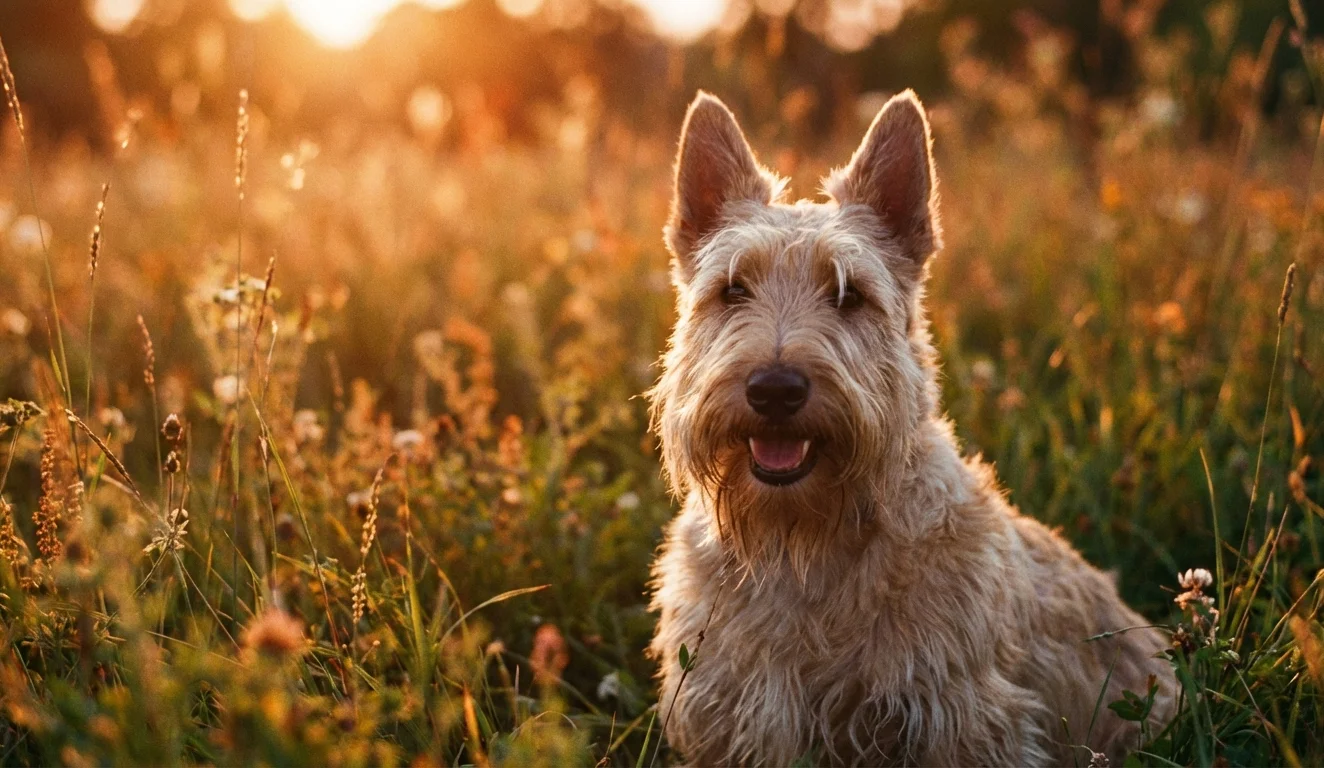
The head is long and narrow relative to the body, with a strong jaw, dark almond-shaped eyes set under heavy brows, and small, erect, pointed ears. The eyebrows, beard, and leg furnishings are the breed’s most recognizable grooming features, properly trimmed, a Scottie has a silhouette that’s instantly identifiable.
The overall impression is a small dog with the bearing of a much larger one. Scotties carry themselves with a level head, a purposeful gait, and what can only be described as an attitude. They walk like they own the ground they’re walking on.
Coat and Color
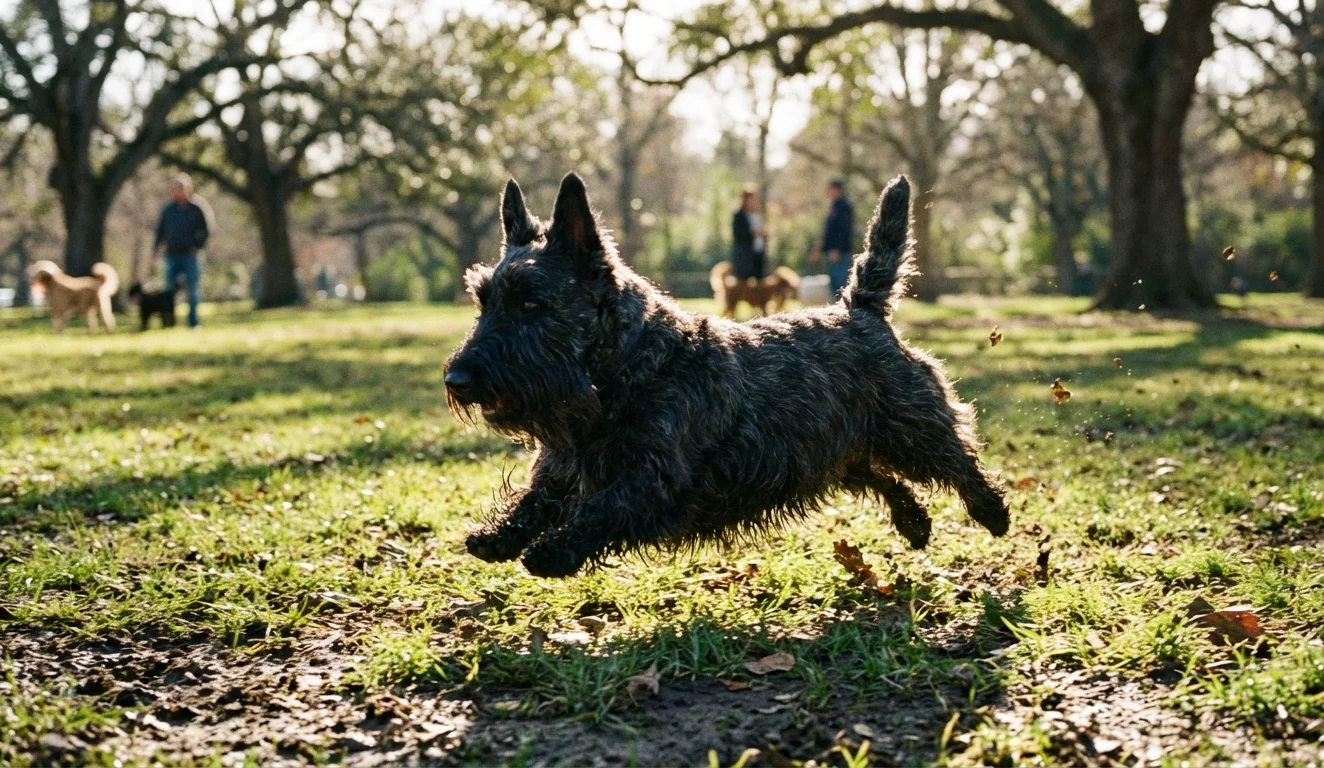
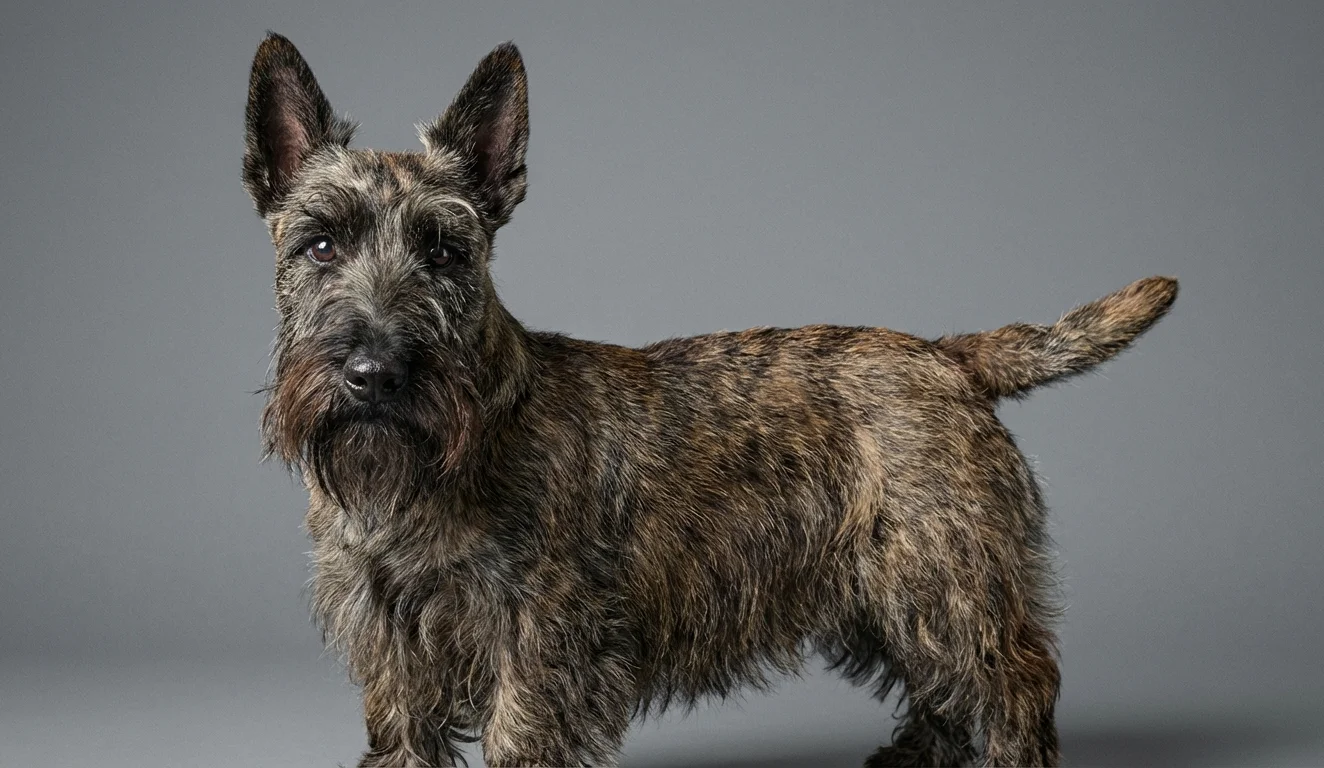
The coat is a double coat with a hard, wiry outer layer and a soft, dense undercoat. Three colors are standard: black (the most common and iconic), wheaten (a pale gold to reddish-wheat color), and brindle (a striped pattern in various shades). Black Scotties are what most people picture when they think of the breed, thanks to Fala and the Monopoly game piece.
The coat sheds very little, which is an advantage for people sensitive to dog hair. The trade-off is that it requires regular professional grooming to maintain the Scottie’s distinctive shape.
Scottish Terrier Temperament
The Scottish Terrier temperament is the reason people who love Scotties REALLY love Scotties, and the reason people who expect affectionate, eager-to-please dogs are bewildered by them. This is a dog that was bred to work alone underground, facing down badgers in pitch darkness. That job produced an animal that’s fearless, independent, and completely comfortable operating on its own judgment.
What living with a Scottie is actually like:
- Independent to the core. A Scottie doesn’t need your validation. They don’t follow you around the house seeking attention. They enjoy your company, but on their terms and their schedule. If you want a dog that gazes adoringly at you and lives for your praise, the Scottie will disappoint you profoundly.
- Loyal but not clingy. Scotties bond with their family, deeply, in fact, but they express it differently than most breeds. They’ll choose to be in the same room as you. They’ll rest near your feet. They’ll alert you to strangers. But they won’t crawl into your lap begging for belly rubs (most of them, anyway). Their loyalty is more like a quiet, constant presence.
- Territorial and alert. Scotties take their property seriously. They’ll bark at approaching strangers, delivery trucks, suspicious squirrels, and anything else that enters their domain. They’re excellent watchdogs, disproportionately effective for their size, because that bark sounds bigger than 20 pounds.
- Not great with small children. Scotties have low tolerance for being poked, prodded, grabbed, or handled roughly. They won’t tolerate a toddler pulling their ears or a child trying to ride them. They can snap when pushed past their threshold, which makes them a poor match for families with young kids. Older children who understand how to interact respectfully with dogs do much better with the breed.
- Same-sex aggression and dog selectivity. Many Scotties don’t get along with other dogs, particularly dogs of the same sex. They won’t start fights with larger dogs, but they absolutely won’t back down from one. This is a 20-pound dog with the confidence of a 120-pound dog, and that mismatch can lead to dangerous situations if owners aren’t managing it.
Exercise Needs
Scottish Terriers need 30-45 minutes of exercise per day. They’re moderate-energy dogs, active enough to enjoy a good walk and a play session, but not so high-energy that they’ll destroy your house if they miss a day.
Good exercise for Scotties:
- Daily walks. Two 15-20 minute walks at a moderate pace suit most Scotties well. They like to sniff and investigate, so don’t rush them.
- Yard exploration. A fenced yard where they can patrol, dig (they will dig), and check for invaders is excellent. Scotties treat the yard as their territory and take patrol duties seriously.
- Short play sessions. Tug-of-war, fetch with small toys, and interactive games work well in short bursts. Scotties play with intensity but don’t have the stamina for extended sessions.
- Earthdog trials. If you want to channel the breed’s natural instincts, earthdog competitions (where dogs work through underground tunnels to find caged rats, the rats are protected and not harmed) are a perfect fit. Scotties tend to excel at this.
What to watch for: Scotties have short legs and a long back, which means they’re not built for jumping, high-impact exercise, or sustained running. Avoid activities that stress the spine, and use ramps instead of stairs when possible (especially as the dog ages).
Grooming
The Scottie’s distinctive look doesn’t happen by accident. That silhouette, the bushy eyebrows, the full beard, the clean body lines, the leg furnishings, requires regular professional grooming.
Grooming routine:
- Brush 2-3 times per week with a slicker brush and comb, paying special attention to the leg furnishings and beard, which mat easily
- Professional grooming every 6-8 weeks. Hand-stripping maintains the correct wiry coat texture and is preferred for show dogs ($75-$125 per session). Pet Scotties are often clipped, which is faster and cheaper ($50-$80) but softens the coat texture over time.
- Beard maintenance daily. The Scottie beard collects food, water, and outdoor debris. Wipe after meals and dry after drinking to prevent matting and skin irritation.
- Bath every 4-6 weeks
- Nail trims every 2-3 weeks
The grooming commitment is real. Budget $500-$800 per year for professional grooming, plus your own time for between-appointment maintenance. An unmaintained Scottie coat becomes a matted, uncomfortable mess quickly.
Scottish Terrier Health Issues
Scotties have some breed-specific health concerns that are worth understanding. The ~12-year lifespan is slightly below average for a dog this size, and cancer rates in the breed are higher than in most small breeds.
Bladder Cancer (Transitional Cell Carcinoma)
This is the health issue that sets Scottish Terriers apart. Studies from Purdue University’s veterinary school found that Scotties are 18-20 times more likely to develop bladder cancer (transitional cell carcinoma, or TCC) than other breeds. It’s the most significant breed-specific cancer risk in the entire dog world. Symptoms include blood in the urine, straining to urinate, and frequent urination. Diagnosis involves urinalysis, ultrasound, and biopsy ($500-$1,500). Treatment typically involves NSAID therapy (piroxicam), chemotherapy, or surgery, costing $2,000-$8,000 depending on the protocol. Early detection through regular urinalysis (every 6-12 months after age 6) improves outcomes.
Scottie Cramp
This is a breed-specific neurological condition that affects movement during exercise or excitement. It’s caused by a serotonin metabolism disorder. Affected dogs develop an exaggerated, stiff-legged gait, sometimes described as “goose-stepping”, during periods of activity. It’s not painful and doesn’t worsen over time, but it can limit exercise tolerance. There’s no cure, but vitamin E supplementation and stress management help in some cases. Diagnosis costs $200-$500. Ongoing management is minimal ($100-$300 per year).
Von Willebrand’s Disease
This is a hereditary blood clotting disorder. Affected dogs bleed excessively from minor wounds or during surgery. A DNA test is available, and breeders should screen for it. Diagnosis costs $50-$200. Management primarily involves awareness, informing your vet before any surgical procedure so they can take precautions. Treatment for a bleeding episode can cost $500-$2,000 depending on severity.
Craniomandibular Osteopathy (CMO)
Sometimes called “Scottie jaw” or “lion jaw,” this condition causes irregular bone growth in the skull and jaw, typically appearing in puppies between 4-8 months old. It causes pain, difficulty eating, and jaw swelling. Most cases resolve as the dog matures (by 12-18 months), though some dogs retain permanent jaw changes. Pain management during active growth phases costs $300-$800. Severe cases that affect eating may require more intensive treatment.
Training
Training a Scottish Terrier is a masterclass in negotiation. They’re intelligent, they understand exactly what you’re asking. Whether they comply is a separate question entirely.
What works with Scottie training:
- Keep it brief and interesting. Scotties bore easily with repetition. Short sessions (3-5 minutes) with varied exercises keep them engaged. The moment a Scottie checks out mentally, the training session is over.
- Positive reinforcement. Treat-based training works with most Scotties, though some individuals are less food-motivated than you’d expect. Find what your specific Scottie values, food, a favorite toy, verbal praise, and use that.
- Respect the temperament. Harsh corrections, raised voices, and physical handling will ruin your relationship with a Scottie permanently. They don’t forgive easily, and they hold grudges. Seriously.
- Pick your battles. A perfectly obedient Scottie doesn’t exist. Prioritize the behaviors that matter most (recall, leash manners, not biting children) and accept that some commands will be followed on a “when I feel like it” basis.
- Early socialization. Expose the puppy to as many people, places, sounds, and other dogs as possible between 8-16 weeks. This won’t make a Scottie outgoing, but it can prevent the extreme suspicion and reactivity that develops in unsocialized dogs.
The honest truth about training a Scottie: you’re not going to win obedience competitions. What you can achieve is a well-mannered, well-socialized dog that understands the house rules and follows them most of the time. That’s a win with this breed.
Cost
Purchase Price
A Scottish Terrier puppy from a reputable breeder costs $1,200-$2,500. Show-quality puppies from titled parents may cost $3,000+. The breed isn’t as common as it once was, AKC registrations have declined significantly since the 1990s, so finding a reputable breeder may require a waitlist. Rescue adoption through the Scottish Terrier Club of America’s rescue network typically costs $250-$500.
Monthly Costs
| Expense | Monthly Estimate |
|---|---|
| Food (high-quality, small breed formula) | $25-$45 |
| Preventive vet care (averaged) | $15-$25 |
| Pet insurance | $25-$40 |
| Professional grooming (averaged monthly) | $40-$65 |
| Treats and chews | $10-$15 |
| Miscellaneous (toys, supplies) | $10-$20 |
| Total | $125-$210 |
First-Year Costs
First-year costs beyond the purchase price typically run $2,000-$3,500. This covers vaccinations, spay/neuter, an appropriate crate, professional grooming appointments (4-6 in the first year), training classes, supplies, and initial vet workup including von Willebrand’s testing if not done by the breeder. Grooming is the most significant ongoing cost specific to the breed.
Is a Scottish Terrier Right for You?
A Scottish Terrier could be a great fit if you:
- Appreciate an independent, self-sufficient dog that doesn’t demand constant attention
- Have experience with terrier breeds or similarly independent dogs
- Live in a house or apartment with a moderate activity level (Scotties adapt to apartment life better than many terriers)
- Are committed to regular professional grooming
- Want a dog that doubles as an alert, territorial watchdog
- Don’t have young children in the home
- Enjoy a dog with a distinct personality and a sense of humor that’s dry rather than slapstick
A Scottish Terrier is probably not right if you:
- Want a cuddly, affectionate dog that craves your attention
- Have young children or a chaotic household
- Want a dog that’s easy to train and eager to please
- Have other dogs (especially same-sex dogs) or small pets
- Don’t want to commit to regular grooming maintenance
- Want a dog for active outdoor sports like running or agility
- Expect obedience without negotiation
The Scottish Terrier is a little dog with a big opinion of itself, and honestly, that opinion might be justified. They’ve been the companions of presidents, the inspiration for one of the most recognizable Monopoly pieces, and the subject of more AKC Group wins than breeds three times their size. They don’t try to impress you. They don’t perform for treats (most of the time). They just exist in your space, on their own terms, with a quiet dignity that makes you feel like you should be earning their approval rather than the other way around. For the right person, that dynamic is perfect.
Related Breeds
If you’re considering this breed, you might also want to look at:
Frequently Asked Questions
Are Scottish Terriers good apartment dogs?
Yes, Scotties are one of the better terrier breeds for apartment living. Their moderate energy level, small size, and relative independence make them adaptable to smaller spaces. The concerns are barking (Scotties bark at sounds and passersby, which can bother neighbors) and the need for daily walks (they won’t exercise themselves indoors). If you can manage the barking and commit to daily outdoor time, a Scottie can thrive in an apartment.
Do Scottish Terriers shed?
Very little. The wiry coat holds dead hair rather than dropping it, which means minimal shedding on your furniture and clothes. The trade-off is that the dead coat needs to be removed through brushing and professional grooming (hand-stripping or clipping). Without regular grooming, the coat becomes matted and uncomfortable. So you’re trading shedding for grooming appointments, it’s a different kind of maintenance, not no maintenance.
Can Scottish Terriers be left alone?
Better than many breeds, yes. Scotties are independent enough that they don’t typically develop severe separation anxiety. Most adult Scotties handle 4-6 hours alone without problems, as long as they’ve had exercise and have something to do (a chew toy, a puzzle feeder). Full-day absences of 8+ hours are harder, any dog left alone that long needs a midday break, and a Scottie left alone with nothing to do will bark, dig, or find other ways to express displeasure.
Why are Scottish Terriers so expensive to own?
The biggest ongoing cost unique to Scotties is professional grooming, $500-$800 per year. Combined with their elevated bladder cancer risk (which means more frequent vet screenings as they age) and the normal costs of dog ownership, Scotties run $1,500-$2,500 per year to maintain properly. They’re not the most expensive breed to own, but they cost more than a short-coated, low-risk breed of similar size.