Chesapeake Bay Retriever Breed Guide: The Retriever That Won't Let You Slack Off (2026)
The Chesapeake Bay Retriever is tougher and more independent than any other retriever breed. That's either exciting or exhausting, depending on who you are.
The Chesapeake Bay Retriever is a large sporting dog that weighs 55-80 pounds, stands 21-26 inches tall, and lives 10-13 years. They were bred to retrieve ducks from the icy, choppy waters of the Chesapeake Bay, sometimes hundreds of birds in a single day. That origin story tells you everything about this breed’s personality. Chessies are built for harsh conditions and they act like it.
In Short: 55–80 lbs, 10–13 years. High energy. Moderate shedding. Watch for Hip Dysplasia. Good with kids, but better for experienced owners.
If you’ve ever met a Labrador Retriever and thought, “I love this dog, but I wish it had more backbone,” the Chesapeake Bay Retriever might be your breed. We say “might” because Chessies are significantly more challenging than Labs. They’re loyal, protective, and willing to work in conditions that would make most breeds quit. But they’re also stubborn, territorial, and less interested in being everyone’s best friend. This is the retriever for experienced dog people who want a real working partner, not just a friendly face at the dog park.
Chesapeake Bay Retriever at a Glance
| Trait | Details |
|---|---|
| Breed Group | Sporting (AKC) |
| Height | Males: 23-26 in / Females: 21-24 in |
| Weight | Males: 65-80 lbs / Females: 55-70 lbs |
| Life Expectancy | 10-13 years |
| Coat | Short, dense, oily, water-resistant double coat |
| Colors | Brown, Sedge, Deadgrass, Tan |
| Temperament | Affectionate, Bright, Sensitive, Loyal |
| Shedding | Moderate |
| Energy Level | High |
| Good With Kids | Yes (older kids preferred) |
| AKC Recognition | 1878 |
History
The Chesapeake Bay Retriever’s origin story is the stuff of legend, literally. In 1807, an English ship wrecked off the coast of Maryland, and two Newfoundland-type puppies were rescued from the wreckage. Named Sailor and Canton, these two dogs were bred with local retrievers in the Chesapeake Bay area over the following decades. The exact crosses are lost to history, but the result was a retriever purpose-built for the brutal conditions of the mid-Atlantic waterfowl hunting scene.
The Chesapeake Bay is cold, rough, and unpredictable. Market hunters in the 19th century needed dogs that could work all day in near-freezing water, fight through waves and current, and retrieve hundreds of ducks without slowing down. The Chessie became that dog. Their oily, waterproof coat, powerful build, and astonishing endurance made them the premier waterfowl retriever on the East Coast.
The AKC recognized the Chesapeake Bay Retriever in 1878, making it one of the earliest breeds registered. Maryland declared the Chessie its official state dog in 1964. Despite their impressive pedigree, they’ve never achieved the mainstream popularity of Labs or Goldens, and most Chessie enthusiasts prefer it that way.
The breed also has a reputation for being fiercely possessive of retrieved game. Stories from the market-hunting era describe Chessies guarding a pile of retrieved ducks from anyone except their handler. That guarding instinct, rare in the retriever family, is still present today and influences the breed’s personality in ways that set them apart from their more easygoing cousins.
Size and Appearance
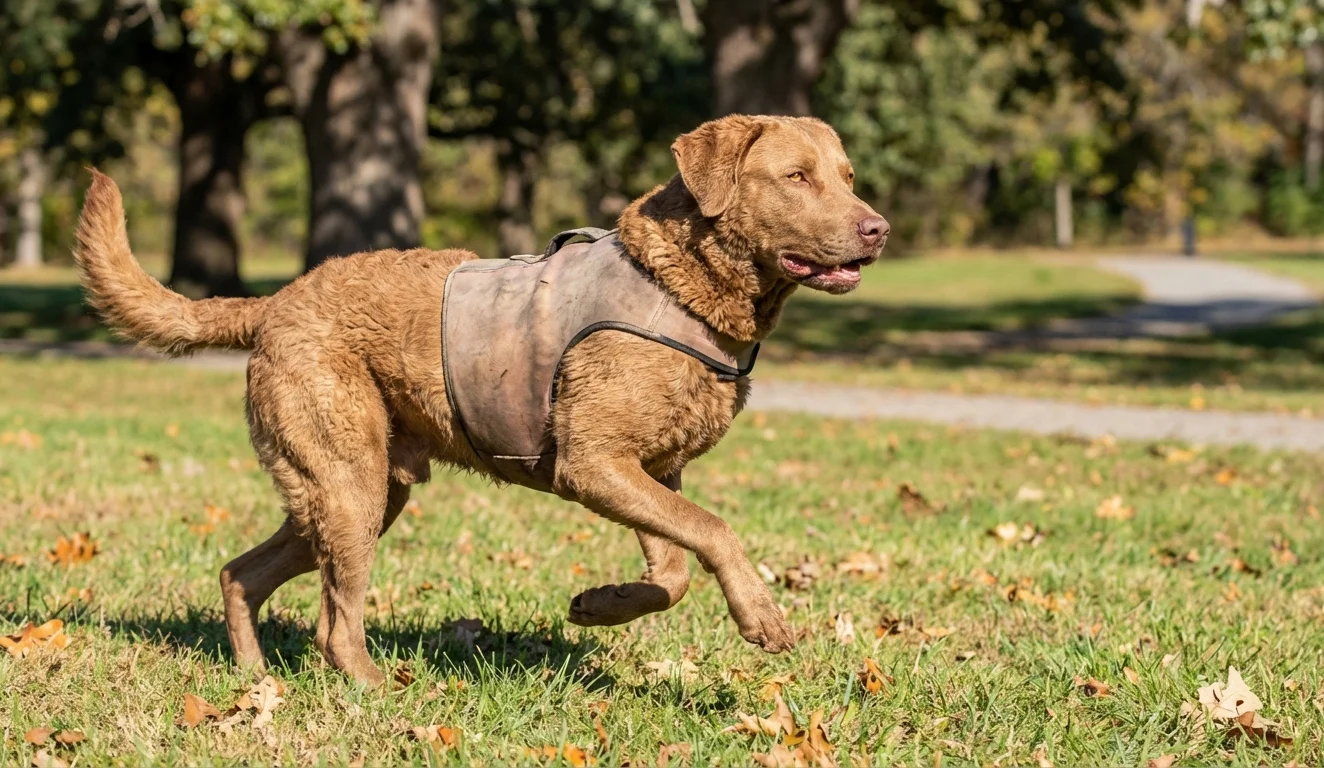
Chesapeake Bay Retrievers are solidly built dogs with a working-athlete physique. Males stand 23-26 inches at the shoulder and weigh 65-80 pounds. Females are smaller at 21-24 inches and 55-70 pounds. They’re similar in size to a Labrador but with a distinctly different look, broader in the chest, with powerful hindquarters built for swimming through rough water.
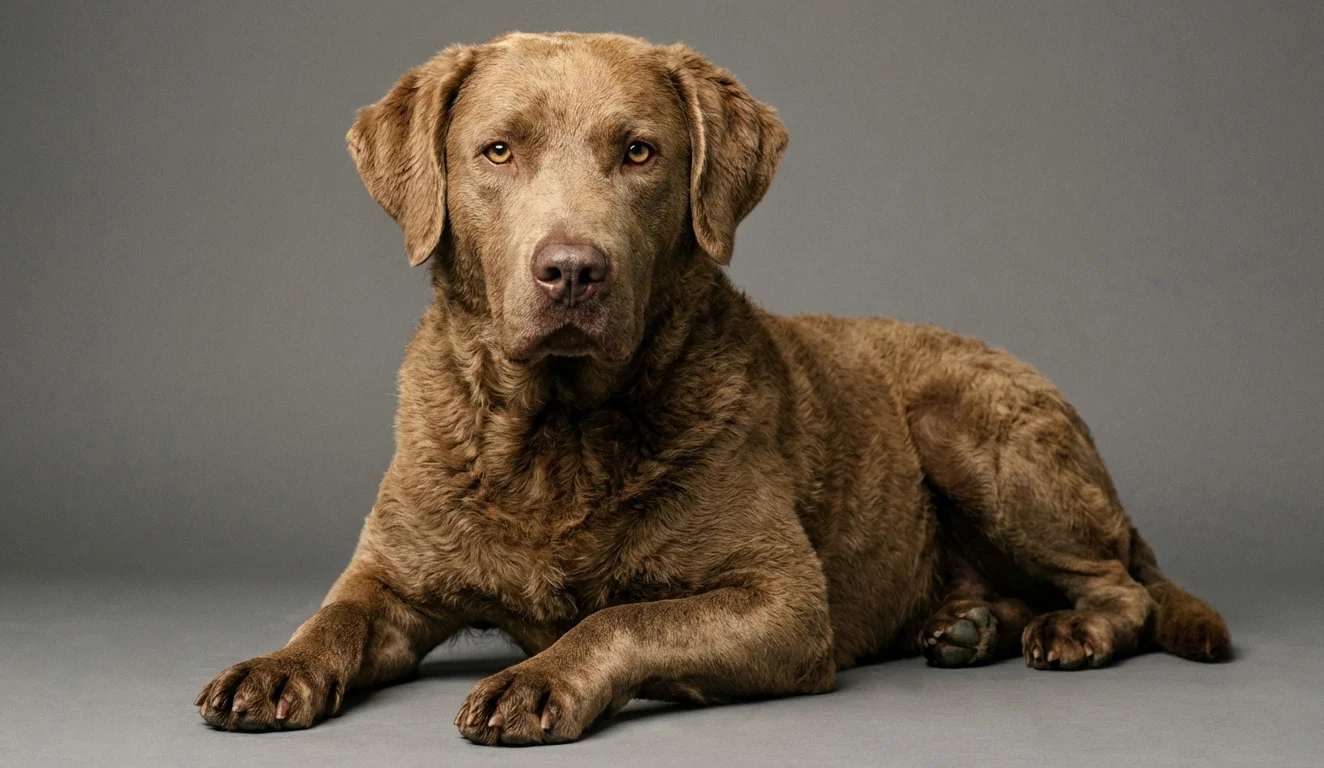
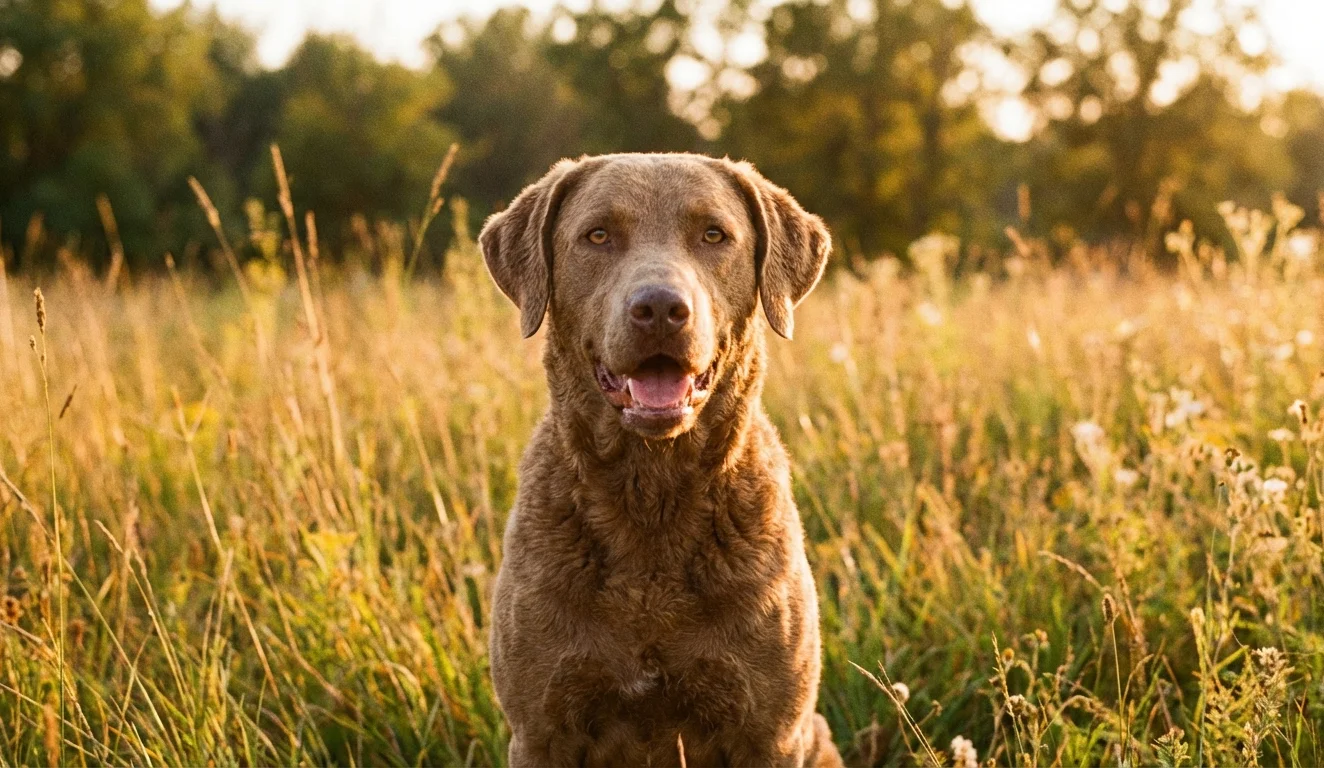
The coat is the Chessie’s most distinctive physical feature. It’s short, dense, and has an oily, almost waxy texture that makes it remarkably waterproof. Run your hand over a Chessie’s coat and it feels different from any other breed, slightly coarse and slick. The undercoat is thick and woolly. Water rolls off a Chessie like it rolls off a duck, which is exactly the point.
Color-wise, Chesapeake Bay Retrievers come in various shades of brown that have wonderfully specific names: brown (dark chocolate to light cocoa), sedge (red-gold to strawberry), deadgrass (dull tan to faded straw), and tan. The breed standard calls for colors that match the working environment of the Chesapeake Bay, think marsh grass and muddy banks, not show-ring flash.
Their eyes are distinctive too. Chessies have amber or yellow-green eyes that give them an intense, knowing expression. Combined with the broad skull and powerful jaw, the overall look is “retriever that has seen things.”
Chesapeake Bay Retriever Temperament
Here’s where the Chessie diverges sharply from other retriever breeds. Labs want to be everyone’s friend. Golden Retrievers want to make the whole world happy. Chesapeake Bay Retrievers want to protect their family and do their job. Full stop.
What sets Chessie temperament apart:
- One-family loyalty. Chessies are deeply bonded to their household. They’re affectionate and sometimes downright clingy with their people. But they’re reserved with strangers in a way that Labs simply aren’t. A Chessie won’t rush to greet every person at the park, they’ll hang back and assess the situation first.
- Protective instinct. Unlike most sporting breeds, Chessies have real guarding instincts. They’ll bark at unfamiliar visitors and position themselves between you and anything they find suspicious. This makes them surprisingly capable watchdogs for a retriever breed.
- Not great with other dogs. Chessies can be territorial and dog-selective, especially with same-sex dogs. Dog parks are generally not a great idea for this breed. Early socialization helps, but the underlying tendency is there.
- Sensitive under the tough exterior. This one surprises people. Despite their rugged looks and no-nonsense work ethic, Chessies are emotionally sensitive dogs. They’re attuned to their owner’s mood and can shut down or become anxious in tense environments. Harsh corrections hit this breed harder than you’d expect.
We think the Chesapeake Bay Retriever is the most underrated retriever breed. They get a reputation for being “difficult” when really they’re just different. A Chessie isn’t difficult, a Chessie just isn’t a Lab.
There’s a saying among Chessie owners: “A Lab will bring you the ball because it wants to please you. A Chessie will bring you the ball because it decided the ball needed to be brought.” That distinction matters. It’s the same end result, but the motivation is different, and the relationship you build with the dog is different because of it.
Exercise Needs
Chesapeake Bay Retrievers need about 60 minutes of vigorous exercise daily. These are high-energy working dogs bred for long days in the field, and a casual walk around the block won’t satisfy them.
Best exercises for Chessies:
- Swimming. Nothing makes a Chessie happier than water. If you live near a lake, river, or coast, you’ll have a hard time keeping your Chessie dry. Their waterproof coat and webbed feet make them natural swimmers, and they’ll happily retrieve bumpers from cold water that would send a Poodle running for the shore.
- Hunting. This is what they were bred for. If you’re a waterfowl hunter, a Chessie is an incredible field partner. Their endurance in cold water is unmatched among retriever breeds.
- Long hikes. Chessies are strong, sure-footed trail dogs. They have the stamina for all-day hikes without flagging.
- Retrieving drills. Even if you don’t hunt, structured retrieving exercises tap into the Chessie’s core instincts and provide great mental stimulation alongside physical exercise.
A bored Chessie is a problem Chessie. They’ll dig up your yard, chew your furniture, and bark at nothing. This isn’t a breed you can leave in the backyard and expect to entertain itself in a healthy way.
Chessie puppies have outsized energy needs. Plan for more exercise time during the first two years, with multiple sessions per day. Around age 3, most Chessies settle into a more predictable routine, though they never become couch potatoes. Senior Chessies (9+ years) may slow down and appreciate shorter, gentler outings, especially if joint issues develop.
Grooming
The Chesapeake Bay Retriever’s coat is low-maintenance compared to long-coated breeds, but it has some quirks.
Weekly brushing is sufficient for most of the year. During seasonal shedding (spring and fall), you’ll want to bump that up to every other day. The shedding is moderate, nowhere near as intense as a Husky or German Shepherd, but you’ll still find hair on your furniture.
The big grooming rule with Chessies: don’t over-bathe them. That oily, water-resistant coat is there for a reason, and frequent bathing strips the natural oils that keep the coat functional. Once every 2-3 months is plenty unless your dog rolls in something truly horrific (and they will, because they’re retrievers). If the coat starts to look dull or feel dry, you’re bathing too much.
After swimming, which will happen often with this breed, towel dry but don’t stress about getting them completely dry. The coat is designed to shed water quickly. Do check and dry the ears, though, since moisture in the ear canal leads to infections.
Nail trims every 2-3 weeks and teeth brushing a few times per week round out the routine.
One more thing: the Chessie coat has a distinctive smell. It’s not unpleasant, exactly, some owners describe it as musky or earthy, but it’s noticeable, especially when the coat is damp. It comes from the natural oils that make the coat waterproof. You get used to it, but guests will notice.
Chesapeake Bay Retriever Health Issues
Chesapeake Bay Retrievers are generally healthy with a lifespan of 10-13 years. But like all purebreds, they have breed-specific health concerns.
Hip Dysplasia
Hip dysplasia is common in Chessies. The condition causes abnormal hip joint development, leading to pain, lameness, and arthritis. Treatment costs range from $1,500-$6,000 depending on whether management or surgery is needed. OFA hip evaluations on both parents should be non-negotiable when choosing a breeder.
Progressive Retinal Atrophy (PRA)
PRA causes gradual vision loss and eventual blindness. It occurs with moderate frequency in the breed. DNA testing identifies carriers, and responsible breeders screen for it. Treatment costs are $2,000-$3,000, though there’s no cure for the underlying condition.
Bloat (Gastric Dilatation-Volvulus)
Chessies are deep-chested dogs at moderate risk for bloat, a life-threatening emergency where the stomach fills with gas and can twist on itself. Watch for a distended abdomen, pacing, and unproductive retching. Emergency surgery runs $2,000-$7,500. Feeding smaller, more frequent meals and avoiding exercise right after eating can reduce risk.
Degenerative Myelopathy
This progressive spinal cord disease causes hind-leg weakness and eventually paralysis. It appears with moderate frequency in Chessies and has no cure. Management costs run $500-$2,000 for supportive care, mobility aids, and physical therapy. A DNA test can identify at-risk dogs.
Von Willebrand Disease
This bleeding disorder affects blood clotting and occurs with moderate frequency in the breed. It can cause excessive bleeding during surgeries or after injuries. Treatment costs range from $500-$3,000. A DNA test is available, and breeders should test for it.
Given the number of breed-specific conditions, we strongly recommend pet insurance for Chesapeake Bay Retrievers. Getting a policy while your dog is still a puppy (before any pre-existing conditions develop) gives you the best coverage options. The breed’s joint issues alone can run thousands of dollars in treatment.
Training
Chesapeake Bay Retrievers are intelligent and capable of learning just about anything you throw at them. The challenge isn’t their brain, it’s their attitude. Chessies have an independent streak that’s wider than other retriever breeds, and they’ll sometimes decide they know better than you.
Training tips for Chessie owners:
- Be consistent and calm. Chessies respond well to steady, fair leadership. Losing your temper or being inconsistent will erode their trust quickly.
- Make it worth their while. Chessies aren’t as treat-obsessed as Labs, so you may need to find other motivators. Many Chessies are driven by retrieving, use a bumper or toy as a reward.
- Don’t drill endlessly. Repeating the same exercise over and over bores a Chessie. Once they’ve got it, move on. If you keep asking for the same sit fifteen times, they’ll start ignoring you, not out of defiance, but out of genuine disinterest.
- Socialization is critical. Given their protective and sometimes dog-aggressive tendencies, early socialization from 8-16 weeks is extremely important. Expose them to different people, dogs (in controlled settings), and environments.
- Channel the work drive. Chessies need a job. Whether it’s hunt training, dock diving, tracking, or obedience competitions, giving your Chessie structured work to do makes them calmer and better behaved at home.
This is not a great breed for first-time owners. We recommend Chessies for people who’ve already trained at least one other dog, ideally a working breed, and understand that “smart” doesn’t always mean “eager to please.”
Cost
Purchase Price
A Chesapeake Bay Retriever puppy from a reputable breeder costs $1,000-$2,500. Puppies from proven hunting lines or show champions may cost more. Chessie-specific rescues exist, with adoption fees typically running $300-$600.
Monthly Costs
| Expense | Monthly Estimate |
|---|---|
| Food (high-quality, large breed) | $45-$70 |
| Preventive vet care (averaged) | $15-$30 |
| Pet insurance | $35-$60 |
| Treats and chews | $10-$20 |
| Miscellaneous (toys, supplies) | $10-$25 |
| Total | $100-$200 |
First-Year Costs
Budget $3,500-$6,000 for your first year. This covers the purchase price, initial veterinary workup, vaccinations, supplies, and the inevitable “my puppy chewed something expensive” fund.
Is a Chesapeake Bay Retriever Right for You?
A Chesapeake Bay Retriever is a great fit if you:
- Are an experienced dog owner who’s comfortable with independent-minded breeds
- Hunt waterfowl or want a dog for water-based activities
- Want a retriever with more protective instincts than a Lab or Golden
- Have a securely fenced yard with access to water
- Can commit to daily vigorous exercise
- Appreciate a dog that’s loyal to its core but doesn’t need to be everyone’s buddy
A Chesapeake Bay Retriever might NOT be right if you:
- Want the easygoing friendliness of a Labrador or Golden Retriever
- Have multiple dogs already, especially same-sex dogs
- Are a first-time dog owner
- Don’t have time for serious daily exercise
- Want a dog that’s enthusiastic about meeting strangers and other animals
We think the Chessie is the best-kept secret in the retriever world. They’re not the right dog for most families, but for the right person, usually someone active who spends time outdoors and near water, a Chessie is a once-in-a-lifetime companion. They’ll work harder for you than any dog you’ve ever owned. They just expect you to earn their respect first.
Related Breeds
If you’re considering this breed, you might also want to look at:
FAQ
How is a Chesapeake Bay Retriever different from a Labrador Retriever?
They look similar at a glance, but the personality difference is significant. Labs are social butterflies, friendly with everyone, eager to please, happy to go with the flow. Chessies are more reserved with strangers, more protective of their family, and more independent in their thinking. Physically, Chessies have a distinctive oily, wavy coat and amber eyes. Training-wise, Labs are generally more forgiving of beginner mistakes, while Chessies need consistent, experienced handling.
Are Chesapeake Bay Retrievers good family dogs?
They can be, with the right family. Chessies are loyal and affectionate with their people, and they do well with older children who understand how to interact with dogs. We wouldn’t recommend them for families with very young children, mostly because of the breed’s size and sometimes possessive tendencies. They’re also not ideal for households with multiple pets unless carefully socialized from puppyhood.
Do Chesapeake Bay Retrievers like water?
They don’t just like water, they’re obsessed with it. The Chessie’s entire breed history is built around water work, and that instinct runs deep. Most Chessies will charge into any body of water they see, regardless of temperature. Their oily, waterproof coat and thick undercoat allow them to swim comfortably in water that would be dangerous for less equipped breeds. If you don’t want a dog that’s perpetually damp, consider a different breed.
How much exercise does a Chesapeake Bay Retriever need?
About 60 minutes of vigorous exercise per day for adults. Puppies need shorter, more frequent sessions. “Vigorous” is the key word, a leisurely neighborhood stroll doesn’t count. Swimming, long hikes, retrieving drills, and running are all good options. A Chessie without adequate exercise will become destructive and hard to live with.
Are Chesapeake Bay Retrievers easy to train?
Easier than, say, an Akita, but harder than a Lab. Chessies are intelligent and capable learners, but they have an independent streak. They’ll sometimes test boundaries or decide a particular command isn’t worth following. Positive reinforcement with variety works best. Harsh methods will backfire. If you keep training sessions interesting and respect the dog’s intelligence, you’ll get excellent results.