Bullmastiff Breed Guide: 130 Pounds of Quiet Confidence and Couch Hogging (2026)
The Bullmastiff is a calm, powerful guardian breed that will protect your home and then steal your spot on the sofa without a shred of guilt.
The Bullmastiff weighs 100-130 pounds, stands 24-27 inches at the shoulder, and lives 7-9 years. That lifespan is the first hard truth about giant breeds, you get fewer years than you want. But the years you get with a Bullmastiff are filled with a kind of quiet devotion that’s hard to find in other breeds. This is a dog that was literally bred to guard without biting, to intimidate without barking, and to knock down poachers in the dark English countryside without making a sound. Today, most of them use those skills to silently claim the best seat in the house and pin you to the couch with sheer body mass.
In Short: 100–130 lbs, 7–9 years. Moderate energy, a couple of good walks will do it. Moderate shedder. Watch for Hip Dysplasia and Bloat. Best for experienced owners who want a loyal, low-key guardian.
The AKC recognized the Bullmastiff in 1934, and the breed has always occupied a specific niche: people who want a big, protective dog that doesn’t need hours of exercise or constant stimulation. If you’re looking for a jogging partner or an agility star, keep scrolling. But if you want a dog that radiates calm authority, bonds deeply with your family, and treats strangers with polite suspicion until you give the all-clear, the Bullmastiff is worth a serious look.
Bullmastiff at a Glance
| Trait | Details |
|---|---|
| Breed Group | Working (AKC, 1934) |
| Height | Males: 25-27 in / Females: 24-26 in |
| Weight | Males: 110-130 lbs / Females: 100-120 lbs |
| Life Expectancy | 7-9 years |
| Coat | Short, dense |
| Colors | Fawn, Red, Brindle (all with black mask) |
| Temperament | Loyal, Brave, Affectionate |
| Shedding | Moderate |
| Energy Level | Moderate |
| Good With Kids | Yes (with supervision) |
| First-Time Owner Friendly | No |
History
The Bullmastiff was developed in mid-19th century England for a very specific job: catching poachers on large country estates. Gamekeepers needed a dog that could track a poacher at night, overtake them, pin them to the ground, and hold them without mauling them. A dead poacher was a legal problem. A restrained one was a conviction.
Gamekeepers crossed the English Mastiff (massive but too slow) with the English Bulldog of the era (athletic but too small and too aggressive) to create a 60/40 Mastiff-to-Bulldog mix that combined size with speed and had the temperament to knock a man down without tearing him apart. The resulting dog, called the “Gamekeeper’s Night Dog”, was exactly what they needed. Dark brindle was the preferred color because it was harder to see in the dark.
By the early 1900s, the breed had standardized enough for the English Kennel Club to grant recognition in 1924. The AKC followed in 1934. As poaching declined and estate security modernized, the Bullmastiff transitioned from working guard dog to family companion and property guardian. The breed’s natural protectiveness remained, but generations of selective breeding softened the intensity. Today’s Bullmastiff is a calm, confident dog that watches and assesses rather than charging and attacking.
Size and Appearance
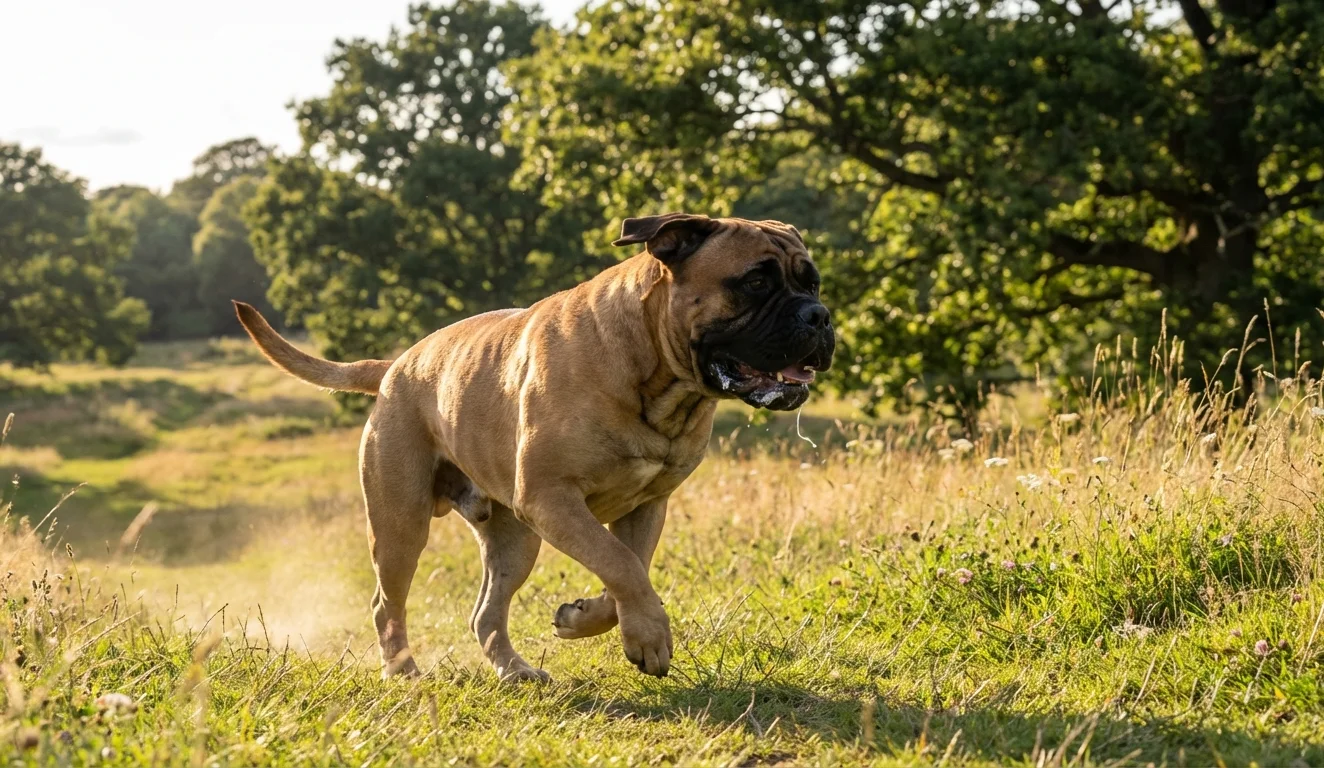
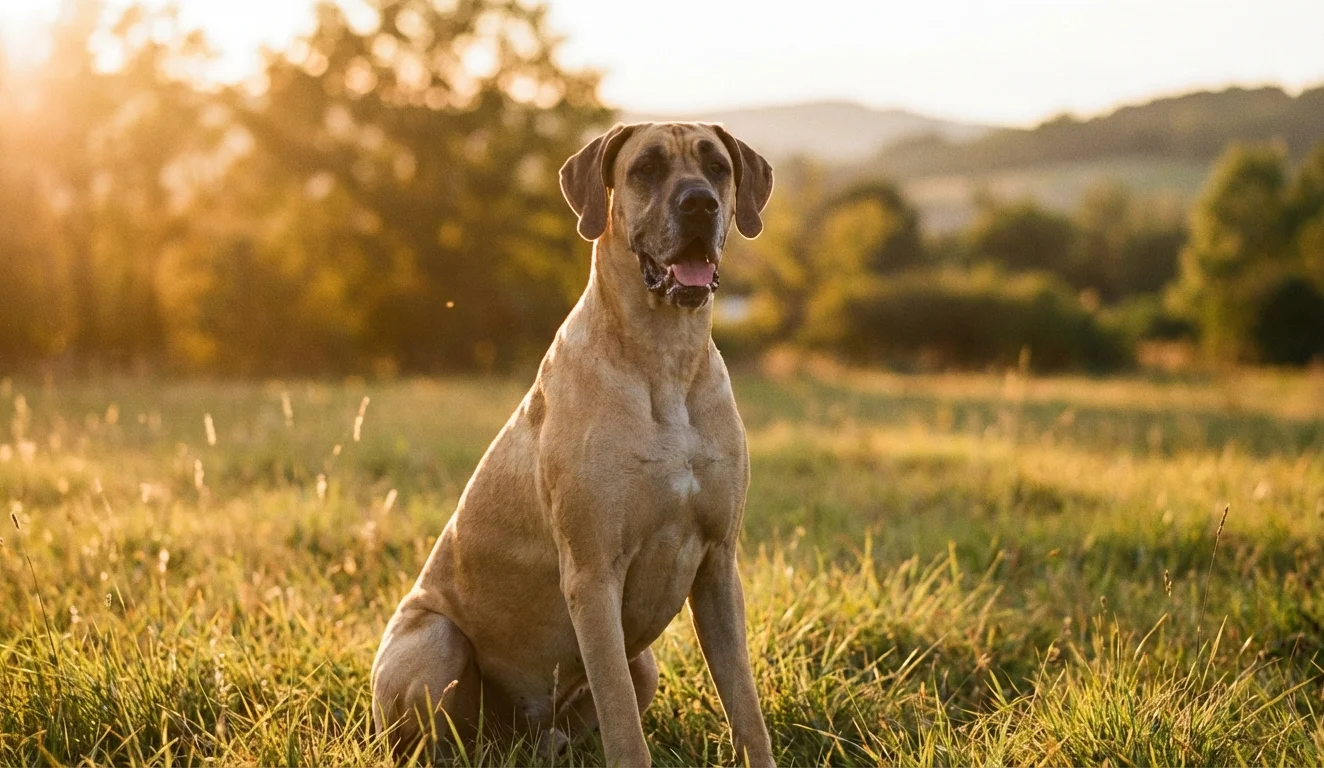
Bullmastiffs are big, but they’re built differently than other giant breeds. Where a Great Dane is tall and leggy, a Bullmastiff is broad, dense, and low to the ground (relatively speaking). Males stand 25-27 inches and weigh 110-130 pounds. Females are 24-26 inches and 100-120 pounds. They’re all muscle and bone, a Bullmastiff feels heavier than they look, and they already look heavy.
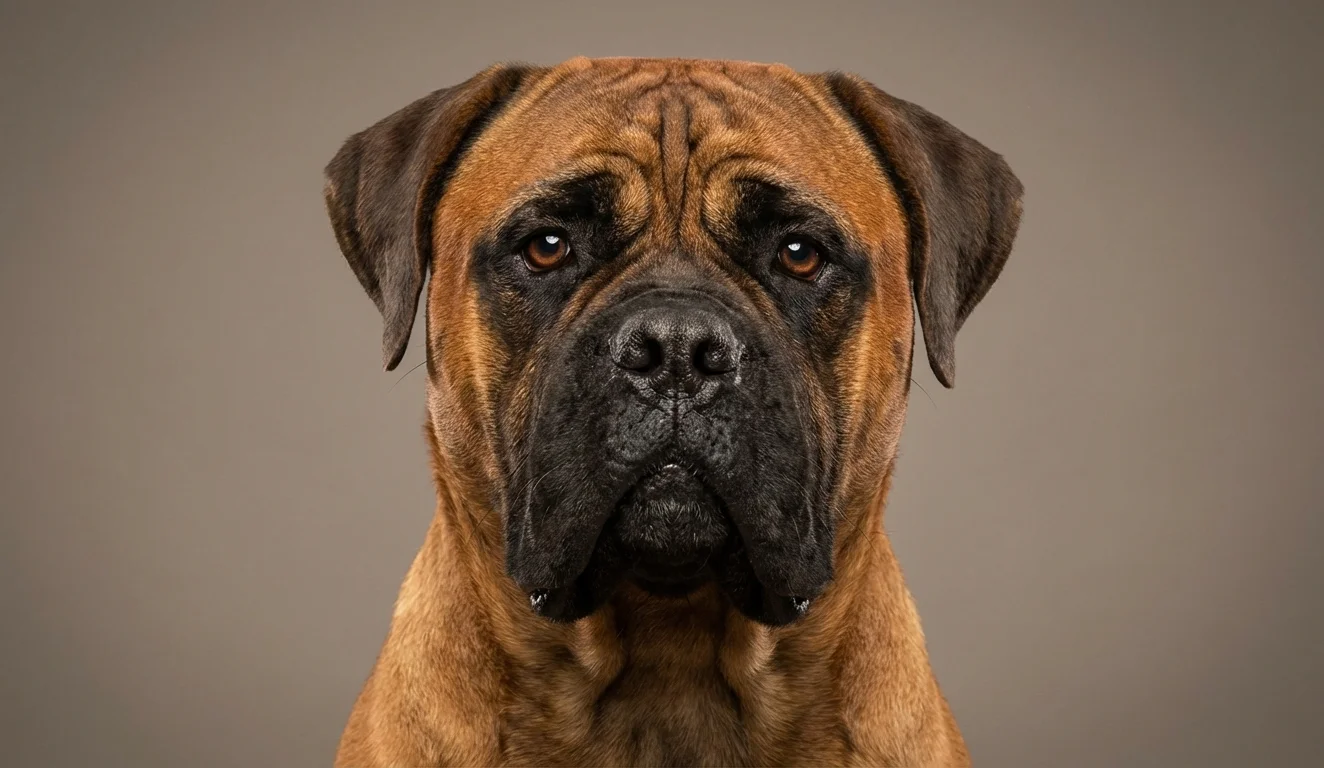
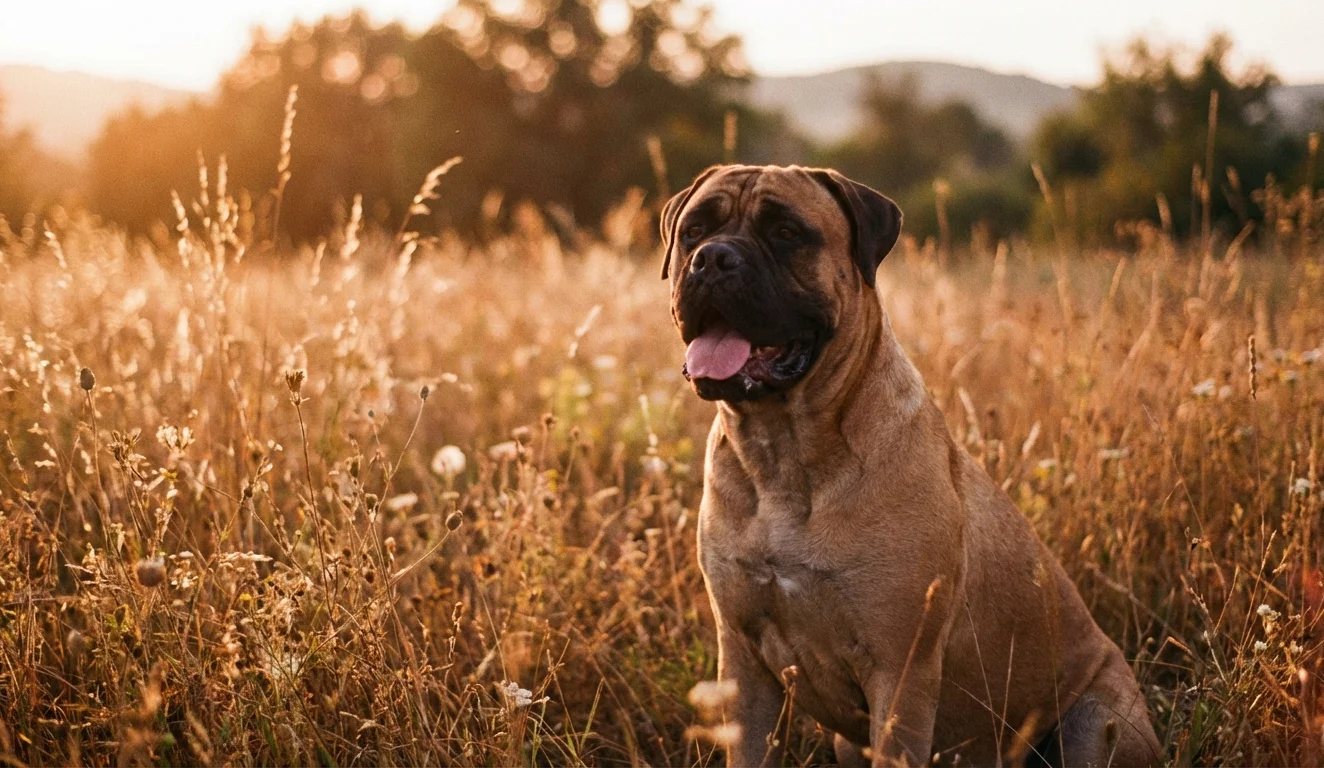
The head is the breed’s signature feature: large, broad, and wrinkled, with a short muzzle, dark eyes, and V-shaped ears that fold close to the head. The muzzle isn’t as flat as a Boxer’s or an English Bulldog’s, but it’s short enough that the breed is considered brachycephalic. This means they don’t handle heat well and can have some respiratory limitations (more on that later).
The body is powerful and symmetrical, deep chest, level topline, muscular hindquarters. Despite their bulk, well-conditioned Bullmastiffs move with surprising agility. They’re not clumsy dogs. They’re just… substantial.
Coat and Color
The coat is short, dense, and weather-resistant. It lies flat against the body and requires minimal grooming. Three colors are accepted: fawn (light tan to reddish-brown), red (a darker, richer shade), and brindle (a striped pattern over fawn or red base). All three colors feature the breed’s trademark black mask on the face and ears.
Bullmastiff Temperament
The Bullmastiff temperament is best described as “quiet intensity.” They’re not nervous, they’re not excitable, and they’re not the kind of dog that bounces off the walls when the doorbell rings. Instead, they observe. They assess. And if they decide something is a threat, they position themselves between that threat and their family with a calm certainty that’s honestly more intimidating than barking.
What living with a Bullmastiff is actually like:
- Loyal to the point of possessiveness. Bullmastiffs attach deeply to their family and can become protective of “their people” in ways that need management. Early socialization helps them understand that not every visitor is a threat, but the protective instinct is always there.
- Naturally suspicious of strangers. Unlike breeds that greet everyone with enthusiasm, a Bullmastiff watches new people carefully. They’ll typically stay close to you, observe the stranger, and only relax once they take their cues from your body language. Once they accept someone, they’re friendly. But that acceptance has to be earned.
- Calm inside the house. Adult Bullmastiffs are remarkably chill indoors. They’re content to lie near you (or on you, if you let them), and they don’t need constant activity. Many owners describe them as the world’s largest lap dog.
- Stubborn. This is a breed that thinks before acting. If a Bullmastiff doesn’t see the point of a command, they’ll stand there and stare at you with an expression that clearly says, “No, I don’t think I will.” This isn’t ignorance, it’s deliberate non-compliance.
- Surprisingly sensitive. For a breed this tough-looking, Bullmastiffs are emotionally perceptive. They pick up on stress, arguments, and tension in the household. Harsh training methods backfire because the dog either shuts down or becomes resentful.
Exercise Needs
Bullmastiffs need 30-45 minutes of exercise per day. That’s refreshingly moderate for a dog this size, and it’s one of the breed’s biggest selling points. A couple of walks and some yard time will keep most Bullmastiffs content.
Good exercise for Bullmastiffs:
- Structured walks. Two 20-minute walks per day at a moderate pace covers the baseline. Bullmastiffs don’t need distance, they need consistency.
- Yard play. A fenced yard where they can patrol, sniff, and move at their own pace is ideal. Bullmastiffs aren’t fetch-obsessed, but some enjoy short play sessions.
- Mental stimulation. Puzzle feeders, training sessions, and scent games engage the breed’s intelligence without stressing their joints.
What to avoid:
- Running or jogging. Bullmastiffs are not built for sustained cardiovascular exercise. Their bulk and brachycephalic features make them poor running partners. Forced jogging can damage joints and cause overheating.
- Intense exercise in heat. The short muzzle limits their ability to cool themselves. Summer exercise should be restricted to cool hours, and you should always watch for signs of heat stress: excessive panting, drooling, stumbling, or glazed eyes.
- Over-exercising puppies. Bullmastiff puppies grow fast, some gain 3-5 pounds per week during peak growth. Their developing joints can’t handle stairs, jumping, or long walks until they’re 12-18 months old. Keep exercise gentle and brief during the first year.
Grooming
Bullmastiffs are about as low-maintenance as grooming gets. The short coat doesn’t mat, doesn’t tangle, and doesn’t need professional attention.
Grooming routine:
- Brush once a week with a rubber curry brush or bristle brush to remove loose hair and distribute oils
- Bath every 6-8 weeks or as needed, they don’t have a strong odor, but they do drool, which can create its own smell situation
- Clean facial wrinkles daily. This is the non-negotiable grooming task. Moisture and bacteria collect in the facial folds, leading to skin infections if not kept clean and dry. A daily wipe with a damp cloth followed by a dry one takes 30 seconds and prevents problems.
- Nail trims every 2-3 weeks
- Drool management. Bullmastiffs drool. Not as much as a Saint Bernard or a Mastiff, but more than most breeds. Keep a towel handy. They drool more after drinking, eating, and during exercise.
Shedding is moderate, you’ll find hair on your clothes and furniture, but it’s nothing compared to a double-coated breed. A weekly brushing session keeps it manageable.
Bullmastiff Health Issues
The Bullmastiff’s relatively short lifespan reflects the health challenges common to giant breeds. 7-9 years is the typical range, and responsible ownership means regular vet visits and awareness of the breed’s predispositions.
Hip and Elbow Dysplasia
The OFA reports that roughly 24% of Bullmastiffs are affected by hip dysplasia, which is above average for all breeds. Elbow dysplasia is also common. Both conditions involve improper joint development leading to arthritis, pain, and mobility limitations. Symptoms include lameness, stiffness after rest, and reluctance to jump or climb stairs. Treatment ranges from weight management and anti-inflammatory medications ($500-$1,500 per year) to joint replacement surgery ($3,500-$7,000 per joint). Always confirm that breeders have OFA evaluations on both parents.
Bloat (Gastric Dilatation-Volvulus)
Bullmastiffs have a deep chest and are at significant risk for bloat, where the stomach fills with gas and can rotate on itself. This is an emergency that can kill a dog within hours. Symptoms include a distended belly, non-productive retching, pacing, and visible distress. Emergency surgery costs $2,000-$5,000. Preventive gastropexy during spay/neuter ($400-$800) is recommended by many breed clubs and veterinary surgeons.
Cancer
Cancer is the leading cause of death in Bullmastiffs, with lymphoma and osteosarcoma (bone cancer) among the most common types. The American Bullmastiff Association reports a higher cancer incidence than the general dog population. Treatment costs vary widely, chemotherapy runs $3,000-$10,000+, and surgical removal of tumors ranges from $1,500-$5,000 depending on location and complexity. Regular wellness exams and prompt investigation of any lumps, bumps, or sudden behavioral changes give the best chance of early detection.
Hypothyroidism
Underactive thyroid is moderately common in the breed. Signs include unexplained weight gain, lethargy, skin issues, and a dull coat. It’s diagnosed with blood work and managed with daily medication, costing $200-$500 per year for medication and monitoring.
Training
Bullmastiffs are smart and capable of learning, but they’re not eager students. Training this breed requires patience, consistency, and an acceptance that obedience will always be on the Bullmastiff’s terms to some degree.
What works:
- Start early. A 15-pound Bullmastiff puppy that jumps on people is cute. A 120-pound adult that does the same thing is dangerous. Manners and basic obedience need to start the day the puppy comes home.
- Positive reinforcement. Food motivation is your friend. Bullmastiffs respond well to treat-based training and praise. They respond poorly to leash corrections, raised voices, and anything that feels adversarial.
- Socialization is non-negotiable. The breed’s natural suspicion of strangers needs to be balanced with extensive positive exposure to different people, places, and dogs during the first year. An unsocialized Bullmastiff can become genuinely problematic, they have the size and power to back up misguided protectiveness.
- Leash manners. A pulling Bullmastiff is a physics problem. They outweigh most handlers, and if they decide to lunge, you’re going with them. Use a front-clip harness and practice loose-leash walking consistently.
- Keep it interesting. Bullmastiffs bore easily with repetitive drills. Vary the routine, keep sessions under 10 minutes, and quit while the dog is still engaged.
Cost
Purchase Price
A Bullmastiff puppy from a reputable breeder typically costs $1,500-$3,000. Show-quality dogs from health-tested parents may run higher. Rescue adoption through breed-specific organizations usually runs $300-$600.
Monthly Costs
| Expense | Monthly Estimate |
|---|---|
| Food (high-quality, large/giant breed formula) | $70-$120 |
| Preventive vet care (averaged) | $25-$40 |
| Pet insurance | $40-$65 |
| Treats and chews | $15-$25 |
| Miscellaneous (toys, supplies, drool towels) | $15-$30 |
| Total | $165-$280 |
First-Year Costs
First-year expenses beyond the purchase price typically run $3,500-$6,000. This includes vaccinations, spay/neuter with gastropexy, a giant-breed crate, orthopedic dog bed, initial vet workup, and supplies sized for a dog that will weigh over 100 pounds by its first birthday. Pet insurance for giant breeds is more expensive than average, expect $40-$65 per month, but given the breed’s health predispositions, it’s worth considering.
Is a Bullmastiff Right for You?
A Bullmastiff could be a great fit if you:
- Want a loyal, protective companion without the exercise demands of a high-energy breed
- Have experience handling large or giant breeds
- Have a house with space for a 100+ pound dog (they need room to stretch out)
- Want a natural deterrent that doesn’t require formal protection training
- Can commit to early socialization and consistent training
- Don’t mind drool on your clothes, furniture, and occasionally the ceiling
- Are home frequently, Bullmastiffs are people-oriented and don’t do well left alone for long stretches
A Bullmastiff is probably not right if you:
- Are a first-time dog owner
- Want a dog for running, hiking, or high-intensity outdoor activities
- Live in a hot climate without reliable air conditioning
- Have a small living space with no yard
- Want a dog that’s immediately friendly with every stranger and dog they meet
- Are uncomfortable with a breed that has guardian instincts (liability considerations matter)
- Aren’t prepared for the financial reality of giant-breed veterinary care
The Bullmastiff is a breed for people who appreciate strength delivered quietly. They don’t need to bark to be intimidating, they don’t need to run marathons to be happy, and they don’t need constant entertainment to be content. What they need is a family that includes them, a home that accommodates their size, and an owner who understands that behind all that muscle is a deeply sensitive dog that wants nothing more than to be near the people it loves.
Related Breeds
If you’re considering this breed, you might also want to look at:
Frequently Asked Questions
Are Bullmastiffs aggressive?
Not inherently, but they are protective. There’s a difference. A well-socialized, well-trained Bullmastiff isn’t going to attack people randomly. But they were bred to guard, and that instinct is real. Without proper socialization, a Bullmastiff can become overly protective or reactive toward strangers. This is why early and ongoing exposure to new people and situations is so important. The breed’s original purpose was to restrain, not maul, they’re more likely to body-block a stranger than to bite. But any dog over 100 pounds that hasn’t been properly socialized is a liability.
How much do Bullmastiffs drool?
More than average, less than a Saint Bernard. Most Bullmastiff owners keep towels in strategic locations around the house. Drool increases after eating, drinking, exercising, and when the dog is hot or excited. The degree varies by individual, some Bullmastiffs are relatively tidy, while others leave strings of drool on furniture, walls, and unsuspecting guests. If drool is a hard no for you, this probably isn’t your breed.
Do Bullmastiffs get along with other dogs?
It depends. Many Bullmastiffs do well with dogs they’re raised with, but the breed can show same-sex aggression, especially males with other males. Early socialization helps, but it doesn’t guarantee dog-friendliness. If you already have a dog, introducing a Bullmastiff puppy (rather than an adult) gives you the best chance of a peaceful household. Dog parks can be risky with this breed, their size and confident body language can trigger reactive dogs, and if a fight starts, the Bullmastiff’s power makes it a serious situation.
Can Bullmastiffs live in apartments?
It’s possible but not ideal. They’re calm enough indoors that some apartment dwellers make it work, but their size creates practical challenges. A Bullmastiff takes up a lot of floor space, needs room to stretch out comfortably, and can be difficult to manage in elevators and narrow hallways. If you’re set on apartment living with a Bullmastiff, make sure the building allows the breed (many don’t, due to insurance restrictions) and commit to daily walks for exercise and bathroom breaks.
Why do Bullmastiffs have such short lifespans?
The 7-9 year average reflects the health toll that extreme size takes on the body. Larger dogs age faster at the cellular level, their hearts, joints, and organs work harder to support their mass. Cancer rates are also higher in giant breeds. The best way to maximize your Bullmastiff’s lifespan is to keep them at a lean body weight, feed a high-quality diet, maintain regular vet visits, and buy from a breeder who tests for hip dysplasia, heart conditions, and other hereditary health issues.