Anatolian Shepherd Breed Guide: 150 Pounds of 'I'll Handle It Myself' (2026)
The Anatolian Shepherd was bred to guard livestock against wolves. That independent streak didn't come with an off switch.
The Anatolian Shepherd is a powerful livestock guardian breed that weighs 80-150 pounds, stands 27-29 inches tall, and lives 11-13 years. Originally from the Anatolian Plateau in Turkey, one of the oldest continuously inhabited regions on Earth, this breed has been protecting flocks from wolves, bears, and jackals for over 6,000 years. That’s not a typo. Six thousand years. While other breeds were being developed for hunting, companionship, or retrieving, the Anatolian Shepherd was making life-or-death decisions in open fields with zero human supervision.
In Short: 80–150 lbs, 11–13 years. Moderate energy with high endurance. Moderate shedding with seasonal blowouts. Watch for Hip Dysplasia. Best for experienced owners with acreage.
The Anatolian Shepherd is the breed equivalent of hiring a security guard who doesn’t report to anyone. They’re loyal, they’re effective, and they’ll protect your family and property with unwavering commitment. But they didn’t get thousands of years of independent decision-making bred into them just to sit when you ask nicely. If you want a dog that looks to you for guidance on every decision, get a German Shepherd. If you want a dog that handles threats on its own and then comes back inside for a nap, the Anatolian might be your match, provided you have the experience, the space, and the fencing to handle it.
Anatolian Shepherd at a Glance
| Trait | Details |
|---|---|
| Breed Group | Working (AKC) |
| Height | Males: 29 in / Females: 27 in |
| Weight | Males: 110-150 lbs / Females: 80-120 lbs |
| Life Expectancy | 11-13 years |
| Coat | Short to medium double coat |
| Colors | Fawn with black mask (most common), Brindle, White, Biscuit, Blue Fawn |
| Temperament | Independent, Loyal, Territorial, Calm |
| Shedding | Moderate (heavy seasonal blowouts) |
| Energy Level | Moderate |
| Good With Kids | Yes, with supervision for young children |
| AKC Recognition | 1996 |
History
The Anatolian Shepherd’s history reads like a timeline of civilization itself. Archaeological evidence from the Anatolian Plateau, modern-day Turkey, shows large guardian dogs working alongside nomadic shepherds as far back as 4000 BCE. These dogs weren’t pets. They were working partners in a genuinely dangerous environment, responsible for protecting flocks of sheep and goats against wolves, bears, and human thieves across vast, open terrain.
The breed developed through thousands of years of natural selection and practical breeding. Turkish shepherds didn’t care about appearance or conformation, they cared about results. Dogs that could survive harsh winters, go days on minimal food, make sound independent decisions about threats, and physically confront predators when necessary were bred. Dogs that couldn’t were not. This ruthless selection process produced one of the hardiest, most self-sufficient breeds in existence.
Anatolian Shepherds arrived in the United States in the 1950s when the Department of Agriculture imported a breeding pair as part of a livestock protection program. The breed gained wider attention in the 1970s and 1980s as ranchers in the American West, particularly in areas with coyote and wolf populations, discovered that a single Anatolian could protect a flock more effectively (and more humanely) than traps or poison. The Cheetah Conservation Fund in Namibia has used Anatolian Shepherds since 1994 to protect livestock from cheetahs, reducing livestock losses by 80-100% on farms that adopted the dogs, and saving cheetahs from retaliatory killings in the process.
Size and Appearance
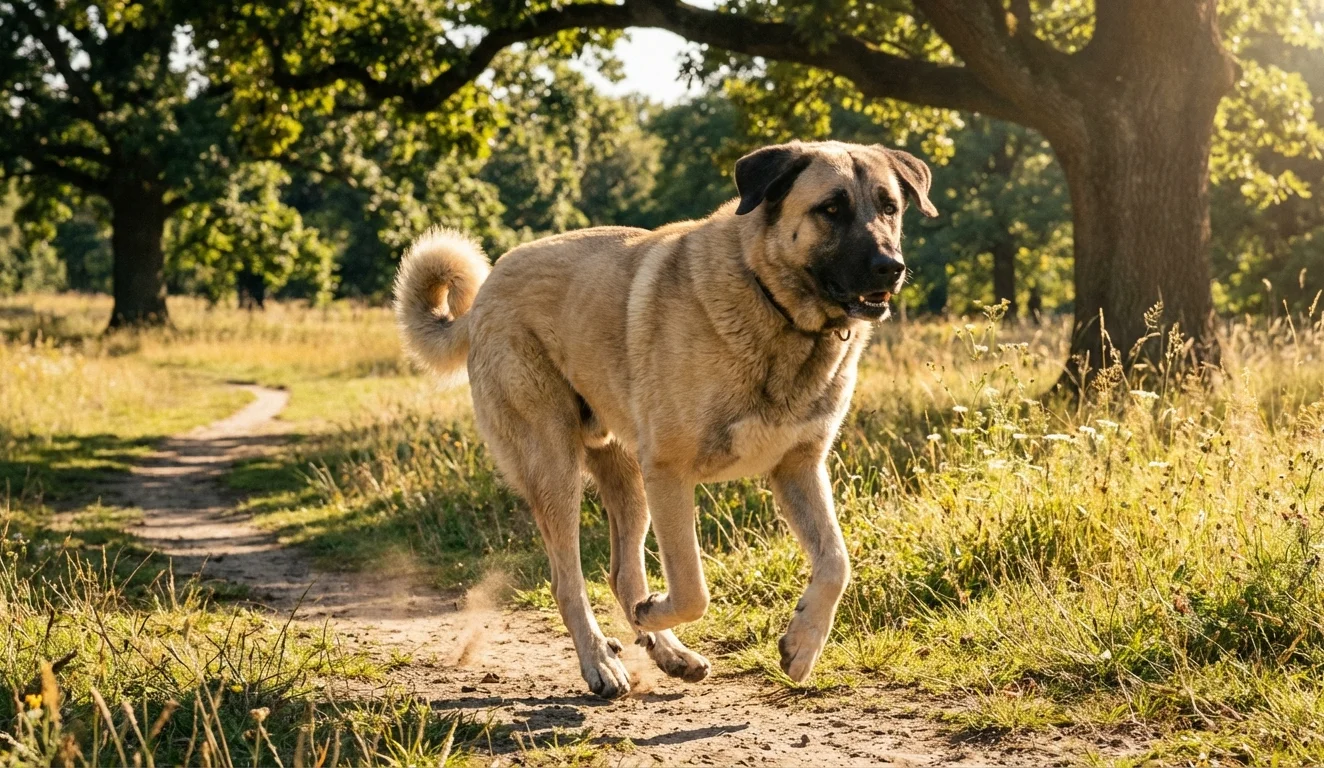
Male Anatolian Shepherds stand about 29 inches at the shoulder and weigh 110-150 pounds. Females are slightly smaller at around 27 inches and 80-120 pounds. These are tall, muscular, athletic dogs built for endurance rather than bulk. Unlike some giant breeds that lumber, Anatolians move with a smooth, ground-covering gait that can sustain for miles.
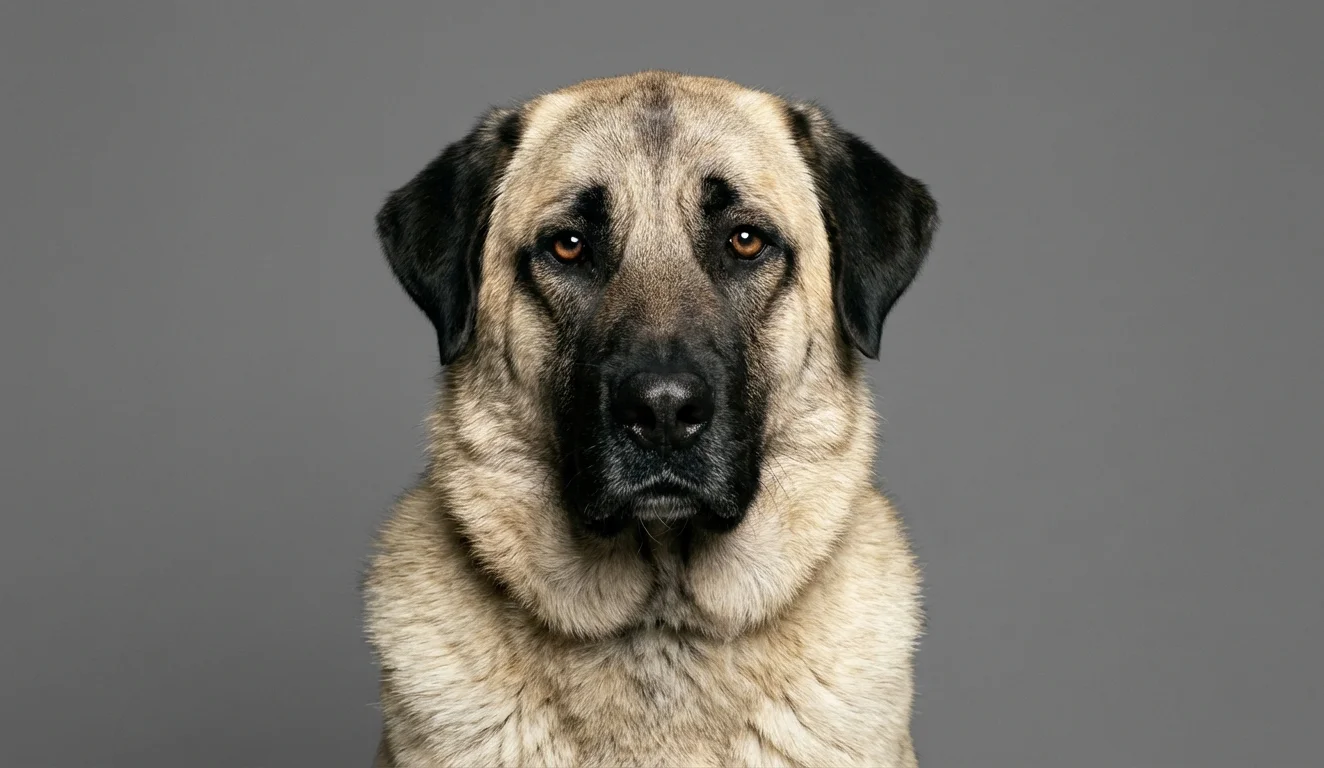
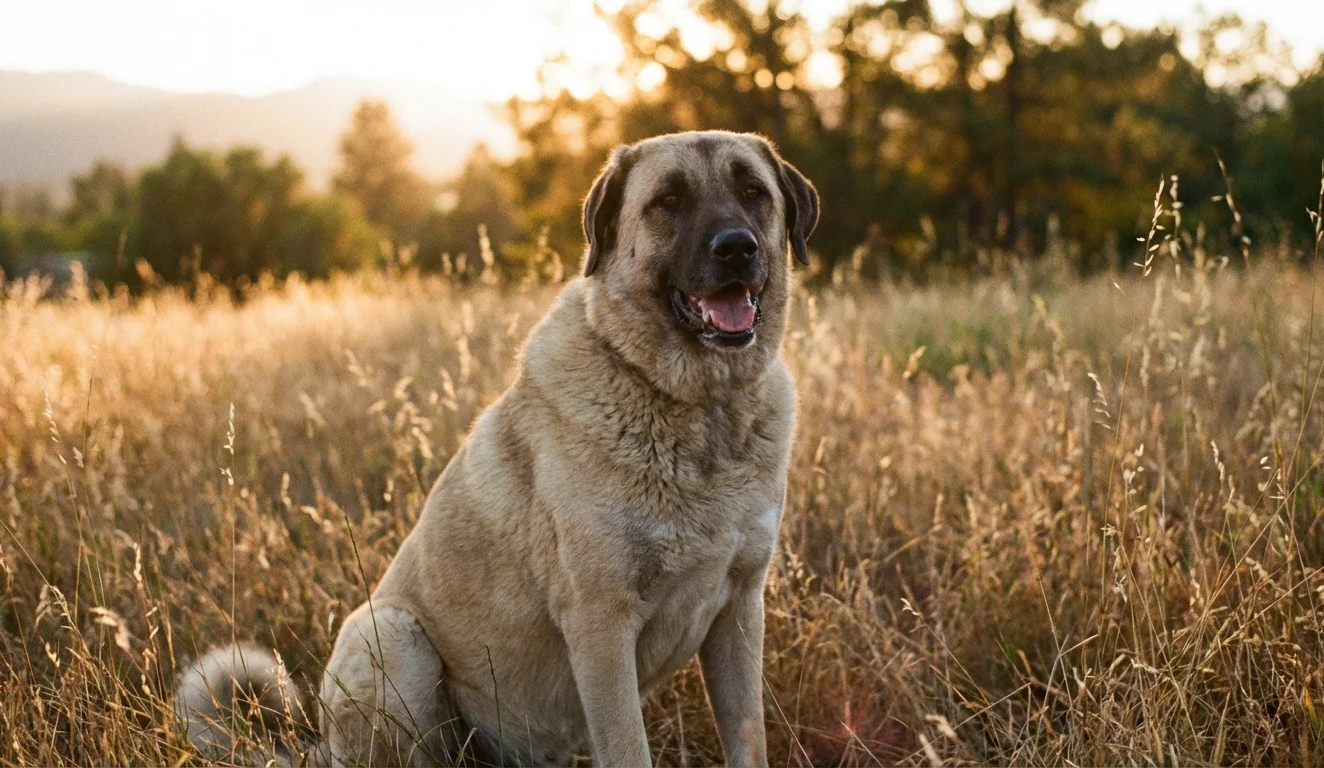
The most common color pattern is fawn with a distinctive black mask, though the breed comes in a range of colors including brindle, white, biscuit, and blue fawn. The coat is short to medium length with a dense undercoat that provides insulation against the extreme temperature swings of the Anatolian Plateau (blazing summers, freezing winters).
Their head is broad and strong with a moderate stop, dark eyes that project intelligence and watchfulness, and pendant ears that hang close to the cheeks. The overall impression is one of power held in reserve, an Anatolian Shepherd at rest looks calm, even relaxed. But the way they scan the environment, track movement at the edge of their property, and shift their position based on perceived threats reveals a dog that’s always working, even when it looks like it’s sleeping.
The breed has a distinctive “thoughtful” expression. When an Anatolian Shepherd looks at you, it feels like it’s assessing you. (It probably is.)
Anatolian Shepherd Temperament
The Anatolian Shepherd’s temperament was forged by a simple requirement: protect the flock, make your own decisions, don’t wait for instructions. That job description produced a dog that’s calm, confident, loyal to its charges, suspicious of strangers, and fundamentally independent.
What living with an Anatolian Shepherd is really like:
- Calm authority is their default mode. Anatolians aren’t nervous or reactive. They’re watchful. They assess situations before acting, and when they do act, it’s deliberate. This calm confidence is one of the breed’s most appealing traits, and one reason they’re effective guardians without being indiscriminately aggressive.
- Independence isn’t optional. Anatolians were bred to work alone, sometimes miles from the nearest human. They don’t look to you for permission. They analyze the situation, decide on the appropriate response, and execute. This is magnificent when they’re guarding livestock. It’s frustrating when they’ve decided the neighbor’s cat needs to be chased out of the yard at 6 AM.
- Territorial instincts are strong and always active. An Anatolian will establish and patrol a perimeter, your property line, your fence, whatever boundary they identify. Anything that crosses that boundary without proper introduction gets challenged. This includes solicitors, wildlife, and dogs walking past on the sidewalk.
- They’re loyal but not clingy. Anatolians bond to their family (or flock) with quiet intensity. They’ll position themselves where they can monitor everyone and everything. They enjoy affection on their terms, a head lean, resting near you, following you around the property. But they’re not Velcro dogs. They have a job to do.
- Nighttime alertness is real. Like the Tibetan Mastiff, Anatolian Shepherds tend to become more active and alert at night. They’ll bark at perceived threats in the darkness. This is feature, not a bug, unless you live in a subdivision.
Exercise Needs
Anatolian Shepherds need about 45-60 minutes of exercise daily, but their exercise style is more patrol than sprint. These dogs were built for endurance, they could walk miles of open terrain all day, maintaining a vigilant pace without exhaustion.
Long, moderate-paced walks are the foundation of Anatolian exercise. They’re not interested in fetch (most find it pointless) and they’re not agility dogs. What they want is to move through an environment, check the perimeter, investigate smells, and survey the territory.
Exercise considerations:
- A large, securely fenced yard is the best exercise environment. Anatolians will self-exercise by patrolling if given enough space. The fence needs to be at least 5-6 feet and anchored at the base, they’re capable diggers when motivated.
- Off-leash walks are not recommended unless you’re on your own acreage with no neighbors or road traffic. Anatolian recall is, charitably, selective. If they see something they consider a threat, they’re going to address it regardless of what you’re shouting.
- Puppies need restricted exercise to protect developing joints. For the first 18 months, avoid forced running, jumping, or high-impact activities. Let them set the pace.
- Mental stimulation matters. These are intelligent dogs that need something to think about. Puzzle feeders, scent work, and having a “job” (even if that job is monitoring the backyard) keep an Anatolian engaged.
A bored Anatolian Shepherd with insufficient exercise and no job will dig. They’ll also bark more, test fencing, and potentially become destructive. These are working dogs, they need to work.
Grooming
The Anatolian Shepherd’s coat is one of the breed’s more manageable features. It’s a short to medium double coat that needs brushing once or twice per week during normal periods. Twice a year, typically in spring and late fall, they blow their undercoat. During blowout season, plan on daily brushing for 2-3 weeks.
Baths are needed only every 8-12 weeks or when the dog gets notably dirty. The coat has natural oils that help repel dirt, and Anatolians are relatively clean dogs. Over-bathing strips those oils and can cause dry skin.
Grooming essentials:
- An undercoat rake for blowout season and a bristle brush for regular maintenance.
- Nail trims every 2-3 weeks. Anatolians that patrol on soft ground won’t wear their nails down naturally.
- Ear checks weekly. The pendant ears can trap moisture and debris.
- Dental care, brushing 2-3 times per week or dental chews. Large breeds are prone to periodontal disease.
The good news: Anatolian Shepherds don’t drool, they don’t have a particularly strong odor, and they groom themselves reasonably well between baths. Compared to many giant breeds, grooming is one of the easier parts of Anatolian ownership.
Anatolian Shepherd Health Issues
Anatolian Shepherds are one of the healthiest giant breeds, with a lifespan of 11-13 years, notably longer than many dogs their size. Their health was shaped by thousands of years of natural selection in harsh conditions, which weeded out a lot of genetic weakness. Still, there are conditions to watch for.
Hip Dysplasia
The OFA reports that Anatolian Shepherds have moderate incidence of hip dysplasia. In a dog this large, hip problems lead to arthritis, pain, and reduced mobility. Treatment costs range from $1,500-$6,000 depending on severity. Insist on OFA hip clearances from both parents before purchasing a puppy.
Entropion
Entropion, where the eyelid rolls inward, causing the eyelashes to irritate the eye surface, occurs with moderate frequency in the breed. Left untreated, it causes corneal ulcers and pain. Surgical correction costs $1,000-$3,000 and is typically a one-time fix.
Bloat (Gastric Dilatation-Volvulus)
As a deep-chested giant breed, Anatolian Shepherds are at elevated risk for bloat. This is a life-threatening emergency where the stomach fills with gas and can twist on itself. Symptoms include a distended belly, unproductive retching, and restlessness. Emergency surgery costs $2,000-$7,500. Preventive gastropexy during spay/neuter is worth discussing with your vet.
Sensitivity to Anesthesia
Anatolian Shepherds can be sensitive to certain anesthesia protocols, particularly those involving barbiturate-based drugs. This isn’t a “health issue” in the traditional sense, but it’s something every Anatolian owner needs to communicate to their vet before any surgical procedure. Experienced vets adjust protocols accordingly. Make sure yours knows the breed.
Demodectic Mange
Young Anatolian Shepherds occasionally develop demodectic mange, caused by an overpopulation of Demodex mites that live naturally on all dogs. Localized cases often resolve on their own. Generalized cases require treatment costing $200-$800. It’s more common in puppies with developing immune systems and usually isn’t a lifelong concern.
Training
Training an Anatolian Shepherd is an exercise in humility. These dogs are smart, genuinely, impressively smart. The problem is that they were bred to use that intelligence independently, and convincing a 6,000-year-old guardian breed that your obedience commands are more important than its own threat assessment is… a challenge.
What works with Anatolian Shepherds:
- Respect, not dominance. Anatolians don’t respond to force or intimidation. They respond to calm, consistent leadership from someone they trust. Earn their respect and they’ll cooperate. Try to bully them and they’ll shut down or push back.
- Socialization is the priority. From 8-16 weeks, expose your Anatolian puppy to every kind of person, dog, environment, and situation you can. An undersocialized Anatolian that weighs 130 pounds and has decided that strangers are threats is a genuine danger. This isn’t optional.
- Keep expectations realistic. An obedience-trained Anatolian is a dog that knows all the commands and performs them when it agrees the command is reasonable. That’s the ceiling. If you want snap-to obedience, this isn’t your breed.
- Leash training starts early. A 150-pound dog that pulls on the leash is unmanageable. Start loose-leash training at 8 weeks and be consistent about it.
Professional training classes are recommended, but choose a trainer who has experience with independent guardian breeds. Trainers who only work with biddable breeds (Labs, Shepherds, Poodles) often misunderstand Anatolian behavior and apply inappropriate methods.
This breed is not for first-time dog owners. Not even close.
Cost
Purchase Price
An Anatolian Shepherd puppy from a reputable breeder costs $1,000-$3,000. Working-line dogs from proven livestock guardian parents may be priced at the lower end. Show-quality dogs from health-tested parents with titled bloodlines run higher.
Rescue is available through the National Anatolian Shepherd Rescue Network and other breed-specific organizations. Adoption fees typically run $200-$500. Many Anatolians in rescue came from situations where the owner didn’t understand the breed’s needs, these are often good dogs that just need experienced placement.
Monthly Costs
| Expense | Monthly Estimate |
|---|---|
| Food (high-quality, large breed) | $70-$120 |
| Preventive vet care (averaged) | $20-$40 |
| Pet insurance | $45-$80 |
| Treats and chews | $15-$25 |
| Miscellaneous (toys, supplies) | $10-$25 |
| Total | $140-$270 |
First-Year Costs
Budget $4,000-$7,000 for the first year. This includes the purchase price, initial vet visits, vaccinations, spay/neuter (many experts recommend waiting until 18-24 months for giant breeds), fencing (which you’ll likely need to upgrade), a large crate, and supplies. Factor in fencing costs seriously, a proper containment setup for an Anatolian can easily run $2,000-$5,000 depending on your property.
Is an Anatolian Shepherd Right for You?
An Anatolian Shepherd is a great fit if you:
- Have experience with independent, large guardian breeds
- Own rural or semi-rural property with at least an acre and secure fencing
- Want a natural livestock guardian or a highly effective property guardian
- Can commit to extensive early socialization
- Appreciate a dog that’s loyal and protective without being needy
- Understand that “well-trained” for this breed looks different than for a retriever
An Anatolian Shepherd is probably NOT right if you:
- Live in a suburban neighborhood or urban apartment
- Have close neighbors who will complain about barking (especially at night)
- Want a highly obedient, people-pleasing dog
- Are a first-time dog owner
- Have a small yard or no fencing
- Want a dog-park dog or a breed that’s reliably friendly with strangers
- Don’t have the physical strength to manage a 150-pound dog on a leash
The Anatolian Shepherd is one of the finest working guardian breeds on the planet. On a ranch with livestock to protect, they’re almost unmatched. As a suburban family pet, they’re usually miserable, and so are their owners. Match the dog to the life, and you’ll have a loyal, steady, awe-inspiring companion. Put one in the wrong environment, and everyone suffers.
Related Breeds
If you’re considering this breed, you might also want to look at:
FAQ
Are Anatolian Shepherds good family dogs?
They can be, with caveats. Anatolian Shepherds are loyal and protective of their family, including children. But their size and guardian instincts mean supervision around young kids is necessary, not because they’re aggressive, but because a 130-pound dog can accidentally knock a toddler over without trying. They’re better suited to families with older children who understand how to interact with large dogs. The bigger concern is the breed’s need for space, socialization, and an owner who can manage their independence.
How much land do you need for an Anatolian Shepherd?
There’s no hard minimum, but one acre or more with secure fencing is a practical starting point. Anatolians need space to patrol and can develop behavioral problems in small, confined areas. A large fenced yard can work if you’re committed to daily walks and mental enrichment, but these dogs are genuinely happiest with room to roam. In their native Turkey, they patrol ranges measured in square miles.
Can Anatolian Shepherds live with other dogs?
Yes, generally. Anatolians are often paired with other livestock guardians or with the herding dogs that work the same flock. They tend to do well with other dogs in the household, especially if raised together. They can be dominant, so pairing two dominant dogs of the same sex can cause conflict. Introductions to new dogs should be gradual and supervised. They’re much less dog-aggressive than some other guardian breeds.
Do Anatolian Shepherds bark a lot?
Yes, particularly at night. Barking is one of their primary guardian tools, they announce threats loudly to deter predators and alert their humans. On a ranch, this is a feature. In a neighborhood, it’s a noise complaint waiting to happen. You can mitigate nighttime barking by bringing the dog inside, using white noise, and maintaining routine, but you can’t fully eliminate it. If barking is a dealbreaker, this breed isn’t for you.
Are Anatolian Shepherds aggressive?
Anatolian Shepherds are protective, not aggressive, there’s a distinction. A well-socialized Anatolian assesses threats calmly and escalates only when necessary, starting with positioning and body language before resorting to barking or physical intervention. They don’t attack without provocation. But an undersocialized or poorly managed Anatolian can become fear-aggressive or territorially aggressive, which is dangerous in a dog this size. Proper socialization and experienced handling are what keep an Anatolian on the right side of that line.