Toy Poodle Breed Guide: Tiny Body, Terrifyingly Smart (2026)
The Toy Poodle weighs under 6 pounds but has the intelligence of a dog four times its size. Here's what living with one is actually like.
The Toy Poodle stands under 10 inches tall, weighs 4-6 pounds, and can live anywhere from 10-18 years. That’s a lot of dog in a very small container. Toy Poodles share the same breed standard as their larger Miniature and Standard relatives, same intelligence ranking (#2 among all breeds), same curly hypoallergenic coat, same retriever heritage. But at 4-6 pounds, daily life looks very different. A puddle that a Standard Poodle would splash through is a genuine obstacle for a Toy.
In Short: 4–6 lbs, 10–18 years. Moderate-to-high energy. Low-shedding (often called hypoallergenic, though no dog truly is). Watch for Patellar Luxation and Hypoglycemia. Great for families and first-time owners, apartment-friendly.
We’ll say this upfront: the Toy Poodle is not a fashion accessory. We get frustrated when people treat them that way. This is a legitimately intelligent working breed that happens to come in a pocket-sized version. Toy Poodles can learn over 200 words. They read human emotions with unnerving accuracy. They excel at obedience, rally, and agility at the toy level. If you carry one around in a purse all day and never let it be a dog, you’re wasting an incredible brain. (If you’re weighing the Toy against the Miniature, we have a Miniature Poodle profile worth reading. And for the full-sized version, check our Standard Poodle guide.)
Toy Poodle at a Glance
| Trait | Details |
|---|---|
| Breed Group | Toy (AKC) |
| Height | Under 10 inches (typically 9-10 in) |
| Weight | 4-6 lbs |
| Life Expectancy | 10-18 years |
| Coat | Curly, dense, single coat |
| Colors | Black, White, Apricot, Silver, Brown, Blue, Cream, Red, Cafe Au Lait, Grey |
| Temperament | Intelligent, Alert, Faithful, Affectionate |
| Shedding | Low (hypoallergenic) |
| Energy Level | Moderate-High |
| Good With Kids | Yes (older kids recommended) |
| Apartment Friendly | Yes |
| First-Time Owner Friendly | Yes |
History
The Poodle’s origin is German, not French, “Pudelhund” translates to “splashing dog,” a nod to the breed’s history as a water retriever. Standard Poodles came first, followed by Miniatures bred for truffle hunting. The Toy Poodle was developed primarily in 18th-century England and France as a companion dog for the aristocracy. Toy Poodles quickly found another role: performing tricks in traveling circuses and street shows across Europe, where their intelligence and trainability made them stars.
The downsizing from Standard to Toy didn’t happen overnight, and it wasn’t always done responsibly. Early Toy Poodle breeding sometimes produced dogs with significant health problems, too-small skulls, fragile bones, neurological issues. Modern responsible breeders have largely corrected these problems, but the “teacup” Poodle market (dogs bred to be even smaller than the Toy standard) continues to produce dogs with serious health risks. We’d strongly advise against buying any Poodle advertised as “teacup.” That’s not a recognized size, it’s a marketing term for an undersized Toy Poodle that’s more likely to have health problems.
All three Poodle sizes (Toy, Miniature, Standard) are considered the same breed by the AKC. They can compete in the same obedience and performance events. But generations of separate breeding have created meaningful differences. Toy Poodles tend to be more attached to their primary person, more prone to anxiety, and more vocal than their larger relatives.
Size and Appearance
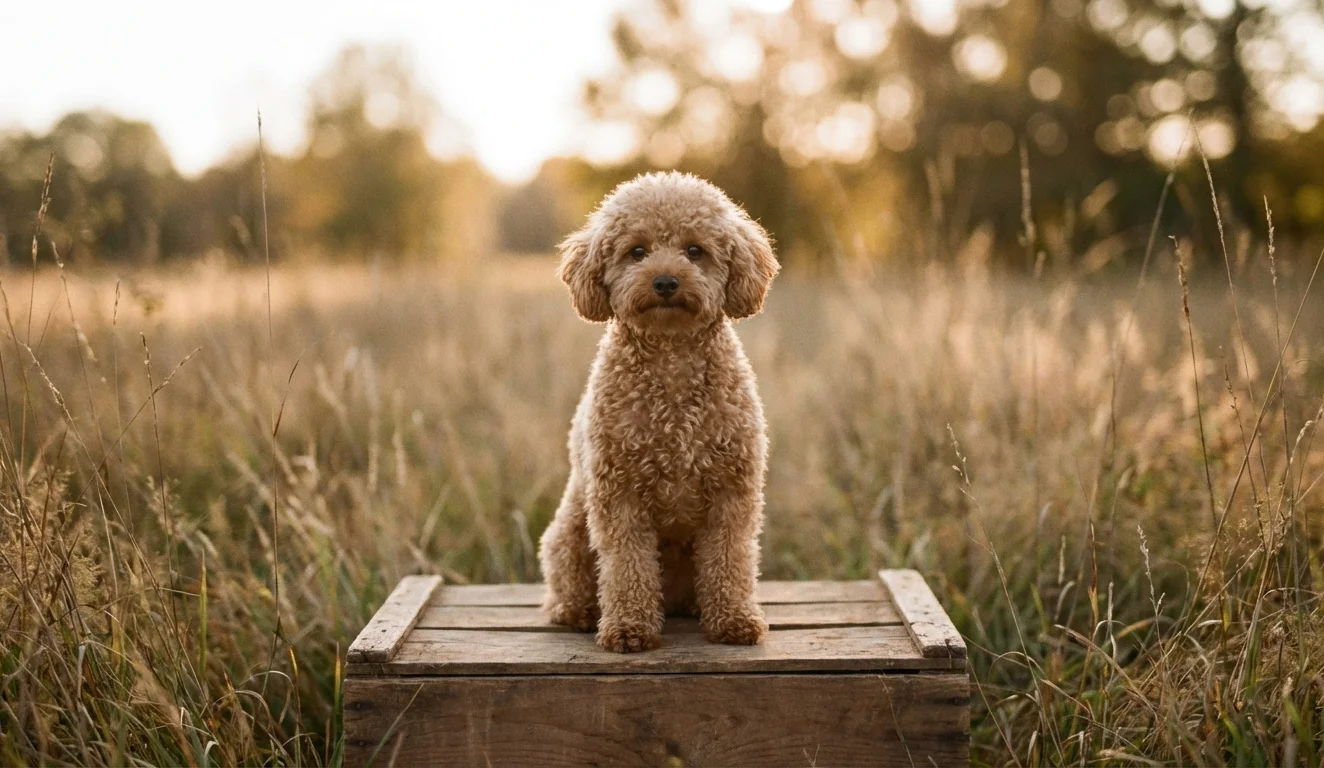
Toy Poodles must stand under 10 inches at the shoulder to meet the AKC breed standard. Most fall in the 9-10 inch range. Weight is typically 4-6 pounds, though the standard focuses on height rather than weight. A healthy Toy Poodle should be proportionate, square in build, with a level topline and proud carriage.
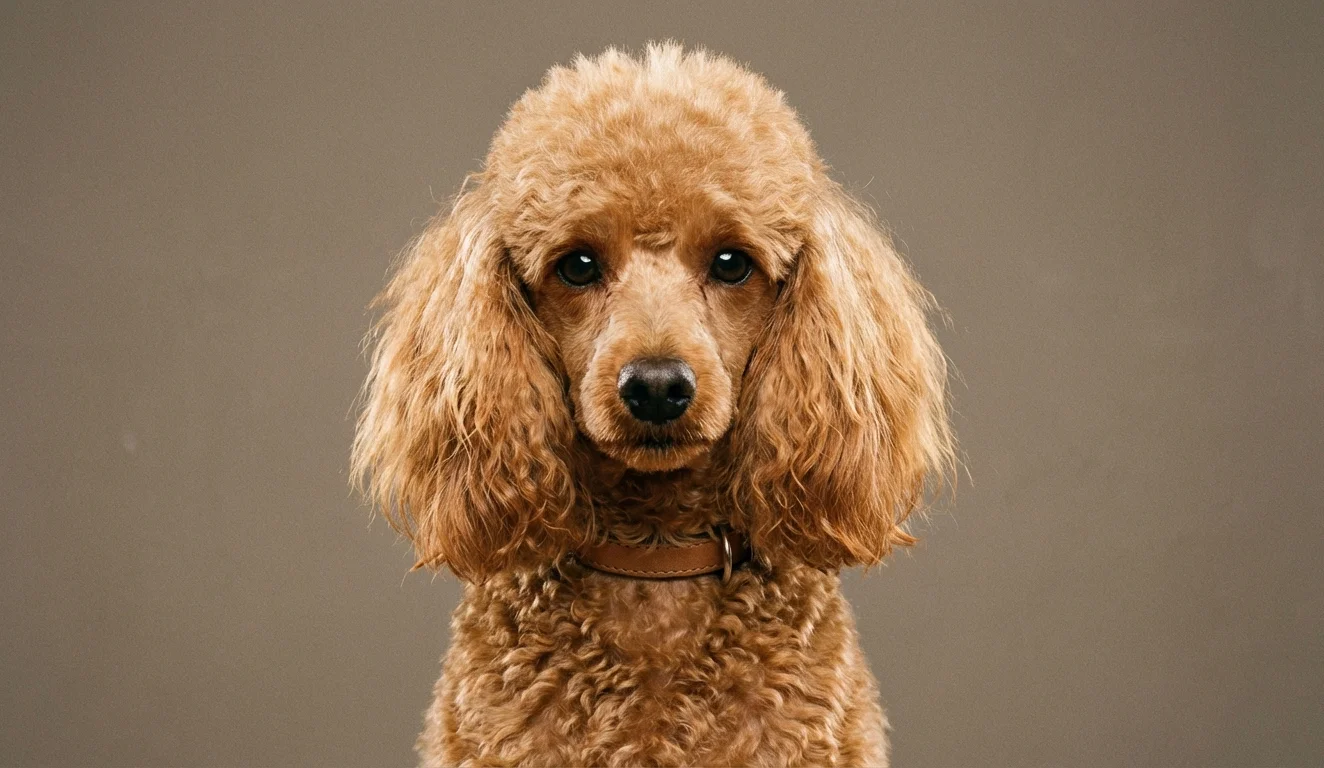
Despite their small stature, well-bred Toy Poodles shouldn’t look fragile. They’re compact and balanced, with the same athletic build as a Standard Poodle just scaled way down. Their eyes are dark and oval, their muzzle is long (not snub-nosed like some toy breeds), and their expression is alert and intelligent. That long muzzle is actually a health advantage, Toy Poodles don’t suffer from the brachycephalic breathing problems that plague flat-faced toy breeds like Pugs and Pekingese.
The coat is identical to the Miniature and Standard, curly, dense, and single-layered. It grows continuously, requires regular grooming, and comes in the same wide range of solid colors: black, white, apricot, silver, brown, blue, cream, red, cafe au lait, and grey. Apricot and red Toy Poodles are particularly sought after, which unfortunately drives some breeders to prioritize color over health. If a breeder is marketing “rare” colors at a premium, that’s a yellow flag, the breed already comes in nearly every color, and none of them are especially rare.
Toy Poodle Temperament
Toy Poodles are fiercely loyal to their primary person. “Velcro dog” is a term you’ll hear from Toy Poodle owners constantly, and it’s accurate. They bond deeply, sometimes too deeply, to one or two people in the household.
What living with a Toy Poodle is really like:
- Incredibly perceptive. Toy Poodles notice everything. Your tone of voice, your body language, whether you grabbed your keys or your wallet. They study you. It’s impressive and occasionally unsettling.
- Prone to anxiety. This is the breed’s biggest temperament challenge. Toy Poodles are more likely than Miniature or Standard Poodles to develop separation anxiety, noise phobias, and generalized anxiety. Some of this is genetic, some comes from owners who carry them everywhere and never let them develop confidence on their own legs.
- Vocal. Toy Poodles have a moderate-to-high barking tendency. They alert-bark, they demand-bark, they bark because they heard something three blocks away. Training helps, but you should expect some noise.
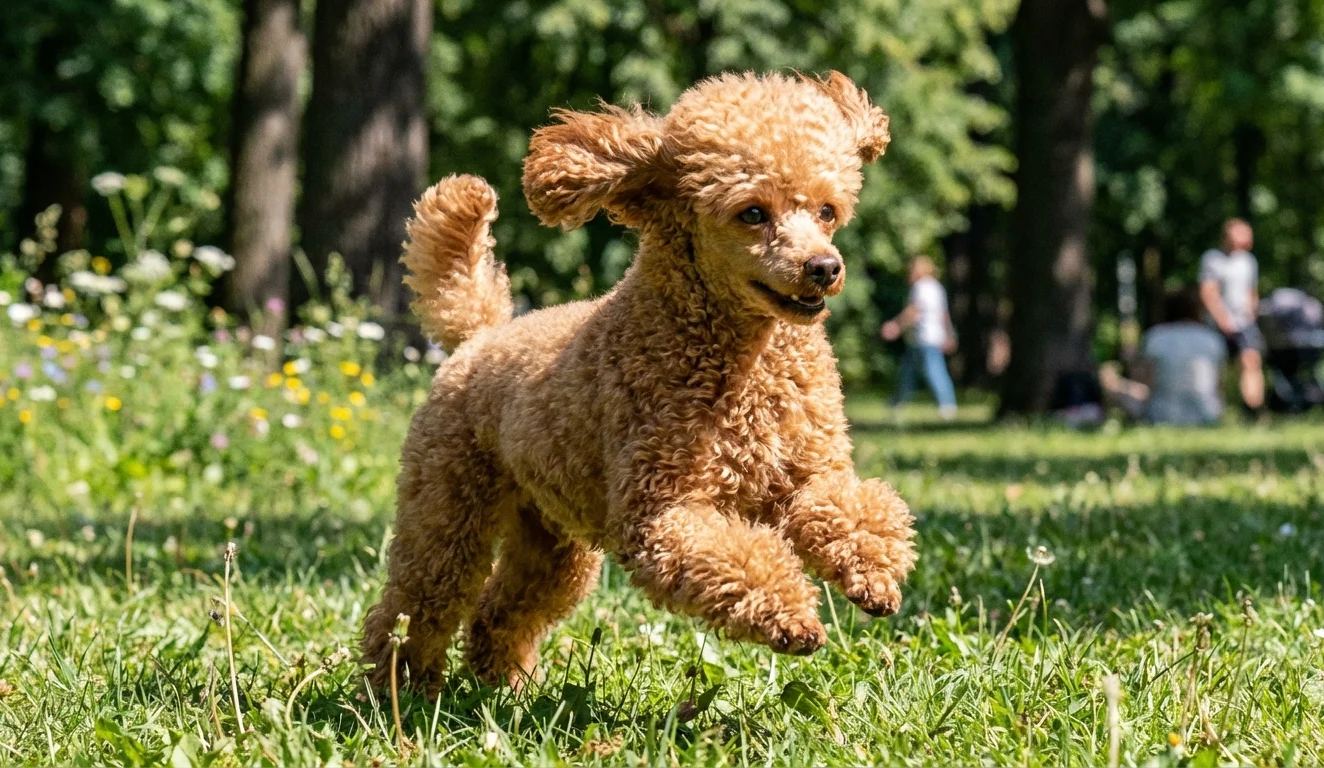
- Surprisingly playful. Don’t mistake their small size for low energy. Toy Poodles love to play, and many stay active and engaged well into their teens. A 14-year-old Toy Poodle will still steal your sock and run laps around the living room.
Our take: Toy Poodles develop the most behavioral problems when they’re treated like babies instead of dogs. Carrying them everywhere, never setting boundaries, never letting them walk on their own feet, this creates anxious, nippy, insecure dogs. The best Toy Poodle owners treat them like small dogs, not like stuffed animals.
Exercise Needs
Toy Poodles need about 30 minutes of exercise per day. That’s less than the Miniature (60 minutes), which makes sense given their size. But don’t confuse “less exercise” with “no exercise.”
Good exercise options include short walks (those little legs cover ground slower, so a 15-minute walk for you is a solid workout for them), indoor play sessions, and puzzle toys. Toy Poodles are excellent candidates for indoor agility, you can set up a mini course in your living room with tunnels, small jumps, and weave poles. They love it, and it burns mental and physical energy simultaneously.
Mental stimulation might actually matter more than physical exercise with Toy Poodles. A 10-minute training session where they learn something new will tire them out more effectively than a 30-minute walk. Hide-and-seek with treats, “which hand” games, and rotating puzzle feeders all tap into the Poodle brain in ways that a simple walk doesn’t.
A couple of practical considerations: Toy Poodles can overheat faster than larger dogs, so be cautious during hot weather. They also chill quickly in cold weather, a sweater isn’t fashion, it’s function for a 5-pound dog with no undercoat. And watch for signs of hypoglycemia (low blood sugar) after exercise, especially in puppies. Trembling, lethargy, or disorientation after activity means they need a small meal or a dab of honey on the gums immediately.
Another thing worth mentioning: Toy Poodles can injure themselves jumping off furniture. A couch that’s a small step for a Lab is a significant drop for a 5-pound dog. Ramps or pet stairs for beds and couches aren’t just nice to have, they prevent the kind of leg injuries that this size of dog is vulnerable to.
Grooming
Same coat, same grooming requirements as the Miniature and Standard, the Toy Poodle’s curly single coat doesn’t shed much but grows continuously and mats easily.
Grooming schedule for Toy Poodles:
- Daily brushing with a small slicker brush, mats form fast on a Toy Poodle and can cause skin irritation underneath
- Professional grooming every 4-6 weeks: expect to pay $40-$70 per session (slightly less than a Miniature due to smaller size)
- Ear cleaning weekly: Poodles grow hair inside the ear canal that needs to be plucked or trimmed regularly to prevent infections
- Teeth brushing at least 3 times per week: this is especially important for Toy Poodles, as dental disease is one of their most common health issues
- Nail trims every 2-3 weeks
Dental care deserves extra emphasis here. Small breeds in general are prone to dental problems, and Toy Poodles are no exception. Their small jaws can lead to crowded teeth, which trap bacteria and accelerate tartar buildup. Some Toy Poodle owners budget for a professional dental cleaning once a year, it’s worth it to prevent tooth loss and the secondary health problems (heart, kidney) that chronic dental disease can cause.
Toy Poodle Health Issues
Toy Poodles have an impressive lifespan of 10-18 years, with many reaching 14-16 years. But their small size creates some health vulnerabilities that larger Poodle varieties don’t face.
Patellar Luxation
The most common orthopedic issue in Toy Poodles. The kneecap slips out of position, causing a characteristic “skipping” gait. Mild cases may not need treatment, but severe or chronic luxation can require surgery at $1,500-$3,000 per knee. Ask breeders if parents have been evaluated.
Dental Disease
This is essentially guaranteed to be a factor in your Toy Poodle’s life. The small jaw means crowded teeth, which means faster tartar accumulation and a higher risk of periodontal disease. Prevention (brushing, dental chews, annual cleanings) is far cheaper than treating advanced dental disease, which can run $300-$2,000 depending on the number of extractions needed.
Hypoglycemia
Low blood sugar is common in Toy Poodle puppies and can occur in adults that miss meals or exercise heavily. Symptoms include trembling, weakness, disorientation, and in severe cases, seizures. It’s manageable, feeding small, frequent meals (3-4 times daily instead of 2) helps prevent episodes. Emergency treatment costs are typically $200-$1,000.
Progressive Retinal Atrophy (PRA)
An inherited eye disease that causes gradual vision loss. DNA testing can identify carriers, and reputable breeders test for it before breeding. There’s no cure, but affected dogs adapt remarkably well to vision loss. Diagnostic and management costs run around $2,000-$3,000.
Legg-Calve-Perthes Disease
The femoral head deteriorates due to restricted blood flow, typically appearing in puppies under a year old. Surgery to remove the damaged bone is usually necessary, costing $1,500-$4,000. Post-surgical outcomes are generally good, most dogs recover full function.
Training
Toy Poodles are extraordinarily trainable. The Poodle’s intelligence ranking (#2 among all breeds) applies fully to the Toy, they learn commands faster than almost any dog alive. Circus performers chose Toy Poodles for a reason.
Training tips for Toy Poodle owners:
- Use tiny, high-value treats. A Toy Poodle’s stomach is small, break training treats into pieces the size of a pea. One regular-sized treat can be 5-10 rewards for a Toy Poodle.
- Keep sessions to 5-10 minutes. They learn fast but lose focus if sessions drag on.
- Prioritize confidence building. Socialization is critical for Toy Poodles because their small size can make the world feel intimidating. Expose them to different surfaces, sounds, people, and environments in a positive, controlled way.
- House training takes longer with Toy breeds. Their bladders are tiny. Expect accidents for the first several months and be patient. Many Toy Poodle owners have success with litter box or indoor potty pad training as a supplement to outdoor house training.
- Address resource guarding early. Some Toy Poodles become possessive of food, toys, or their owner’s lap. Nip this in the bud with positive trading games (swap something the dog has for something better).
The biggest training mistake we see with Toy Poodles: skipping training altogether because the dog is small. A Toy Poodle that growls at strangers or snaps when picked up isn’t “sassy”, it’s poorly trained. Small dogs deserve the same behavioral standards as large dogs.
One more thing. Toy Poodles can be surprisingly good candidates for therapy dog work. Their small size makes them non-threatening in hospital and nursing home settings, and their intelligence means they can learn to behave calmly in environments that would overwhelm less trainable breeds. If you’re interested in therapy work, it’s worth exploring once your Toy Poodle has a solid obedience foundation.
Cost
Purchase Price
A Toy Poodle puppy from a reputable breeder costs $1,000-$3,000. Puppies from exceptional bloodlines with full health clearances can go higher. Be deeply skeptical of “teacup” Poodles priced at $3,000-$5,000+, the premium is for smaller size, which often comes with bigger health bills.
Rescue Toy Poodles are available through breed-specific organizations like the Poodle Club of America Rescue Foundation. Adoption fees typically run $200-$500. Many rescued Toy Poodles are adults, which can actually be an advantage, you skip the intense puppy phase and get a dog whose personality is already established.
Monthly Costs
| Expense | Monthly Estimate |
|---|---|
| Food (high-quality toy breed formula) | $15-$30 |
| Professional grooming (averaged monthly) | $40-$70 |
| Preventive vet care (averaged) | $10-$25 |
| Pet insurance | $25-$45 |
| Dental care products | $10-$15 |
| Treats and chews | $5-$10 |
| Miscellaneous (toys, supplies) | $10-$15 |
| Total | $115-$210 |
First-Year Costs
Expect $3,000-$5,500 in the first year. The purchase price is the big number, followed by grooming ($480-$840/year), initial vet work, and supplies. One cost advantage of Toy Poodles: they eat very little. A high-quality bag of food that would last a Lab two weeks lasts a Toy Poodle two months.
Is a Toy Poodle Right for You?
A Toy Poodle is a great fit if you:
- Want a highly intelligent dog in the smallest possible package
- Live in an apartment or small space
- Have allergies and need a low-shedding breed
- Are home frequently or can bring your dog to work (they do poorly alone)
- Enjoy grooming and are willing to maintain the coat
- Have older children who understand gentle handling
A Toy Poodle might NOT be right if you:
- Have toddlers or very young children, a 5-pound dog is fragile, and accidents happen
- Are away from home for long hours, separation anxiety is common in this size
- Don’t want to deal with professional grooming every month
- Want a rugged outdoor adventure dog (consider the Miniature Poodle instead)
- Expect a quiet dog, Toy Poodles are barkers
- Are attracted to “teacup” sizing, that road leads to vet bills
The Toy Poodle packs more personality, intelligence, and sheer attitude per pound than just about any breed we’ve covered. They’re not for everyone, the grooming alone is a serious time and financial commitment. And their emotional neediness can be a lot if you aren’t prepared for it. But if what you want is a tiny dog that can actually think, that will learn anything you teach it, and that will love you with an almost alarming intensity, the Toy Poodle delivers on all counts. Just don’t carry it everywhere. Let it walk.
Related Breeds
If you’re considering this breed, you might also want to look at:
Frequently Asked Questions
How long do Toy Poodles live?
Toy Poodles are one of the longest-lived breeds, with a lifespan of 10-18 years. Many Toy Poodles live well into their mid-teens, and some make it to 18 or beyond. Longevity depends heavily on breeding quality, dental health maintenance, and overall care. Dogs from breeders who health-test their breeding stock tend to live longer and healthier lives than those from puppy mills or backyard breeders.
What’s the difference between a Toy Poodle and a “teacup” Poodle?
There’s no such thing as a “teacup” Poodle in any breed registry. “Teacup” is a marketing term used by breeders who breed Toy Poodles to be even smaller than the standard allows, typically under 4 pounds. These dogs frequently suffer from hydrocephalus, heart defects, collapsing trachea, hypoglycemia, and fragile bones. We don’t recommend seeking out teacup-sized Poodles. A well-bred Toy Poodle within the standard size range (4-6 pounds) is already a very small dog.
Are Toy Poodles good apartment dogs?
Toy Poodles are excellent apartment dogs. They need only about 30 minutes of exercise daily, they don’t shed much, and they’re small enough to get a workout just playing in the living room. The one downside for apartment living is their tendency to bark, alert barking at neighbors in the hallway, delivery people, or noises from adjacent units. Working on “quiet” training early is important if you live in close quarters.
Do Toy Poodles get along with other pets?
Generally, yes. Toy Poodles are rated as good with other dogs and cats. They’re social dogs that often appreciate having companionship, especially if their owner is away during the day. One caution: if you have a much larger dog, supervise interactions carefully. A well-meaning 70-pound dog playing too rough can seriously injure a 5-pound Toy Poodle. Some Toy Poodle owners pair them with another small breed or another Toy Poodle, which tends to work well.
How often do Toy Poodles need grooming?
Professional grooming every 4-6 weeks is the standard recommendation, plus daily brushing at home. Skipping the daily brushing leads to mats that are painful for the dog and expensive for you to have removed. Some owners learn to clip their Toy Poodle’s coat at home between professional visits, which can reduce costs. Budget $480-$840 per year for professional grooming, it’s the single biggest ongoing expense of Toy Poodle ownership aside from food and vet care.