Papillon Breed Guide: A Big Dog Brain in a Five-Pound Body (2026)
The Papillon is a tiny dog that outsmarts breeds four times its size. Don't let the butterfly ears fool you, there's a serious athlete under that silk.
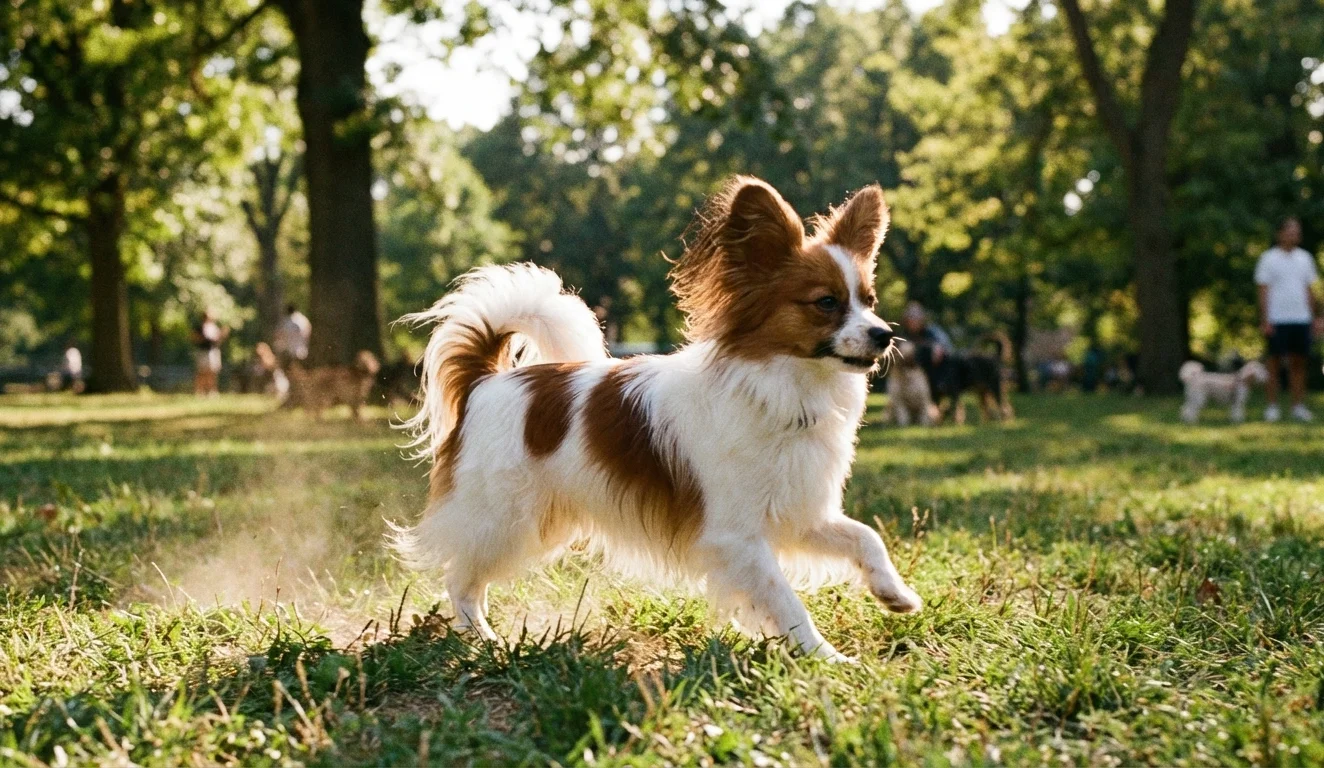
The Papillon is a toy breed that weighs 5-10 pounds, stands 8-11 inches tall, and lives 14-16 years. They’re named for their ears, “papillon” is French for “butterfly,” and those large, upright, fringed ears really do look like butterfly wings in motion. But don’t let the dainty appearance fool you. This is one of the smartest, most athletic small dogs you’ll ever meet.
In Short: 5–10 lbs, 14–16 years. Moderate-to-high energy. Moderate shedding. Watch for Patellar Luxation and Dental Disease. Great for families and first-time owners, apartment-friendly.
We think the Papillon is the most underestimated breed in the toy group. People see a 7-pound dog with silky fur and assume it’s a lapdog. And sure, Papillons are happy to sit in your lap, eventually. But first, they want to learn something new, run an agility course, figure out how to open the baby gate, and outsmart whatever puzzle toy you put in front of them. The Papillon is essentially a Border Collie that fits in a handbag. We mean that as the highest possible compliment.
Papillon at a Glance
| Trait | Details |
|---|---|
| Breed Group | Toy (AKC) |
| Height | 8-11 in (males and females) |
| Weight | 5-10 lbs (males and females) |
| Life Expectancy | 14-16 years |
| Coat | Long, silky, single coat |
| Colors | White with Black, White with Red, White with Sable, White with Lemon, Tricolor |
| Temperament | Friendly, Alert, Happy, Intelligent |
| Shedding | Moderate |
| Energy Level | Moderate-High |
| Good With Kids | Yes (older kids recommended due to fragility) |
| AKC Recognition | 1915 |
History
The Papillon’s roots trace back to the Continental Toy Spaniel, which appears in European paintings dating to the 1500s. Titian, Rubens, Goya, some of the greatest artists in Western history painted these little dogs sitting in the laps of nobility. For centuries, the breed was a favorite of European royalty. Marie Antoinette reportedly walked to the guillotine carrying her Papillon (though historians debate whether this detail is true or romantic embellishment).
The original Continental Toy Spaniels had drop ears, the variety now called Phalene (French for “moth”). The erect-eared Papillon variety didn’t become dominant until the late 19th century. Both ear types can still appear in the same litter, and both are recognized by the AKC, though the butterfly-eared Papillon is far more common and more popular in the show ring.
Despite their aristocratic history, Papillons were never purely decorative. They were bred to be ratters in royal households, keeping vermin away from grain stores and living quarters. That pest-control heritage shows up today in the Papillon’s alertness, quick reflexes, and surprising prey drive for a dog that weighs less than a gallon of milk.
Size and Appearance
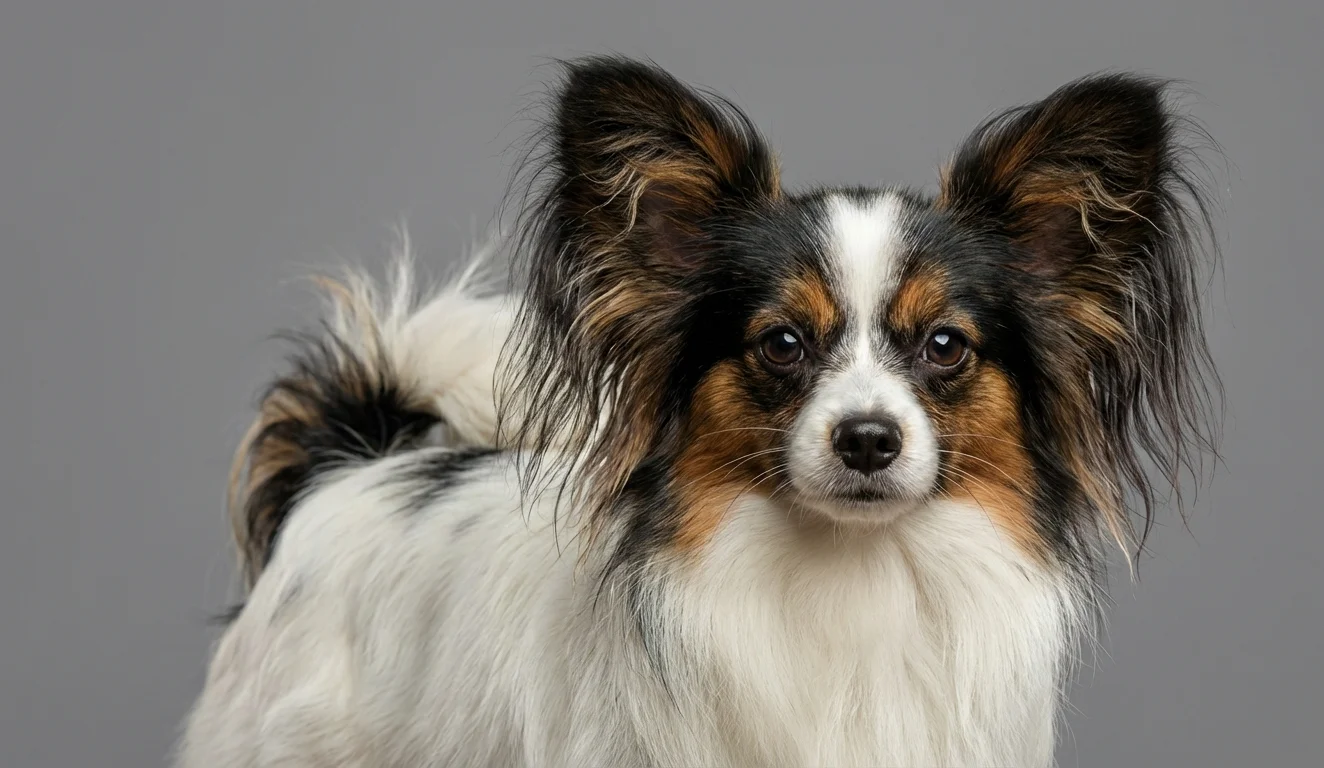
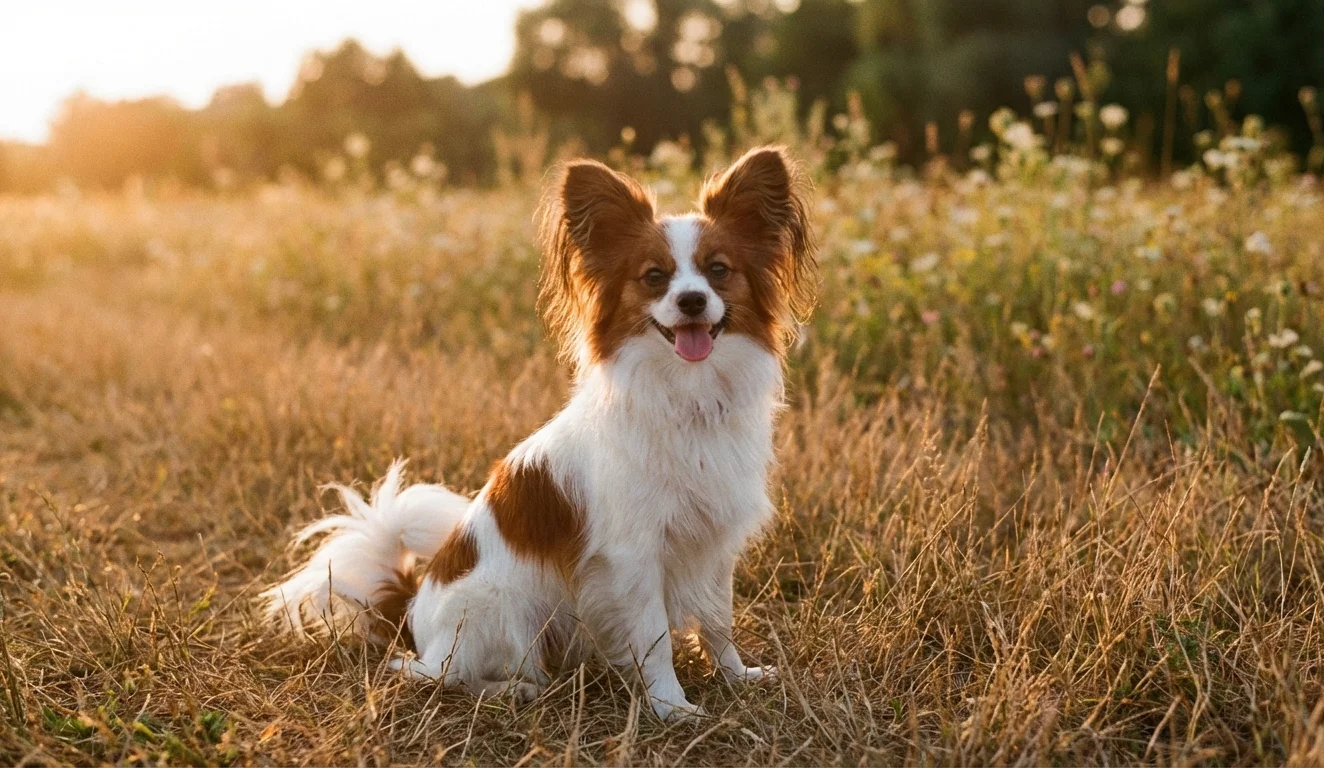
Papillons are tiny. Both males and females stand 8-11 inches at the shoulder and weigh 5-10 pounds. But within that small frame is a surprisingly athletic, well-proportioned dog, they’re not stocky or delicate-looking. They’re built like miniature spaniels with fine bones, a slightly rounded skull, and dark, expressive eyes.
The ears are the breed’s signature. Papillon ears are large, set on the sides of the head, wide open, and carried like butterfly wings, upright and fully fringed with long, silky hair. The Phalene variety has ears that fold down, giving a softer, moth-like appearance. Both are structurally identical otherwise.
The coat is long, silky, fine, and single-layered (no undercoat). It flows from the body in a graceful pattern, with particularly long hair on the ears, chest, backs of the legs, and tail. The tail itself is a plume, carried arched over the back and covered in long, flowing hair. Colors are always parti-colored: white base with patches of black, red, sable, lemon, or tricolor markings.
Despite looking like a dog that belongs on a velvet pillow, Papillons are surprisingly hardy. They’re not fragile in the way that some toy breeds are. They’re fine-boned but athletic, and they move with a quick, light-footed confidence that’s closer to a terrier than a lap dog.
Papillon Temperament
The Papillon’s temperament is where this breed really shines. They consistently rank among the top 10 smartest dog breeds, Stanley Coren placed them at #8 in The Intelligence of Dogs, ahead of Rottweilers and Australian Cattle Dogs. That intelligence, combined with a sunny disposition and genuine eagerness to learn, makes Papillons one of the most engaging small breeds you can own.
What Papillon personality looks like in practice:
- Startlingly smart. Papillons learn commands fast. They pick up tricks after just a handful of repetitions. They also learn things you didn’t intend to teach them, like how to open cabinet doors, manipulate you for treats, and time their escape attempts for when you’re on a phone call.
- Confident beyond their size. Papillons don’t know they’re small. They’ll approach large dogs without hesitation, bark at delivery trucks, and hold their ground in situations where self-preservation should probably kick in. This confidence is charming but requires management, a 7-pound dog confronting a 70-pound dog can end badly.
- Affectionate but not clingy. Papillons love their people and want to be near them, but they also have an independent streak. They’ll sit with you on the couch, but they’ll also happily entertain themselves with a toy across the room. It’s a nice balance.
- Alert and vocal. Papillons bark. They bark at doorbells, at squirrels, at cars, at things only they can see. The barking level is high for the breed. It’s manageable with training, but if you need a quiet dog, the Papillon may test your limits.
One thing we really appreciate about Papillons: they don’t have the nervous, yappy energy that people associate with toy breeds. A well-bred Papillon is confident, not anxious. Happy, not frantic. There’s a real difference.
Exercise Needs
Papillons need about 30 minutes of exercise per day, which is moderate by any standard. But those 30 minutes should include some mental challenge, a simple walk around the block won’t fully satisfy a Papillon’s busy brain.
Good activities for Papillons:
- Agility. Papillons are agility stars. Seriously. They regularly compete against much larger breeds and win. Their speed, intelligence, and nimble footwork make them naturals on the agility course. If you’ve never seen a 6-pound dog destroy an agility run, look it up.
- Short walks with variety. Papillons enjoy walks but prefer interesting routes over long distances. A 20-minute walk through a new neighborhood beats a 40-minute loop of the same block.
- Indoor games. Hide-and-seek, puzzle toys, and trick training are all great ways to work a Papillon’s brain when the weather’s bad. They’re one of the few breeds that can get a genuinely satisfying workout indoors.
- Play sessions. Papillons love to play with their people. Tug, fetch with small toys, and chase games keep them physically active and happy.
The good news: Papillons are adaptable. They don’t need a yard. They don’t need miles of running. A committed owner in an apartment can keep a Papillon perfectly happy with daily walks and indoor enrichment. That’s a big part of what makes them such good city dogs.
Grooming
Papillons look high-maintenance but they’re actually one of the easier breeds to groom. That single coat (no undercoat) is the key, it doesn’t mat as readily as double-coated breeds and doesn’t have the dense, tangling properties of breeds like the Shih Tzu or Maltese.
Grooming routine:
- Brush 2-3 times per week with a pin brush or fine-toothed comb. Pay attention to behind the ears and under the legs, where tangles are most likely.
- Bathe every 4-6 weeks. Papillons are clean dogs with minimal odor.
- No professional grooming required. Some owners have the hair on the feet and around the pads trimmed for neatness, but Papillons don’t need haircuts or professional styling.
- Nail trims every 2-3 weeks. Small dogs are often neglected on nail care because their nails don’t make as much noise on floors, but overgrown nails can cause pain and gait problems.
- Teeth brushing is especially important for Papillons, see the health section below.
Shedding is moderate. You’ll find hair on your clothes and furniture, but it’s nothing compared to a Lab or Husky. The hair is fine and long, so it’s easier to spot and clean up than the stiff, needle-like hairs of short-coated shedders.
Papillon Health Issues
Papillons are a long-lived, generally healthy breed. That 14-16 year lifespan is one of the longest among all dog breeds. But small size brings its own set of health considerations.
Patellar Luxation
This is the most common health issue in Papillons. The kneecap (patella) slips out of its normal position, causing skipping, limping, or holding up the affected leg. It’s common in small breeds across the board. Mild cases can be managed with weight control and exercise modification. Severe cases may need surgery, costing $1,500-$3,000 per knee.
Dental Disease
Small breeds are notoriously prone to dental problems, and Papillons are no exception. Their small jaws mean teeth are crowded, which accelerates plaque buildup, gum disease, and tooth decay. Dental disease is common in the breed. Annual dental cleanings cost $400-$1,500, and extractions add more.
This is the health issue that Papillon owners underestimate most. A Papillon with neglected dental care can lose teeth by age 5 or 6. Brush your Papillon’s teeth at least 3 times per week, daily is better. Dental chews help but aren’t a substitute for actual brushing.
Progressive Retinal Atrophy (PRA)
PRA causes gradual vision loss and has moderate prevalence in Papillons. DNA testing can identify carriers. Treatment costs run $2,000-$3,000, though there’s no cure for the underlying degeneration.
Collapsed Trachea
This condition, where the tracheal rings weaken and collapse, occurs with moderate frequency in Papillons and other toy breeds. Symptoms include a honking cough, especially during excitement or exercise. Using a harness instead of a collar reduces pressure on the trachea. Treatment ranges from $1,000-$5,000 depending on whether medication or surgery is needed.
Von Willebrand Disease
A rare bleeding disorder that affects blood clotting. It occurs infrequently in Papillons, and a DNA test can identify carriers. Treatment costs $500-$3,000 depending on severity.
Training
Papillons are among the easiest breeds to train. Period. Their intelligence, eagerness to please, and food motivation make them a joy for beginners and experienced trainers alike. If you want a small dog that can do everything a big dog can do, and in many cases do it better, the Papillon delivers.
Why Papillons train so well:
- Fast learners. Most Papillons learn a new command in under 10 repetitions. Many pick things up in 3-5.
- Eager for the challenge. Where some breeds tolerate training, Papillons actively enjoy it. They light up during training sessions and will sometimes bring you a toy as if to say, “Okay, what’s next?”
- Responsive to positive reinforcement. Treats, praise, and play all work well as motivators. Papillons are food-motivated but not food-obsessed, they work for praise nearly as enthusiastically as they work for cheese.
Things to watch for:
- Small dog syndrome. Because Papillons are cute and small, owners sometimes skip training basics or laugh off bad behavior (like barking or jumping). Don’t do this. A Papillon with no boundaries becomes a tyrant. Train them like you’d train a large dog, with the same expectations for manners and obedience.
- The barking. Papillons are alert barkers by nature. Teaching a “quiet” command early is important, or you’ll have a dog that sounds the alarm every time a leaf blows past the window.
- Housetraining can be slow. Small breeds in general take longer to housetrain. Their tiny bladders mean more frequent trips outside, and some Papillons are persistent about finding indoor spots if given the opportunity. Consistency and patience are the solution.
Papillons are legitimate competitors in obedience, agility, rally, and trick competitions. They’re proof that a dog’s size has nothing to do with its capabilities.
Cost
Purchase Price
A Papillon puppy from a reputable breeder costs $1,000-$2,500. Show-quality puppies from champion parents can run higher. Papillons from breeders who test for patellar luxation, PRA, and cardiac issues are worth the premium. Adoption through breed-specific rescues is available, typically $300-$500.
Monthly Costs
| Expense | Monthly Estimate |
|---|---|
| Food (high-quality, small breed) | $20-$35 |
| Preventive vet care (averaged) | $10-$25 |
| Pet insurance | $20-$40 |
| Dental care (averaged, including annual cleaning) | $15-$30 |
| Treats and chews | $5-$15 |
| Miscellaneous (toys, supplies) | $5-$15 |
| Total | $60-$130 |
Papillons are one of the more affordable breeds to maintain. Their small size means lower food costs, lower medication doses, and generally lower vet bills. The one exception is dental care, budget more for that than you think you’ll need.
First-Year Costs
Expect $2,500-$5,000 for your first year, including the purchase price, initial veterinary care, supplies, and food. Papillons don’t need expensive XL crates or giant-breed food, which helps keep startup costs reasonable.
Is a Papillon Right for You?
A Papillon is a great fit if you:
- Want a smart, trainable dog in a compact package
- Live in an apartment or small home (Papillons are excellent apartment dogs)
- Enjoy training and want a dog that’s enthusiastic about learning
- Are looking for a long-lived breed (14-16 years is a long, wonderful commitment)
- Want a dog that’s athletic enough for agility but calm enough for lap time
- Are committed to dental care, this breed needs it
A Papillon might NOT be right if you:
- Have very young children who might accidentally injure a small dog
- Want a quiet dog (Papillons bark more than average)
- Prefer a dog that’s low-energy and doesn’t need mental stimulation
- Want a guard dog or a breed with a tough, imposing presence
- Don’t have time for regular teeth brushing
The Papillon is our pick for the best small breed that nobody talks about enough. They have the intelligence of a herding dog, the heart of an athlete, and a lifespan that lets you spend 15+ years together. They’ll outperform dogs five times their size at just about everything except intimidating burglars. If you want a small dog with a big personality and an even bigger brain, it’s hard to beat the Papillon.
Related Breeds
If you’re considering this breed, you might also want to look at:
FAQ
Are Papillons good apartment dogs?
They’re one of the best apartment breeds. Papillons are small, moderate in exercise needs, and adaptable to indoor living. The main apartment concern is barking, Papillons are vocal, and thin walls can make that an issue with neighbors. Training a reliable “quiet” command before it becomes a habit is key. Beyond that, a Papillon in an apartment with daily walks and indoor enrichment will thrive.
Do Papillons get along with other pets?
Generally, yes. Papillons are social dogs that usually do well with other dogs and even cats. Their confidence means they won’t be intimidated by larger pets, which is both a positive and a concern, make sure bigger dogs in the household are gentle enough not to accidentally hurt a 7-pound dog during play. Papillons can also coexist with cats, especially if introduced young.
Are Papillons hard to housetrain?
They can be. Small breeds are often slower to housetrain because of their small bladder capacity and, frankly, because accidents from a 6-pound dog are less noticeable than from a 60-pound dog (which means they sometimes get ignored). Consistent scheduling, frequent outdoor trips (every 2 hours for puppies), and crate training make the process smoother. Most Papillons are reliably housetrained by 6-8 months.
How long do Papillons live?
Papillons have one of the longest lifespans among all dog breeds at 14-16 years. Some individuals live to 17 or 18. Good dental care, maintaining a healthy weight, and regular veterinary checkups all contribute to longevity. The breed’s relatively small size and lack of extreme physical features (no flat face, no exaggerated proportions) contribute to their impressive lifespan.
Do Papillons shed a lot?
Moderately. Papillons have a single coat (no undercoat) that sheds year-round at a steady but manageable rate. You’ll find hair on clothes and furniture, but it’s nothing like the shedding blizzard you’d get from a double-coated breed. Regular brushing 2-3 times per week keeps loose hair under control. Because the coat is long and fine rather than short and stiff, it’s easier to clean up than you’d expect.