Yorkshire Terrier Breed Guide: Seven Pounds of Pure Audacity (2026)
Yorkshire Terriers are tiny dogs with huge personalities and a surprising past as factory rat hunters. Here's what owning one is really like.
The Yorkshire Terrier weighs 4-7 pounds, stands 7-8 inches tall, and lives 11-15 years. That’s barely bigger than a football. But if you’ve ever met a Yorkie, you know that weight class means absolutely nothing to this breed. Yorkies carry themselves like they’re 70 pounds, they will stare down a Great Dane without blinking, bark at thunder, and demand to be the center of every room they enter.
In Short: 4–7 lbs, 11–15 years. Moderate-to-high energy. Low-shedding (often called hypoallergenic, though no dog truly is). Watch for Patellar Luxation. Good for first-time owners, apartment-friendly.
People assume Yorkies are delicate little accessories, and we think that’s one of the most persistent myths in the dog world. These dogs were bred to kill rats in textile mills and coal mines in northern England. That terrier grit didn’t go anywhere just because the breed moved from the factory floor to the penthouse. Your Yorkie is, at its core, a tiny predator with a silk coat and very strong opinions.
Yorkshire Terrier at a Glance
| Trait | Details |
|---|---|
| Breed Group | Toy (AKC) |
| Height | 7-8 inches |
| Weight | 4-7 lbs |
| Life Expectancy | 11-15 years |
| Coat | Long, silky, single coat (hypoallergenic) |
| Colors | Black & Tan, Blue & Tan, Steel Blue & Tan |
| Temperament | Bold, Confident, Courageous |
| Shedding | Low |
| Energy Level | Moderate to High |
| Good With Kids | Not recommended for young children |
| Apartment Friendly | Yes |
History of the Yorkshire Terrier
The Yorkshire Terrier originated in, you guessed it, Yorkshire, England, during the mid-19th century. But the Yorkie’s origin story isn’t glamorous at all. Scottish weavers migrating to the textile mills of northern England brought small terriers with them, and these dogs were bred specifically to hunt rats in the mills and mines. The breed was a working-class dog through and through.
The exact breeds that went into creating the Yorkshire Terrier are debated, but likely contributors include the Clydesdale Terrier (now extinct), the Paisley Terrier (also extinct), the Skye Terrier, and the Waterside Terrier. These dogs were selected for their small size (to fit into tight spaces where rats hid), their tenacity, and their long silky coats.
The AKC recognized the Yorkshire Terrier in 1885, making it one of the earliest registered breeds. By the late Victorian era, Yorkies had transitioned from ratting dogs to fashionable companions for English ladies. That shift in status happened remarkably fast, within a single generation, the Yorkie went from killing vermin in coal mines to sitting in the laps of aristocrats. The breed has been a top-10 AKC breed by registration numbers for decades.
Size and Appearance
Yorkshire Terriers are tiny. The AKC standard calls for a maximum weight of 7 pounds, though some Yorkies from less careful breeding programs run larger (8-10 pounds isn’t unheard of). Height is typically 7-8 inches at the shoulder. Males and females are essentially the same size.
Build
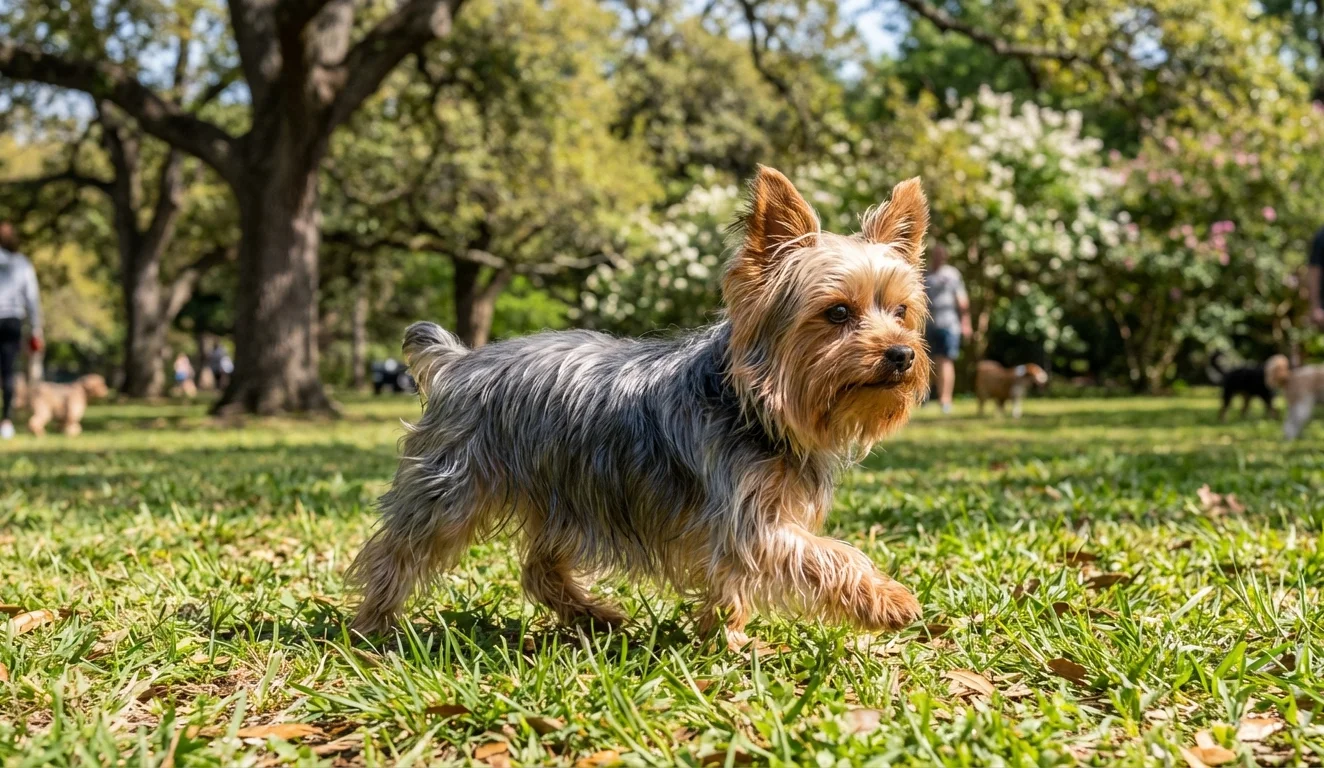
Despite their small size, Yorkies should be compact and well-proportioned, not fragile-looking. The breed standard calls for a level topline and a confident carriage. A healthy Yorkie moves with surprising purpose and energy for something you could carry in a handbag.
The Famous Coat
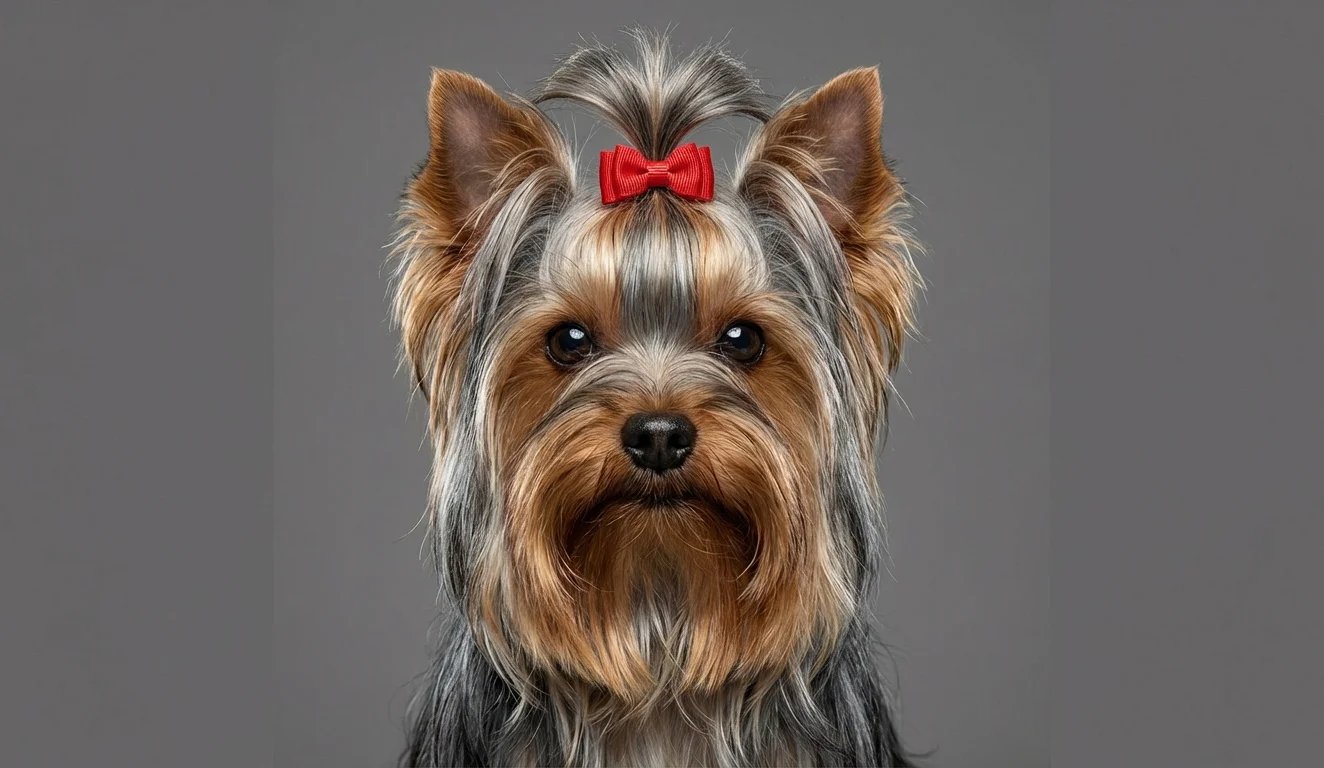
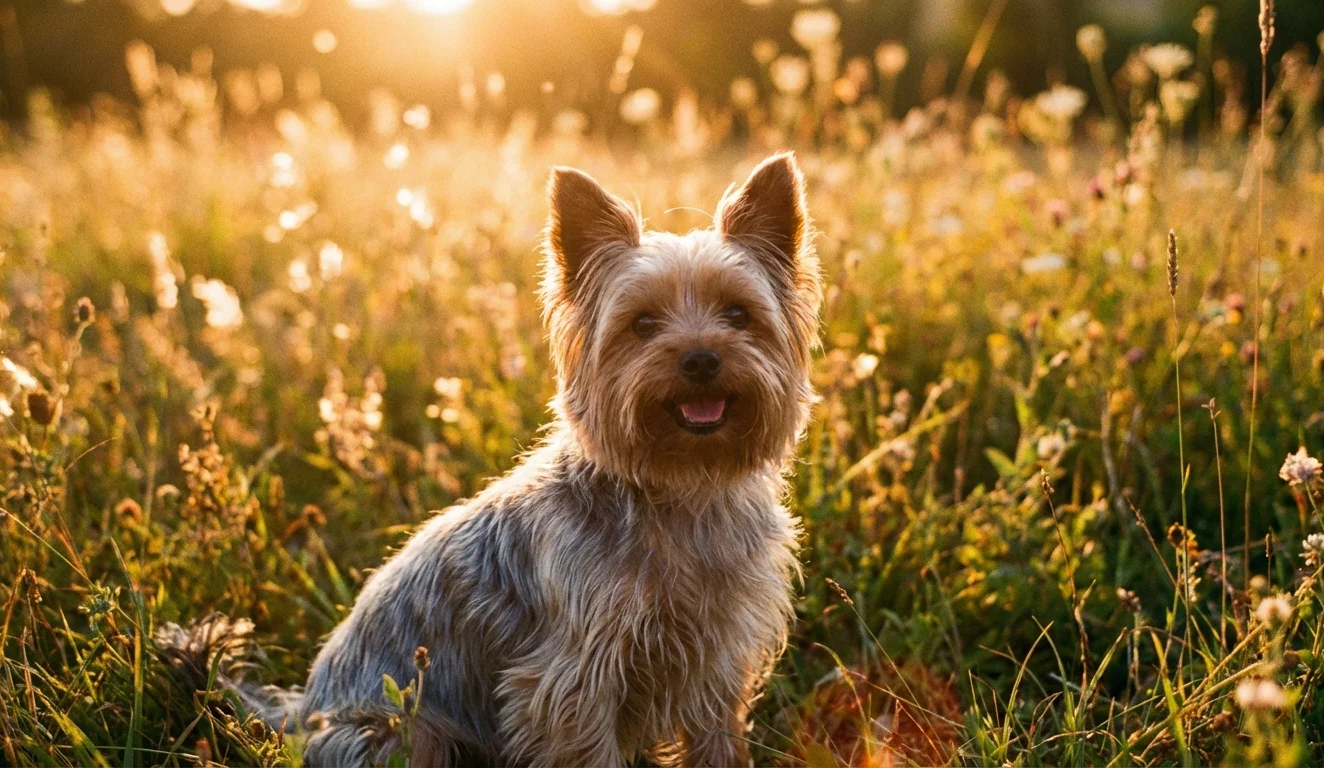
The Yorkie coat is its defining feature and its biggest grooming commitment. It’s a single coat (no undercoat), composed of hair that’s more similar to human hair than typical dog fur. This makes Yorkies hypoallergenic, or as close to it as any dog gets. They don’t shed in the way double-coated breeds do.
Show Yorkies wear their coats floor-length, which looks stunning but requires daily maintenance, wrapping, and professional grooming. Most pet Yorkies get a “puppy cut” that keeps the hair short and manageable.
Yorkie puppies are born black and tan. As they mature, the black gradually turns to a steel blue (a dark silvery gray with blue tones). The color change can take 2-3 years to complete. The final adult coat should be steel blue on the body and rich tan on the head and legs.
Yorkshire Terrier Temperament
The AKC describes the Yorkie as “sprightly” and “tomboyish.” We’d say they have the confidence of a much larger dog crammed into a very small body. The effect is either charming or exhausting, depending on the day.
What living with a Yorkie is actually like:
- They bark. A lot. Yorkies have a very-high barking level, and they bark at everything. The mail carrier, a leaf, someone three blocks away. This is the most common complaint from Yorkie owners, and it’s the trait that surprises people most. Training helps, but you’ll never fully silence a Yorkie.
- They’re fiercely loyal to their person. Yorkies tend to pick one favorite human and attach like velcro. They can be standoffish or suspicious with strangers, which makes them surprisingly decent little watchdogs. They won’t stop an intruder, but they’ll make sure you know one is there.
- They don’t always love other dogs. Yorkies are rated as not good with other dogs, and that matches what we’ve seen. Many Yorkies are dog-reactive, especially with larger dogs. Whether that’s fear-based or genuine terrier scrappiness depends on the individual, but socialization from puppyhood is critical.
- They’re not great with young children. This is an important one. A 5-pound dog can be seriously injured by a toddler who doesn’t understand gentle handling. And Yorkies won’t tolerate being grabbed or handled roughly, they’ll snap. We’d recommend Yorkies for families with older children (8+) or adults-only households.
What Yorkie people love and non-Yorkie people find baffling is that these dogs have a level of self-assurance that borders on delusional. A Yorkie genuinely seems to believe it’s the biggest, most important creature in any room. That swagger is what makes them so entertaining to live with.
Exercise Needs
Yorkies need about 30 minutes of exercise per day, which is manageable for almost any living situation. A couple of short walks and some indoor playtime will keep most Yorkies satisfied.
Good exercise for Yorkies:
- Short walks (15-20 minutes is usually ideal per session)
- Indoor fetch and tug-of-war games
- Supervised off-leash play in enclosed areas, emphasis on “enclosed,” because Yorkies will chase things they shouldn’t
- Puzzle toys and training games for mental stimulation
Watch out for:
- Overexertion. Yorkies are small and can overheat or become exhausted faster than larger breeds, especially in hot weather.
- Rough play with larger dogs. Even a friendly big dog can accidentally injure a Yorkie during play. Monitor all interactions.
- Cold weather. That single coat provides minimal insulation. Many Yorkie owners use sweaters or coats in winter, and that’s not a fashion statement, it’s a genuine need.
Yorkies have more energy than most people expect from a toy breed, but their exercise needs are modest in absolute terms. The bigger risk with a Yorkie isn’t under-exercise, it’s the tendency to carry them everywhere and skip walks entirely. They need to walk on their own four legs regularly to maintain muscle tone and mental health.
Grooming
This is where Yorkie ownership gets expensive and time-consuming. That beautiful silky coat doesn’t maintain itself.
If you keep a long coat:
- Daily brushing is mandatory, the fine, silky hair tangles and mats quickly
- A steel comb and pin brush are your primary tools
- Topknots or bows aren’t just for show, they keep hair out of the dog’s eyes
- Professional grooming every 4-6 weeks for trimming and bathing ($50-$80 per session)
If you keep a short “puppy cut”:
- Brush every 2-3 days to prevent tangles
- Professional grooming every 6-8 weeks for maintenance cuts ($40-$70 per session)
- Much more manageable day-to-day
Regardless of coat length:
- Dental care is critical. Yorkies are highly prone to dental disease, brush teeth daily or at minimum 3-4 times per week
- Tear staining is common. Clean around the eyes daily with a damp cloth
- Nail trims every 2 weeks, small nails grow fast
The grooming costs for a Yorkie are higher than you’d expect for a dog this small. Budget $500-$1,000 per year for professional grooming alone if you’re keeping any kind of styled cut. The trade-off is minimal shedding, your clothes and furniture will stay relatively hair-free.
Yorkshire Terrier Health Issues
Yorkies live 11-15 years, which is a good lifespan. Small breeds generally live longer than large breeds. But Yorkies have a specific set of health concerns, several of which are connected to their tiny size.
Patellar Luxation
This is the most common orthopedic problem in Yorkies. The kneecap (patella) slips out of its normal groove, causing intermittent lameness. You’ll see the dog suddenly skip or hop on one back leg and then go back to normal. Mild cases may not need treatment. Severe cases require surgery costing $1,500-$3,000 per knee. The OFA reports high prevalence in the breed.
Tracheal Collapse
The cartilage rings supporting the trachea weaken over time, causing the airway to flatten. Symptoms include a chronic honking cough, especially when the dog is excited, pulling on a leash, or drinking water. Treatment ranges from medication management to surgical stenting ($1,000-$5,000). Using a harness instead of a collar is strongly recommended for all Yorkies to avoid putting pressure on the trachea.
Portosystemic Shunt (Liver Shunt)
This is a congenital condition where blood bypasses the liver through an abnormal vessel. The liver can’t properly filter toxins from the bloodstream, leading to neurological symptoms, poor growth, and urinary issues. Yorkies are significantly overrepresented in liver shunt diagnoses compared to most other breeds. Surgical correction costs $3,000-$8,000 but has a good success rate when caught early.
Dental Disease
Yorkies have small mouths with crowded teeth, which creates the perfect environment for plaque buildup, tartar, and periodontal disease. By age 3, most Yorkies will need some degree of professional dental intervention. Annual dental cleanings ($300-$800) are a near-certainty with this breed. Home dental care, daily brushing, dental chews, and water additives, can slow progression but rarely prevents it entirely.
Legg-Calve-Perthes Disease
This condition involves the spontaneous degeneration of the femoral head (the ball part of the hip joint) in young dogs, typically appearing between 4-12 months of age. It causes progressive hind-leg lameness. Surgical treatment costs $1,000-$3,000 and outcomes are generally good.
Training a Yorkshire Terrier
Yorkies are intelligent but moderately trainable, which means they understand what you want just fine, they simply may not feel like doing it. The terrier independence is real, and it shows up during training sessions as selective hearing and creative noncompliance.
Training tips for Yorkie owners:
- Keep sessions very short, 5-10 minutes max. Yorkies have limited patience for repetition.
- Use high-value treats. Yorkies are food-motivated, but the treat needs to be worth the effort.
- Housetraining is notoriously difficult with Yorkies. Their small bladders mean more frequent bathroom breaks, and many owners resort to indoor potty pads as a permanent solution. Consistency and patience are everything.
- Start handling exercises early, touching paws, ears, mouth, and tail. Yorkies that aren’t used to being handled will resist grooming and vet visits.
- Socialization is critical. Expose your Yorkie to different people, dogs, and environments between 8-16 weeks. Under-socialized Yorkies become fearful or aggressive toward strangers.
The single most important training priority with a Yorkie is not allowing “small dog syndrome” to develop. Because they’re cute and tiny, owners tend to let behaviors slide that would never be acceptable in a larger dog, jumping on people, barking at strangers, snapping when handled. A Yorkie that’s treated like a dog (with gentle but firm boundaries) is a much better companion than one that’s treated like a baby.
Yorkshire Terrier Cost
Purchase Price
A Yorkshire Terrier puppy from a reputable breeder costs $1,000-$3,000. Show-quality Yorkies from champion lines can run $3,500+. “Teacup” Yorkies (bred to be under 4 pounds) often carry premium prices of $2,000-$5,000, but we’d strongly recommend against seeking out the smallest possible Yorkie, the health problems multiply as size decreases.
Yorkie rescue organizations are available in most states. Adoption fees typically run $200-$500.
Monthly Costs
| Expense | Monthly Estimate |
|---|---|
| Food (high-quality small-breed kibble) | $20-$40 |
| Professional grooming (averaged) | $40-$80 |
| Preventive vet care (averaged) | $15-$25 |
| Pet insurance | $25-$45 |
| Treats, dental chews | $10-$15 |
| Miscellaneous (toys, supplies) | $5-$15 |
| Total | $80-$180 |
Grooming is the surprisingly large expense here. Most small-breed owners don’t expect to spend $500-$1,000 per year on grooming, but a Yorkie coat demands it.
First-Year Costs
Budget $2,500-$5,000 for the first year including purchase price, initial vet visits, spay/neuter, supplies, grooming, and training. Dental cleanings ($300-$800) will become a recurring annual expense starting around age 2-3.
Is a Yorkshire Terrier Right for You?
A Yorkie is a great fit if you:
- Live in an apartment or small space and want a dog that thrives there
- Are looking for a loyal, personality-packed companion
- Want a hypoallergenic breed with minimal shedding
- Are an adult or have older children (8+) who understand gentle handling
- Can commit to regular grooming and dental care
- Appreciate a dog with strong opinions and genuine character
A Yorkie is probably NOT right if you:
- Have toddlers or very young children
- Want a dog that’s easy to housetrain
- Prefer a quiet dog, Yorkies bark, and they bark often
- Don’t want to deal with ongoing grooming costs
- Want a dog that gets along easily with other dogs
- Prefer a laid-back, go-with-the-flow pet
Yorkies are polarizing. People either absolutely love the breed’s outsized personality or find it too much dog in too small a package. If you’re in the first camp, if the idea of a 5-pound dog with the confidence of a Rottweiler makes you smile, a Yorkie might be your perfect match. Just budget for the groomer.
Related Breeds
If you’re considering this breed, you might also want to look at:
Frequently Asked Questions
Are Yorkshire Terriers hypoallergenic?
Yorkies are about as hypoallergenic as a dog can be. Their single coat grows continuously (like human hair) rather than going through shed cycles like double-coated breeds. They produce less dander than most breeds, and their hair drops minimally. No dog is 100% hypoallergenic, all dogs produce some allergens through dander, saliva, and urine, but Yorkies are consistently recommended for allergy sufferers. If allergies are your primary concern, spend time around Yorkies before committing to make sure you personally tolerate the breed.
How hard is it to housetrain a Yorkshire Terrier?
Genuinely difficult. Yorkies are one of the hardest breeds to housetrain, and we’re not saying that lightly. Their tiny bladders mean they need frequent bathroom breaks (every 2-3 hours for puppies, every 4-6 hours for adults), and their small body makes it easy for accidents to go unnoticed in corners of your home. Many Yorkie owners use a combination of outdoor training and indoor potty pads. Consistency is key, same schedule, same spot, same praise every single time. Expect housetraining to take 4-6 months, sometimes longer.
What’s the difference between a regular Yorkie and a “teacup” Yorkie?
“Teacup” is a marketing term, not an official breed variety. It refers to Yorkies bred to be under 4 pounds (sometimes as small as 2 pounds). We’d recommend against specifically seeking teacup Yorkies because the health risks increase dramatically at those sizes, hypoglycemia, organ problems, fragile bones, and shorter lifespans are all more common. The AKC breed standard doesn’t recognize “teacup” as a category. A healthy Yorkie at 5-7 pounds is a small enough dog. Going smaller is choosing aesthetics over the dog’s wellbeing.
Do Yorkshire Terriers get along with other pets?
It depends heavily on socialization. Yorkies that are well-socialized from puppyhood can coexist peacefully with other dogs, though they may always be a bit scrappy with unfamiliar dogs. Yorkies with cats is a mixed bag, their terrier prey drive can kick in with smaller animals, but many Yorkies raised with cats get along fine. With small pets like hamsters, rabbits, or birds, exercise caution. Remember, this breed was literally created to hunt small animals. That instinct hasn’t been fully bred out just because the dog now fits in a purse.
How long do Yorkshire Terriers live?
Yorkshire Terriers have a lifespan of 11-15 years, with many reaching the upper end of that range. Small breeds generally outlive larger breeds, and Yorkies are no exception. The keys to a long Yorkie life are maintaining dental health (periodontal disease can affect organ health over time), keeping them at a lean weight (even an extra pound is significant on a 5-pound dog), and regular veterinary care that catches issues like liver shunts and patellar luxation early.